

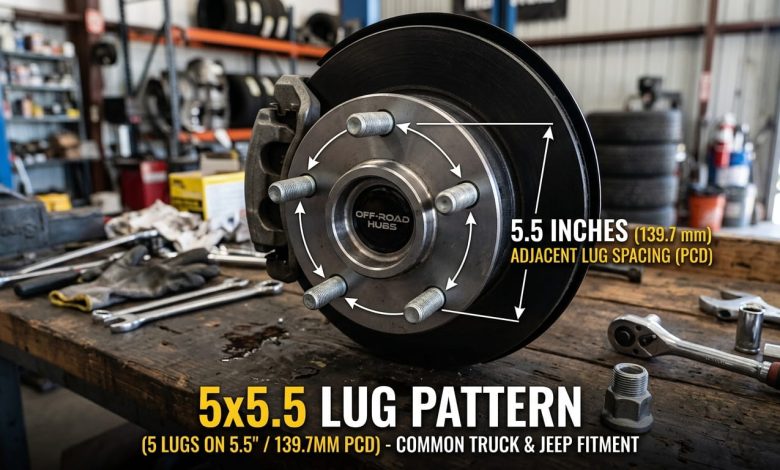
You’re standing in front of a wheel listing trying to figure out if it’ll actually bolt onto your truck, and the numbers on the box don’t match what you thought your vehicle used. Getting the 5×5.5 lug pattern right before you buy saves you a return shipment and a wasted afternoon at the shop.
This guide breaks down exactly what the 5×5.5 pattern means, which vehicles actually use it, how it differs from the similar-looking 5×5 pattern, and how to measure your own hub if you’re still not sure.
What Does 5×5.5 Bolt Pattern Actually Mean?
A 5×5.5 bolt pattern means a wheel has 5 lug holes arranged in a circle with a 5.5-inch diameter, measured from the center of one lug hole to the center of the one directly across from it. In metric terms, that same pattern is written as 5×139.7mm, since 5.5 inches converts to roughly 139.7 millimeters.
You’ll see both notations used depending on where you’re shopping. US and Canadian retailers usually stick with the inch measurement, while European and Asian parts catalogs default to the metric equivalent.
How to Measure It Yourself
If you’re not sure which pattern your vehicle uses, grab a tape measure and check the hub directly:
- Find the center of one lug hole on the wheel.
- Measure straight across to the center of the lug hole directly opposite it.
- Compare that number to 5.5 inches (139.7mm).
- If the measurement doesn’t line up perfectly, check your specific make and model against a bolt pattern chart before ordering anything.
What Vehicles Have a 5×5.5 Bolt Pattern
The 5×5.5 pattern shows up most often on older American trucks and SUVs built for towing and off-road use. Here’s where you’ll typically find it:
- Dodge Ram 1500: Second generation models from 1994 to 2010 used this pattern before switching to a different lug arrangement.
- Dodge Dakota: Model years 2005 through 2011 carried the 5×5.5 setup.
- Dodge Durango: The 2004 to 2010 generation also used this pattern.
- Ford F-100 and older F-150 models: Ford’s half-ton trucks relied on this pattern from the 1940s through the late 1990s, sometimes called the “large Ford” pattern.
- Ford Bronco: The classic 1966 to 1996 generation, along with pre-1997 models, used the 5×5.5 configuration.
- Jeep CJ5, CJ7, and Wrangler YJ/TJ: Several older Jeep off-road models share this pattern with certain Ford and Dodge trucks.
- Toyota Tacoma: Classic-generation, non-PreRunner models used 5×5.5 before Toyota moved to a different pattern.
- Chevrolet Tracker: This compact SUV, produced from 1989 to 2009, is one of the smaller vehicles to use this larger bolt pattern.
Ford’s Two Different Five-Lug Patterns
Ford historically ran two separate five-lug patterns side by side, and mixing them up is a common mistake. The 5×5.5 pattern, the “large Ford” spacing, applied to trucks and early passenger cars, while the smaller 5×4.5 pattern, the “small Ford” spacing, showed up on cars like the Mustang and Fairlane. Always double check which generation and body style you’re working with before assuming either pattern applies.
5×5.5 vs 5×5 Bolt Pattern: What’s the Difference
These two patterns look similar on paper, but the half-inch gap matters a lot when it comes to actual fitment. The 5×5 pattern (5x127mm) has a 5-inch diameter between lug holes, while 5×5.5 (5×139.7mm) uses a wider 5.5-inch spacing.
| Feature | 5×5 Bolt Pattern | 5×5.5 Bolt Pattern |
| Diameter | 5 inches (127mm) | 5.5 inches (139.7mm) |
| Common vehicles | Jeep Wrangler, Grand Cherokee, Gladiator, Chevrolet | Older Dodge Ram, classic Ford F-Series, Ford Bronco |
| Typical use | Modern Jeep SUVs and GM trucks | Older American trucks and SUVs |
| Interchangeable? | No | No |
A wheel built for 5×5 will not physically fit a 5×5.5 hub, and forcing it can damage the lug studs or leave the wheel improperly seated. Always confirm your exact pattern before buying, even if two vehicles seem similar on the surface.
Buying Wheels for a 5×5.5 Pattern
Once you’ve confirmed your vehicle uses the 5×5.5 pattern, buying a wheel and tire package together tends to work out better than sourcing wheels and tires separately. Packages come pre-balanced and matched, which simplifies installation and reduces the chance of a mismatch slipping through.
Aftermarket 5×5.5 wheels are widely available in 17-inch through 22-inch diameters, covering everything from steel wheels built for off-road abuse to alloy options aimed at towing and daily driving. Since this pattern skews toward older, heavier-duty vehicles, look specifically for wheels rated for the load capacity your truck or SUV actually needs.
FAQS
What bolt pattern is 5×5?
A 5×5 bolt pattern has 5 lug holes arranged in a circle with a 5-inch diameter, also written as 5x127mm in metric. It’s common on newer Jeep Wranglers, Grand Cherokees, and several Chevrolet and GM truck models.
What vehicles have a 5×5 lug pattern?
Jeep Wrangler, Grand Cherokee, and Gladiator models commonly use the 5×5 pattern, along with several Chevrolet, Cadillac, and Buick vehicles. Chrysler has also used this pattern across a number of its lineup.
What cars have a 5×5.5 bolt pattern?
Older Dodge Ram 1500 (pre-2019), Dodge Dakota, Dodge Durango, classic Ford F-100 and F-150 trucks, the classic Ford Bronco, older Jeep CJ and Wrangler YJ/TJ models, and select older Toyota Tacoma trims all use the 5×5.5 pattern.
Is 5×5.5 the same as 5×139.7?
Yes. 5×5.5 is the imperial measurement and 5×139.7mm is the exact metric equivalent of the same bolt pattern. US retailers typically list the inch version, while international listings default to millimeters.
Can I put 5×5 wheels on a 5×5.5 hub?
No. The half-inch difference in diameter means the lug holes won’t line up correctly, and forcing a mismatched wheel onto the hub risks damaging the studs or leaving the wheel unsafely seated. Always confirm the exact pattern before purchasing.
How do I know what bolt pattern my truck has?
Measure from the center of one lug hole to the center of the opposite lug hole, then compare that number to standard pattern charts for your make and model. Many tire shops can also confirm your exact pattern in a few minutes if you’re not confident measuring it yourself.
Do modern trucks still use the 5×5.5 pattern?
Most modern trucks have moved away from 5×5.5 toward 6-lug or 8-lug patterns better suited to heavier loads. The pattern is now mostly associated with older Dodge, Ford, and Jeep models from past decades.
Confirm Your Fitment Before You Buy
The 5×5.5 lug pattern covers a specific range of older American trucks and SUVs, and getting it right means checking your exact make, model, and year before ordering wheels. A quick measurement or a look at your owner’s manual saves you from a mismatched order and a wasted trip.
If you’re planning a wheel upgrade, check out our guide on choosing the right offset for a lifted truck or our breakdown of steel versus alloy wheels for off-road use.