

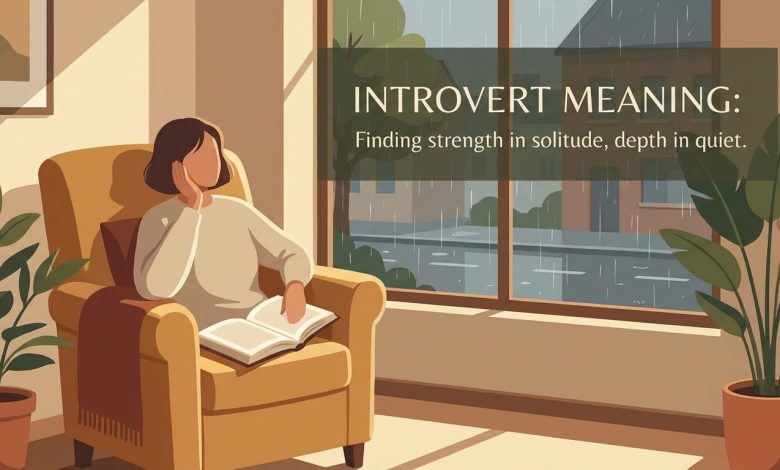
You just left a party after twenty minutes and you’re already planning your exit strategy for the next one. Your friends call you quiet. Your coworkers think you don’t like them. None of that tells the real story. The introvert meaning goes far past “shy” or “antisocial,” and knowing what does introverted mean can change how you see yourself and everyone around you. This article breaks down the real definition, the science behind it, the signs to watch for, and how to work with your personality instead of against it.
What Does Introvert Mean?
An introvert is a person who recharges through solitude and spends energy in social situations, even ones they enjoy. This sits at the center of what does introvert mean in psychology: it’s about where you get your energy, not whether you like people.
Swiss psychiatrist Carl Jung introduced the terms introvert and extrovert in the 1920s to describe two different ways people direct their attention and energy. Jung placed introverts on the side of the inner world: thoughts, memories, and reflection. Extroverts, in his model, point outward toward people, activity, and external stimulation.
Merriam-Webster defines an introvert as a reserved, introspective person who enjoys spending time alone. That’s accurate as far as it goes. It misses the part that matters most: introversion is a preference for how you manage energy, not a personality flaw or a social limitation.
What Does Introverted Mean in Practice
Being introverted means your battery drains during group interaction and refills in quiet, low-stimulation settings. A weekend alone with a book isn’t avoidance for an introvert. It’s maintenance.
This shows up in small, daily choices. Skipping a happy hour to cook dinner alone. Texting instead of calling. Needing a walk after a long meeting before answering another email. None of these behaviors point to shyness. They point to a nervous system that processes stimulation differently.
Introvert vs Extrovert vs Ambivert
Personality researchers treat introversion and extroversion as two ends of a single spectrum, not two separate boxes. Most people land somewhere in the middle.
- Introverts recharge alone and spend energy around others, even in situations they genuinely enjoy.
- Extroverts recharge through social contact and can feel understimulated in solitude.
- Ambiverts sit near the middle of the spectrum, drawing energy from both alone time and social time depending on mood and circumstance.
Adam Grant, a psychology professor at the University of Pennsylvania, studied call center sales performance and found ambiverts outsold both strongly introverted and strongly extroverted employees. The flexibility to switch between listening and talking, rather than defaulting to one mode, gave them an edge.
Cleveland Clinic estimates roughly two-thirds of people fall closer to the ambivert middle than to either extreme. Pure introverts and pure extroverts are rarer than most personality quizzes suggest.
Introvert Doesn’t Mean Shy: The Biggest Myth
Shyness and introversion get confused constantly, and they’re not the same trait. Shyness is anxiety about social judgment. Introversion is a preference for lower stimulation.
You can be a confident, socially skilled introvert who simply prefers a dinner with two close friends over a room full of strangers. You can also be an outgoing extrovert who still struggles with social anxiety in specific situations. The two traits can overlap, but one doesn’t cause the other.
Bill Gates has described himself as an introvert who isn’t shy. He’s comfortable speaking to large audiences and negotiating high-stakes deals. What drains him is prolonged, unstructured social contact, not the act of being watched or judged.
The Science Behind Introversion
Brain imaging research points to real physiological differences behind the introvert meaning. Introverts show higher blood flow to the frontal lobe, the region tied to memory, planning, and problem-solving. That extra processing tends to slow down verbal response time, which is why introverts often need a beat before answering a question out loud.
Dopamine sensitivity plays a role too. Introverts and extroverts produce similar amounts of dopamine, the brain chemical linked to reward and pleasure-seeking. Extrovert brains respond to that dopamine hit with a noticeable buzz. Introvert brains tend to register the same stimulation as overstimulation, which is part of why loud parties and packed schedules feel draining rather than exciting.
A classic experiment placed a drop of lemon juice on participants’ tongues and measured saliva response. Introverts salivated more than extroverts, a sign their nervous systems react more strongly to external input. That heightened sensitivity extends beyond taste and into noise, crowds, and social stimulation generally.
Four Types of Introverts
Research from psychologist Jonathan Cheek identifies subtypes within introversion, often remembered by the acronym STAR:
Social Introverts
This is the type most people picture first. Social introverts prefer small groups over crowds and choose quiet settings over loud ones, without any underlying anxiety about people.
Thinking Introverts
Thinking introverts spend a lot of time in their own heads, drawn to daydreaming, imagination, and introspection rather than active socializing or avoiding it.
Anxious Introverts
Anxious introverts feel self-conscious around others and tend to overthink past interactions, even alone. This subtype overlaps most with what people mistake for general shyness.
Restrained Introverts
Restrained introverts act and speak more slowly and deliberately. They prefer to think before acting rather than jumping into a decision or conversation.
Signs You Might Be an Introvert
A few common patterns show up again and again in people who identify as introverts:
- You feel worn out after socializing, even when you had a genuinely good time
- Small talk drains you faster than a deep, one-on-one conversation
- You prefer texting or email over phone calls
- Weekends with no plans sound appealing rather than lonely
- You process thoughts internally before speaking them out loud
- Large parties feel more exhausting than fun, while a small dinner with close friends feels comfortable
- You need quiet time to recover after a busy workday or event
None of these signs are absolute rules. Introversion sits on a spectrum, and most people show a mix of introverted and extroverted traits depending on the day.
Introverts in the Workplace
Roughly one-third to one-half of the U.S. population identifies as introverted, according to WebMD, yet corporate culture still tends to reward loud, fast-talking behavior. A Harvard Business Review survey found 65% of senior executives viewed introversion as a barrier to leadership.
That bias overlooks real strengths introverts bring to a team. Introverts tend to listen more than they speak, which builds trust and surfaces ideas that louder voices miss. They’re often strong independent workers who produce focused, high-quality output without needing constant collaboration to stay motivated.
Open floor plans and mandatory group brainstorms can work against introverted employees, who often generate better ideas through quiet, individual reflection first. Companies that offer quiet workspaces, written communication options, and smaller meeting formats tend to get more out of their introverted staff.
How to Take Care of Your Energy as an Introvert
Protecting your energy isn’t about avoiding people. It’s about pacing social contact so it doesn’t leave you depleted.
- Schedule recovery time after social commitments instead of stacking plans back to back
- Choose one-on-one coffee over group happy hours when you get to pick the format
- Say no to invitations that don’t interest you without over-explaining the reason
- Build quiet transitions into your day, like a short walk between meetings
- Tell close friends and partners how you recharge, so your need for solitude doesn’t read as rejection
None of this means isolating yourself. Introverts still need connection. The difference is in dosage and format, not in the desire for relationships.
Frequently Asked Questions About Introvert Meaning
What does introvert mean in simple terms?
An introvert is someone who gains energy from solitude and spends energy in social interaction. It describes an internal energy pattern, not a level of friendliness or social skill.
What does introverted mean as a personality trait?
Introverted describes a preference for a calmer, lower-stimulation environment over constant external activity. Introverted people process information internally and often need quiet time to recover after socializing.
Is introvert the same as shy?
No. Shyness is anxiety about social judgment, and introversion is a preference for lower stimulation. A person can be introverted without any social anxiety, or shy without being introverted at all.
Can an introvert become an extrovert?
Behavior can shift with practice, and plenty of introverts build strong social skills and comfort speaking publicly. The underlying preference for solitude to recharge tends to stay fairly stable across a lifetime.
What percentage of people are introverts?
Estimates place introverts at around one-third to one-half of the population in the U.S. Ambiverts, who sit closer to the middle of the spectrum, make up the largest share.
What is the difference between an introvert and an ambivert?
An introvert consistently recharges through alone time and spends energy socializing. An ambivert draws energy from both solitude and social contact, shifting based on mood and situation.
Are introverts good leaders?
Research from Wharton professor Adam Grant found introverted leaders often outperform extroverted ones when managing proactive, high-initiative teams, since they tend to listen more and let good ideas from the team surface.
Do introverts hate people?
No. Most introverts enjoy close friendships and meaningful conversation. What drains them is prolonged exposure to large groups or unstructured social stimulation, not people themselves.
What causes introversion?
Brain research points to differences in frontal lobe blood flow and dopamine sensitivity between introverts and extroverts. Genetics and early environment both appear to play a part, and scientists haven’t pinned down one single cause.
How do I know if I’m an introvert or an ambivert?
Track how you feel after different types of social contact for a week or two. A strong, consistent pull toward alone time to recharge points to introversion, while a more flexible pattern that shifts with mood points to ambiversion.
Figure Out Where You Land on the Spectrum
Introversion comes down to how you manage energy, not how much you like people or how good you are in a room. Pay attention to what drains you and what restores you, and build your schedule around that pattern instead of fighting it. If you want to go deeper, check out our guides on personality types and how to set boundaries without guilt, both linked below.