
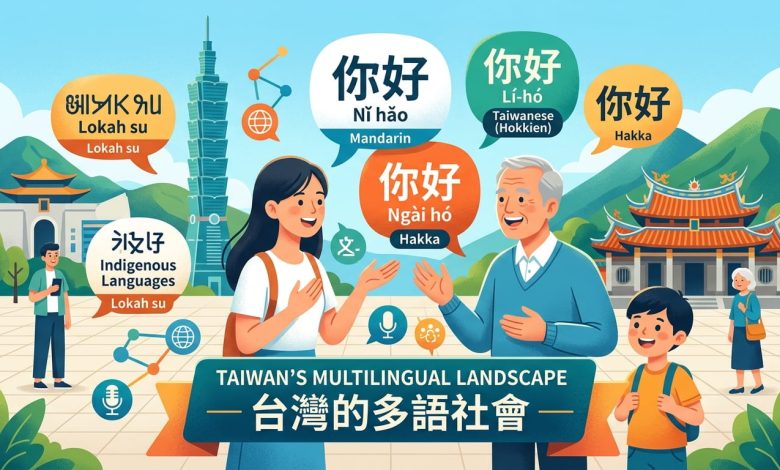
Order a bowl of beef noodle soup in Taipei and you might hear the cashier switch between three different languages before your food even arrives: Mandarin with you, Taiwanese Hokkien with a coworker, and maybe a burst of Japanese with an older customer. That mix is exactly why so many travelers and language learners ask what language is Taiwan really speaking, since the answer isn’t as simple as picking just one. This guide walks through every major language spoken across the island, how they came to coexist, and which one you’ll actually need depending on where you go.
You’ll learn which language dominates daily life, why Taiwan technically has no single official language on paper, and how the island’s indigenous communities are working to keep their own languages alive.
What Is the Main Language of Taiwan
Mandarin Chinese, known locally as Guoyu, functions as Taiwan’s main language in practice, even though the country has no standalone law naming a single official language. It’s the language used in schools, courts, government offices, and national broadcasting, so nearly everyone on the island can speak and understand it.
Taiwanese Mandarin differs slightly from the Mandarin spoken in mainland China, both in accent and in a handful of everyday vocabulary choices. Taiwan also uses traditional Chinese characters, not the simplified characters standard across the mainland, which matters if you’re trying to read signs or menus while traveling.
Taiwan’s Official and National Languages
Taiwan’s language policy has shifted significantly over the past decade. A 2017 law granted “national language” status to the island’s indigenous Austronesian languages, and a follow-up law in 2018, effective in 2019, extended that same status to Taiwanese Hokkien, Hakka, and Taiwan Sign Language.
That means Taiwan now legally recognizes several languages side by side rather than elevating just one. Here’s how the numbers actually break down among self-reported speakers:
- Mandarin Chinese –spoken by the vast majority of the population as a main or secondary language
- Taiwanese Hokkien – used by roughly 70 to 80 percent of people, either as a first or second language
- Hakka – spoken by around 5 to 7 percent of the population, concentrated in areas like Hsinchu and Miaoli
- Formosan (indigenous) languages – 16 officially recognized languages, each spoken by a much smaller and often shrinking group
- Taiwan Sign Language – the recognized sign language used by the island’s Deaf community
- Matsu dialect – a variety of Fuzhounese spoken specifically on the Matsu Islands
Taiwanese Hokkien: The Island’s Most Common Local Language
Taiwanese Hokkien, often just called Taiwanese, traces back to the Minnan dialect brought over by immigrants from Fujian province centuries ago. It remains the language you’ll hear most in casual conversation, local media, and traditional night markets, especially among older generations and in more rural parts of the island.
Mandarin and Hokkien aren’t mutually intelligible, so knowing one doesn’t automatically mean you can follow the other. Many younger Taiwanese still understand Hokkien even if they primarily speak Mandarin day to day, since it’s tied closely to family and regional identity.
Hakka and Taiwan’s Indigenous Languages
Hakka speakers make up a smaller share of Taiwan’s population, mostly concentrated in the northwestern counties of Hsinchu and Miaoli, along with pockets in southern and eastern Taiwan. The Hakka community has worked to preserve its language through dedicated media channels, cultural festivals, and government support from the Hakka Affairs Council.
Taiwan’s indigenous peoples, who predate Chinese settlement on the island by thousands of years, speak Formosan languages that belong to the Austronesian language family. In fact, growing linguistic evidence points to Taiwan as the likely origin point for the entire Austronesian language family, which now stretches from Madagascar to Easter Island. Groups like the Amis, Atayal, Paiwan, and Bunun each maintain their own distinct language, though several are considered endangered due to decades of assimilation pressure.
Why Taiwan Speaks So Many Languages
Taiwan’s linguistic diversity comes directly from its layered history of migration and colonization. Indigenous Austronesian peoples settled the island first, followed by waves of Hoklo and Hakka immigrants from mainland China’s Fujian and Guangdong provinces.
Japan then governed Taiwan for fifty years, from 1895 to 1945, leaving behind a generation of Japanese speakers and lasting loanwords still used in everyday Taiwanese Mandarin. When the Republic of China government relocated to Taiwan after the Chinese Civil War, it made Mandarin the sole language of education and government, actively discouraging Hokkien and other native languages in schools through the 1980s. That policy shifted only after Taiwan’s democratization, when local languages started reclaiming space in public life.
Does Taiwan Speak English
English isn’t an official or national language in Taiwan, and fluency levels remain modest outside of major cities and international business settings. That said, the government has invested heavily in improving English education through its Bilingual 2030 policy, aiming to raise proficiency nationwide over the coming years.
You’ll generally find more English speakers in Taipei, especially in tourist areas, universities, and larger companies, than in smaller towns or rural regions. If you’re traveling outside the capital, learning a few basic Mandarin phrases goes a long way.
FAQs
What language do they speak in Taiwan?
Mandarin Chinese is the main language spoken in Taiwan, used in schools, government, and media nationwide. Taiwanese Hokkien, Hakka, and 16 indigenous Formosan languages are also officially recognized as national languages and spoken across different communities.
What is Taiwan’s official language?
Taiwan has no single official language defined by a standalone law, though Mandarin functions as the de facto national language in government and education. Taiwanese Hokkien, Hakka, indigenous languages, and Taiwan Sign Language all hold legally recognized national language status as well.
Is Taiwanese the same as Mandarin?
No, Taiwanese Hokkien and Mandarin are distinct languages that aren’t mutually intelligible. Taiwanese Hokkien developed from the Minnan dialect of Fujian province, while Mandarin became dominant only after the mid-1940s.
Do people in Taiwan speak Chinese?
Yes, most people in Taiwan speak Mandarin Chinese, which is a form of Chinese, though the local accent and some vocabulary differ from mainland Mandarin. Taiwan also uses traditional Chinese characters instead of the simplified characters used across mainland China.
What’s the difference between Taiwanese Mandarin and mainland Mandarin?
Taiwanese Mandarin uses a softer pronunciation of certain retroflex sounds and includes loanwords from Japanese and Hokkien not commonly used on the mainland. Both versions remain largely mutually intelligible despite these differences.
Is English widely spoken in Taiwan?
English isn’t an official language and fluency varies widely across the island, though it’s more common in Taipei and among younger, urban populations. The government’s Bilingual 2030 initiative is actively working to expand English proficiency nationwide.
Are indigenous languages in Taiwan endangered?
Several of Taiwan’s 16 officially recognized indigenous languages are considered endangered, with shrinking numbers of fluent speakers, particularly among younger generations. Government programs now support indigenous language education and cultural preservation efforts to help reverse that decline.
Why did Japanese influence Taiwan’s language?
Japan governed Taiwan for fifty years, from 1895 to 1945, and Japanese was the language of education and administration during that period. That legacy left lasting loanwords in Taiwanese Mandarin and a generation of older residents who still speak some Japanese today.
Explore More About Taiwan Before You Go
Taiwan’s language landscape reflects its layered history, from indigenous Austronesian roots to Hokkien, Hakka, and decades of Mandarin-focused policy. Knowing this going in helps explain why you’ll hear such a distinct mix of languages depending on which part of the island you’re visiting.
If you’re planning a trip, check out our guide to must-visit destinations in East Asia on reuterings.com for more on where Taiwan fits into a broader itinerary.