

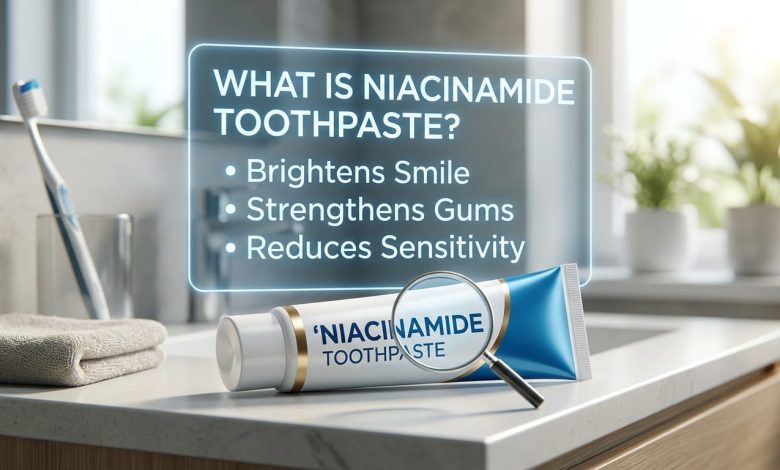
You’re scrolling through toothpaste options and one label stops you: niacinamide, the same ingredient from your nighttime serum, now sitting in a tube meant for your teeth. That crossover from skincare to dental care is exactly what’s driving interest in niacinamide toothpaste right now, and it raises a fair question: does an ingredient known for calming skin actually do anything for your teeth? This guide covers what niacinamide toothpaste actually contains, what the whitening claims are based on, and where the evidence still falls short.
What Niacinamide Actually Is
Niacinamide is a form of vitamin B3, well established in skincare for reducing redness and supporting the skin’s barrier function. Its jump into toothpaste formulas is newer, and the marketing behind it borrows heavily from that skincare reputation rather than from independent dental research specific to the mouth.
In toothpaste, niacinamide is typically included alongside standard active ingredients like fluoride, and sometimes alongside additional whitening agents like hydrated silica or activated charcoal. That combination matters, since niacinamide itself is rarely the toothpaste’s only functional ingredient, which makes it harder to credit niacinamide specifically for any whitening result you notice.
Is Niacinamide Whitening Toothpaste Safe?
Yes, niacinamide is generally considered safe for use in oral care products at the low concentrations found in toothpaste, and it doesn’t carry the same sensitivity risks associated with stronger bleaching agents like hydrogen peroxide. The American Dental Association’s ingredient safety standards for approved toothpaste products don’t flag niacinamide as a concern at typical formulation levels.
That said, safe doesn’t automatically mean proven effective for whitening specifically. A toothpaste can be entirely safe to use daily while still not delivering the dramatic results some marketing copy implies, and it’s worth separating those two questions before you buy based on the label alone.
Does Niacinamide Whitening Toothpaste Actually Work?
The evidence for niacinamide’s whitening effect on teeth is much thinner than the evidence for its skincare benefits. Most of what toothpaste brands cite comes from niacinamide’s known anti-inflammatory and barrier-supporting properties in skin, not from dental-specific clinical trials measuring actual tooth shade change.
What likely does the whitening work in these formulas is the abrasive or polishing ingredients included alongside niacinamide, such as silica, rather than niacinamide itself. If a niacinamide toothpaste genuinely lightens your teeth over a few weeks, the more probable explanation is surface stain removal from mechanical polishing, similar to what any decent whitening toothpaste achieves, rather than a chemical whitening reaction unique to niacinamide.
Is Niacinamide Toothpaste Good for Teeth Beyond Whitening?
Niacinamide toothpaste benefits beyond whitening are plausible but still under-researched specifically for oral tissue. Niacinamide’s known ability to support skin barrier function and calm inflammation has led some formulators to suggest it may help soothe gum tissue, though this application hasn’t been studied nearly as thoroughly as its skincare use.
If gum sensitivity or inflammation is your main concern, an ADA-accepted toothpaste formulated specifically for sensitive gums, with ingredients like potassium nitrate, has a stronger evidence base behind it than niacinamide currently does for that specific purpose.
How Niacinamide Toothpaste Compares to Standard Whitening Options
| Toothpaste Type | Primary Whitening Mechanism | Typical Timeline for Visible Results | Sensitivity Risk |
| Niacinamide toothpaste | Mild polishing agents alongside niacinamide | Several weeks, gradual | Low |
| Hydrogen peroxide whitening toothpaste | Chemical bleaching reaction | One to two weeks | Moderate to high |
| Charcoal toothpaste | Abrasive polishing | Days to weeks, surface stains only | Moderate, can wear enamel over time |
| Standard fluoride toothpaste | Minimal whitening effect | Not primarily designed for whitening | Low |
This comparison shows why niacinamide toothpaste tends to sit in the gentler, slower-acting category rather than competing directly with peroxide-based whitening products on speed of results.
What to Look for on the Label
A few practical checks help you judge any niacinamide toothpaste before buying it, regardless of the brand.
- Confirm the toothpaste still contains fluoride, since niacinamide doesn’t replace fluoride’s cavity-prevention role.
- Check for an ADA Seal of Acceptance if you want independent verification of the product’s safety and efficacy claims, since not all toothpaste brands carry this seal.
- Look at where niacinamide falls in the ingredient list. Ingredients are typically listed by concentration, so a niacinamide toothpaste with a strong marketing focus on the ingredient but with niacinamide listed near the bottom likely contains only a small amount.
- Watch for added abrasives like activated charcoal in the same formula, since daily use of highly abrasive toothpaste over months can wear down enamel regardless of what other beneficial ingredients are present.
FAQs
What is niacinamide toothpaste?
Niacinamide toothpaste is a toothpaste formula that includes niacinamide, a form of vitamin B3 commonly used in skincare, alongside standard ingredients like fluoride and mild abrasives. It’s marketed primarily for whitening and gum comfort, though its dental-specific benefits are less studied than its skincare uses.
Is niacinamide toothpaste safe to use daily?
Yes, niacinamide is considered safe for daily oral use at the concentrations found in toothpaste, and it doesn’t carry the sensitivity risks linked to stronger whitening agents. Checking for an ADA Seal of Acceptance adds an extra layer of confidence in the product’s overall safety.
Does niacinamide whiten teeth?
Niacinamide itself doesn’t have strong dental-specific evidence supporting a direct whitening effect. Most of the whitening result in these toothpaste formulas likely comes from accompanying polishing ingredients like silica rather than niacinamide alone.
How long does niacinamide toothpaste take to show results?
Visible results typically take several weeks of consistent daily use, since the whitening effect is gradual and tied to surface stain removal rather than a fast-acting chemical reaction. Peroxide-based whitening toothpaste generally shows results faster by comparison.
Can niacinamide toothpaste help with sensitive teeth?
Niacinamide’s anti-inflammatory properties in skin have led to speculation about similar benefits for gum tissue, though this hasn’t been studied thoroughly in dental research specifically. A toothpaste formulated for sensitivity with ingredients like potassium nitrate has stronger evidence behind it for that particular concern.
Is niacinamide the same as niacin?
No, niacinamide and niacin are both forms of vitamin B3 but behave differently in the body. Niacin can cause a flushing reaction at higher doses when taken orally as a supplement, while niacinamide does not, which is part of why niacinamide is the preferred form in topical products like toothpaste.
Does niacinamide toothpaste replace the need for professional whitening?
No, niacinamide toothpaste works on surface stains through gradual, gentle polishing rather than addressing the deeper, intrinsic tooth discoloration that professional whitening treatments target. For significant or long-standing discoloration, a conversation with your dentist about in-office or dentist-supervised options will get you further than any toothpaste alone.
Talk to Your Dentist Before Switching
Niacinamide toothpaste is a safe, low-risk addition to your routine, but its whitening results depend more on the mild abrasives it’s paired with than on niacinamide itself. If you’re dealing with noticeable gum sensitivity or stubborn discoloration, your dentist can point you toward an option with stronger evidence behind it for that specific concern. For more on choosing the right toothpaste for your needs, check out our guides on ADA-accepted toothpaste ingredients and how professional teeth whitening actually works.