

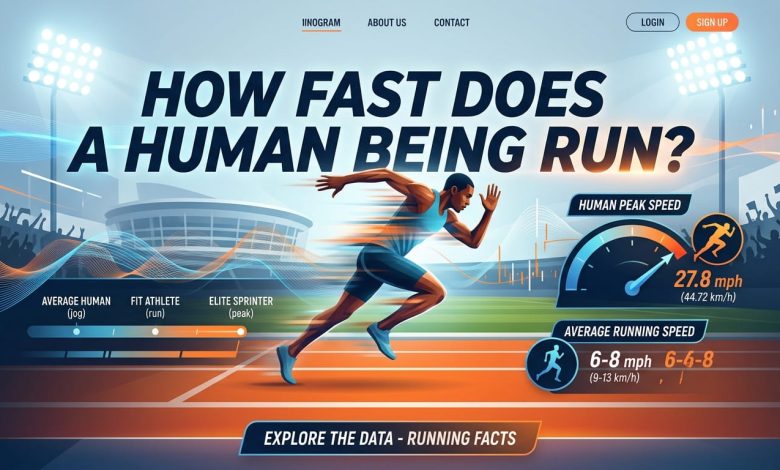
You’ve probably wondered, mid sprint for a bus or watching the Olympics, just how fast a human being can actually move. The honest answer covers a huge range, since how fast a human being runs depends heavily on fitness level, sprint distance, and whether you’re talking about an Olympic athlete or your average adult jogging around the block.
This guide breaks down real numbers across age groups, fitness levels, and world-class sprinters, plus the biology behind why some people run so much faster than others.
Average Human Running Speed
The average person runs somewhere between 8 and 12 miles per hour during a sprint, and much slower, around 5 to 6 mph, during a steady jog. Sprint speed drops fast once fatigue sets in, so most people can only hold their top speed for a few seconds at a time.
For context, a brisk walking pace sits around 3 to 4 mph, meaning even an untrained adult sprinting flat out is moving two to three times faster than a normal walk. Fitness level plays a bigger role here than most people expect, since regular runners can push their average speed well past someone who rarely exercises.
Average Speed by Age and Sex
Running speed shifts across age groups and tends to differ between men and women at a population level, largely due to differences in muscle mass and training history rather than any single factor:
- Children (ages 6 to 12): Average sprint speed lands around 8 to 10 mph.
- Teenagers (13 to 19): Typical sprint speed climbs to 10 to 14 mph, especially among athletes.
- Adults (20 to 39): Average untrained sprint speed sits around 10 to 12 mph.
- Adults (40 to 59): Speed generally drops to 8 to 10 mph without regular training.
- Adults 60 and older: Average sprint speed often falls to 6 to 8 mph, though active older adults can stay well above that range.
How Fast Can the Fastest Humans Run?
Usain Bolt holds the current world record for the fastest recorded human running speed, hitting 27.8 mph during his 100-meter world record run in 2009. That number came from a single stretch of the race, not his average pace across the full 100 meters.
Elite sprinters as a group typically reach top speeds between 22 and 28 mph during competitive 100-meter races. That’s roughly double what a well-trained non-professional runner can hit, and nearly triple the average untrained adult’s top sprint speed.
Why Sprinters Are So Much Faster
Fast-twitch muscle fiber ratio plays the biggest role in raw sprint speed, since these fibers contract quickly and generate short bursts of high power. Genetics set the baseline for how many fast-twitch fibers a person has, but stride length, ground contact time, and running mechanics developed through training account for a large share of the gap between an average runner and an elite sprinter.
How Running Speed Is Measured
Sprint speed is typically measured using either radar guns, similar to the ones used for pitching speed, or GPS-based tracking through wearable devices and running watches. Elite competitions use motion-capture and timing gate systems for more precise splits.
For casual runners, a GPS running watch gives a solid estimate of pace and speed, though accuracy can dip slightly on curves or in areas with weak satellite signal. Treadmill speed settings offer another common reference point, since most treadmills display speed directly in mph or km/h.
What Affects How Fast You Can Run
A handful of factors determine where you land on the speed spectrum, and most of them respond to training over time:
- Muscle fiber composition: A higher ratio of fast-twitch fibers supports quicker, more powerful strides.
- Running mechanics: Stride length and cadence both affect top speed, and poor form can cap speed regardless of fitness level.
- Body weight and composition: Excess body weight relative to muscle mass generally slows sprint speed.
- Age: Speed tends to peak in the mid-20s and gradually declines afterward without continued training.
- Training history: Sprint-specific training, including interval work and resistance training, improves speed more directly than distance running alone.
Human Running Speed vs. Animal Speed
Even Usain Bolt’s world-record pace looks slow next to the fastest land animals. A cheetah can hit speeds over 60 mph, more than double the fastest recorded human sprint, and even a common house cat can outrun most humans over a short distance.
Greyhounds average around 35 mph, and a common domestic horse can sustain speeds near 25 to 30 mph over longer distances than any human sprinter could hold. Humans do have an edge in long-distance endurance running compared to most sprinting-focused animals, a trait tied to our ability to regulate body heat through sweating over extended distances.
Frequently Asked Questions About How Fast Humans Run
How fast can the average human run?
The average person can sprint between 8 and 12 mph, while a steady jogging pace typically sits around 5 to 6 mph. Fitness level and training history cause significant variation within that range.
What is the fastest a human has ever run?
Usain Bolt reached a peak speed of 27.8 mph during his 100-meter world record run in 2009. That’s the fastest verified speed recorded for a human sprinter.
How fast does the average person run a mile?
Most untrained adults run a mile in 9 to 12 minutes, averaging around 5 to 7 mph. Regular runners often complete a mile in 7 to 8 minutes, pushing their average pace closer to 8 mph.
Can humans outrun any animals?
Not over short distances, but humans hold an advantage in long-distance endurance running against most sprinting animals. Our ability to sweat and regulate body temperature lets us sustain moderate speeds over far longer distances than animals built for short bursts.
How fast do Olympic sprinters run compared to average people?
Olympic sprinters reach peak speeds between 22 and 28 mph, roughly double the top speed of a well-trained non-professional runner. That gap comes down to muscle fiber composition, biomechanics, and years of sprint-specific training.
Does running speed decrease with age?
Yes, running speed typically peaks in the mid-20s and gradually declines afterward, largely due to natural decreases in muscle mass and fast-twitch fiber activity. Staying active with regular training can slow that decline noticeably.
What’s a good running speed for a beginner?
A beginner jogging at 4 to 5 mph is working at a solid, sustainable pace for building endurance. Speed matters less than consistency when you’re just starting out, since pace naturally improves with regular training.
Track Your Own Running Speed
Human running speed spans a massive range, from a casual 5 mph jog to Usain Bolt’s record-setting 27.8 mph sprint, and where you land depends on training, age, and muscle composition more than any single factor. Tracking your own pace over time gives a clearer picture of progress than comparing yourself to elite numbers.
If you’re looking to improve your own speed, check out our guide on building a beginner sprint training routine or our breakdown of the best running watches for tracking pace accurately.