

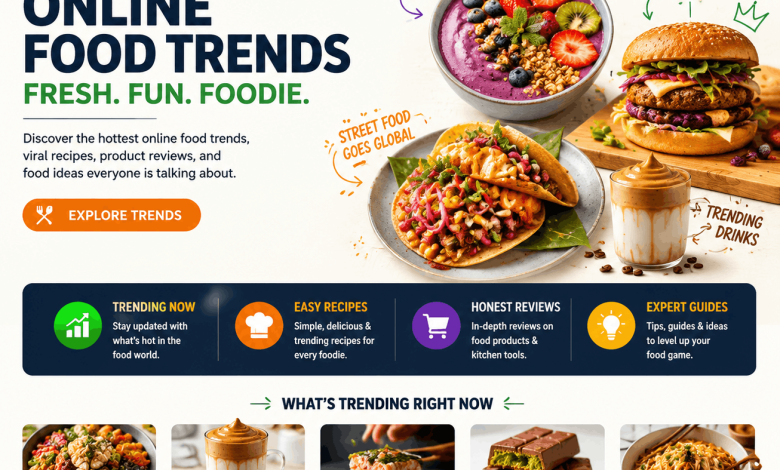
You scroll through your phone, see someone drizzle hot honey over fried chicken, and twenty minutes later you’re checking if you have the ingredients to try it yourself. That’s not an accident. It’s how online food trends actually work, and food blogs like jalbiteblog are part of a much bigger ecosystem where social platforms, home cooks, and content creators shape what ends up on people’s plates.
This article breaks down how online food trends actually spread, how social media shapes what you crave and cook, and how to tell a genuinely useful recipe source from one that’s just chasing clicks.
How Online Food Trends Actually Develop
Most viral food trends follow a similar path. Someone posts a dish, whether it’s a home cook, a chef, or a content creator, and the format is usually simple: a short video, a striking visual, or an unexpected flavor combination that’s easy to replicate. If it catches on, other creators start posting their own versions, each adding a small twist, and the dish spreads across platforms faster than a traditional recipe ever could through a cookbook or magazine.
Baked feta pasta is a well-documented example. It started as a Finnish recipe blog post, got picked up and shared widely on social media around 2019, and within weeks it was showing up in kitchens and news coverage across multiple countries. That pattern, a niche recipe suddenly hitting mainstream attention through repeated sharing, is typical of how food trends move online today, whether the dish is a pasta bake, a coffee whipped into a cloud, or a specific way of plating a bowl.
How Social Media Shapes What You Choose to Eat
Social media doesn’t just show you food. It changes the criteria you use to decide what looks appealing in the first place. A dish that photographs or films well, with bright colors, satisfying texture, or a dramatic cheese pull, tends to spread faster than something that might taste just as good but doesn’t translate to a short video.
This has real effects on restaurants and home cooking alike. Restaurants have adjusted menu presentation with visual appeal in mind, knowing dishes are likely to be photographed and shared. At home, people increasingly discover what to cook not from a cookbook or a parent’s recipe box, but from a video that autoplays while they’re doing something else entirely. Neither approach is better or worse on its own, but it’s worth recognizing how much influence a fifteen-second clip can have on a dinner decision.
Short-Form Video and the Speed of Food Trends
Platforms built around short video content compress the traditional trend cycle. A recipe idea that once took months to spread through word of mouth or print media can now reach a wide audience within days. That speed is part of the appeal, but it also means trends fade quickly, and what feels essential to try this month may barely register a few months later.
How People Discover Recipes and Dining Ideas Online
Recipe discovery today happens across several overlapping channels, and most people use more than one without thinking about it as a deliberate strategy.
- Short-form video platforms, where a recipe is demonstrated visually in real time, often with minimal text.
- Food-focused blogs, including sites like jalbiteblog, which typically offer full written recipes, ingredient lists, and step-by-step instructions rather than just a quick visual.
- Search engines, when someone has a specific ingredient or craving and wants a direct, detailed answer.
- Recommendation and review apps, used more for deciding where to eat out than what to cook.
- Word of mouth and personal networks, which still play a role even as digital discovery has grown, particularly for family recipes and regional dishes.
Each of these serves a slightly different purpose. A video might spark the initial interest, while a written blog post is often what someone turns to when they actually need exact measurements and steps.
How to Evaluate Food Blogs and Influencer Recommendations
Not every food blog or influencer account offers the same level of reliability, and a few checks can help you figure out which sources are actually worth trusting with your grocery list.
- Look for tested, specific instructions. A trustworthy recipe includes precise measurements, cook times, and notes on common mistakes, not just a vague description of the process.
- Check whether the source has a consistent track record. A blog or account with a real history of recipes, rather than a single viral post, is generally a stronger signal of ongoing quality.
- Be cautious of extreme or unsupported claims. Phrases like “the only recipe you’ll ever need” or specific, uncited popularity statistics are marketing language, not evidence.
- See if other cooks have tried it. Comments, ratings, or independent recreations of a recipe on other platforms can tell you whether it actually works as described.
- Separate sponsored content from genuine recommendations. Many creators disclose paid partnerships, and it’s worth noting when a glowing review is also an advertisement.
Real, Documented Food Trends Worth Knowing About
A few food trends have clear, traceable origins worth understanding, since they illustrate how this cycle actually plays out.
- Dalgona coffee, a whipped instant coffee drink, spread rapidly during 2020 as people spent more time at home experimenting with simple recipes using pantry staples.
- Baked feta pasta, mentioned earlier, moved from a personal blog to widespread home cooking and mainstream food media coverage within a matter of weeks.
- Girl dinner, a term used to describe informal, snack-style meals assembled from whatever’s on hand, became a widely used framing device across social platforms for casual, low-effort eating.
What connects these examples isn’t a single platform or blog. It’s the same underlying pattern: a simple, visually shareable idea, picked up and repeated by enough people to shift briefly into the mainstream.
Frequently Asked Questions About Online Food Trends
Why do some recipes go viral while others don’t?
Recipes tend to spread when they’re visually striking, simple enough to replicate quickly, and easy to demonstrate in a short video or photo. A dish that’s delicious but visually unremarkable often gets far less social media attention regardless of taste.
How has social media changed the way people cook at home?
Many people now discover recipes primarily through short videos and food blogs rather than cookbooks or family recipes alone. This has made recipe discovery faster and more visual, while also shortening how long any single trend stays popular.
Is jalbiteblog a major or well-known food platform?
There’s no independently verified evidence establishing jalbiteblog as a widely recognized or dominant platform in online food content. It functions as one of many food-focused blogs covering recipes and food trends, alongside numerous similar sites.
How can I tell if a food trend is worth trying?
Look for a recipe with specific, tested instructions and independent confirmation from other cooks who’ve made it, rather than relying on a single viral post. Trends that hold up under repeated testing tend to have more consistent instructions across sources.
Do food influencers get paid to promote certain trends or products?
Yes, sponsored content is common in food influencer marketing, and many creators are required to disclose paid partnerships. Checking for disclosure labels can help you separate a genuine recommendation from a paid promotion.
Why do food trends fade so quickly?
Short-form platforms move attention rapidly from one idea to the next, which compresses how long any single trend holds public interest compared to trends that spread through slower, traditional media. What feels essential one month often fades from feeds within a few weeks.
Cook What Actually Works for You
Online food trends move fast, shaped by short videos, visual appeal, and how easily a dish spreads across platforms rather than by taste alone. Whether you’re browsing a blog like jalbiteblog or scrolling a video feed, checking for specific instructions and a real track record will serve you better than chasing whatever looks trendiest this week.