

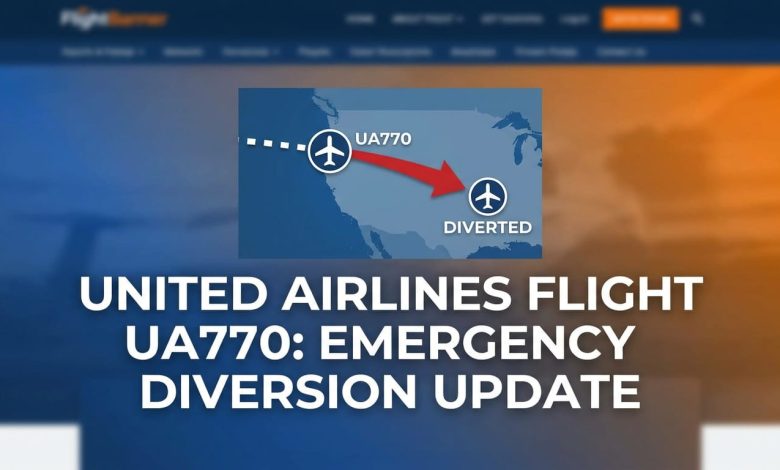
United Airlines Flight UA770 Emergency Diversion: What Really Happened
On May 27, 2025, United Airlines Flight UA770 declared a mid-air emergency and diverted from its scheduled Barcelona-to-Chicago route to London Heathrow Airport instead. The United Airlines Flight UA770 emergency diversion made headlines mostly because of how routine it turned out to be: no injuries, no dramatic depressurization, and a safe landing that showed the aviation safety system working the way it’s designed to. If you’re trying to piece together what happened on board, why the crew chose to divert, and what it means for passenger rights, here’s what’s confirmed and what’s still murky.
What Happened During the United Airlines Flight UA770 Emergency Diversion
Flight UA770, a Boeing 787-9 Dreamliner registered N26902, departed Barcelona El Prat Airport as a normal transatlantic service bound for Chicago O’Hare. Roughly 90 minutes into the flight, while cruising near 37,000 feet over Europe, the crew squawked 7700, the universal transponder code pilots use to signal a general emergency to air traffic control. Air traffic controllers cleared the airspace ahead of the aircraft and coordinated an expedited path to London Heathrow, where the plane landed without incident.
United hasn’t released a detailed public breakdown of the exact technical trigger, and early reporting on the cause varies. The most consistent thread points to a warning tied to the cabin’s pressurization system, though there’s no indication oxygen masks deployed or that cabin pressure actually dropped. Passengers who described the flight afterward said the descent and diversion felt controlled rather than chaotic, and the crew kept the cabin informed as the aircraft changed course toward Heathrow. After landing, United arranged hotel rooms, meal vouchers, and rebooking for passengers to continue on to Chicago.
It’s worth being upfront that a lot of what’s circulating online about this flight comes from sites recycling the same handful of details with varying levels of accuracy, so treat any hyper-specific claims (exact passenger counts, gate numbers, and so on) with a healthy amount of skepticism unless they trace back to United or an official aviation source.
What Counts as an Emergency Diversion
A diversion happens any time a flight lands somewhere other than its scheduled destination. Not every diversion rises to the level of a declared emergency. Sometimes it’s precautionary, like a fuel stop after a long holding pattern. Other times, as with UA770, a pilot squawks 7700 and gives the flight priority handling from air traffic control.
Industry tracking data puts diversions at roughly 0.2% to 0.3% of flights. That sounds small, but tens of thousands of flights cross the globe daily, so it adds up to hundreds of diversions every day worldwide.
Diversion vs. Emergency Landing
People use these terms interchangeably, but they don’t mean the same thing. A diversion means the plane lands at a different airport than planned, which is exactly what happened when UA770 touched down in London instead of Chicago. An emergency landing implies the situation is urgent enough that normal procedures get compressed or skipped. A flight can divert without ever declaring an emergency, and a plane can make an emergency landing at its original destination without diverting anywhere.
Common Reasons Pilots Divert
Pilots don’t divert on a whim. The decision follows a structured risk assessment, and it almost always comes down to one of a handful of triggers.
Severe weather: Thunderstorms, blizzards, or dense fog at the destination can make landing unsafe, so crews reroute to clearer skies.
Technical or mechanical issues: Warning lights for hydraulics, avionics, engines, or cabin pressurization the category UA770 appears to fall into prompt a precautionary landing so maintenance crews can inspect the aircraft.
Medical emergencies: A passenger or crew member having a stroke, severe allergic reaction, or going into labor often forces an unscheduled landing near appropriate medical care.
Security concerns: Unruly passengers, threats, or suspicious behavior can lead a captain to land at the nearest suitable airport and involve law enforcement.
Fuel and airspace issues: Extended holding patterns, airport closures, or airspace restrictions sometimes leave a flight without enough fuel to reach its original destination safely.
How Pilots Decide Where to Land
The pilot-in-command makes the final call, but it’s rarely a solo decision. Dispatchers, air traffic control, and airline operations centers weigh in on which airport can handle the aircraft type, has the right runway length, and offers the medical or maintenance support the situation calls for. For UA770, that meant passing over closer options in favor of Heathrow, a major hub with the infrastructure to handle a widebody aircraft and get passengers rebooked quickly. Proximity matters, but it’s not the only factor a closer airport with no available gate or limited emergency coverage can get passed over for one a little farther away.
What Happens Onboard During a Diversion
For passengers, the experience usually starts with an announcement. The crew explains what’s happening in general terms, gives an estimated new arrival time, and prepares the cabin for landing. When a mechanical fault or pressurization concern is involved, as it reportedly was on UA770, pilots may activate that squawk 7700 code, prompting controllers to clear airspace ahead of the aircraft and stage emergency crews near the runway as a precaution.
That last part is often the most alarming for passengers watching from the window. Seeing fire trucks lined up on the tarmac can rattle even seasoned travelers, but in most cases it’s simply protocol ground crews respond any time a flight declares an emergency, regardless of how minor the underlying issue turns out to be. It’s a built-in layer of caution, not a sign that disaster was narrowly avoided.
What Happens After the Plane Lands
Landing safely is just the first step. What happens next depends heavily on why the flight diverted in the first place.
Mechanical or technical issue: Maintenance teams inspect the aircraft on-site. If repairs can’t happen quickly, the airline arranges a replacement plane or rebooks passengers on other flightswhich is what United did for UA770 passengers stuck in London instead of Chicago.
Medical emergency: Local emergency responders take over care for the affected passenger, and the flight typically continues to its original destination once cleared.
Weather or airspace closure: Crews wait for conditions to clear, then either continue the flight or cancel it depending on crew duty-time limits and aircraft scheduling.
Security incident: Law enforcement boards the aircraft and removes the disruptive passenger before the flight resumes.
Passengers often remain onboard while airline staff figure out next steps, especially if the delay is expected to be short. For longer disruptions, you’ll typically deplane into the terminal while the airline sorts out rebooking, as UA770 passengers did in London.
Your Rights After the United Airlines Flight UA770 Emergency Diversion
Passenger rights depend heavily on where you’re flying from and which rules apply. UA770’s situation is a useful illustration because it departed from an EU airport (Barcelona) on a US carrier, which puts it under EU261 jurisdiction regardless of United’s nationality.
Under EU261 (and the UK’s near-identical UK261), passengers on eligible flights can claim compensation of up to €600 if a diversion delays their arrival by three hours or more, provided the cause was within the airline’s control. Mechanical and technical problems typically qualify for compensation. Severe weather, security threats, and medical emergencies usually fall under “extraordinary circumstances,” which exempt the airline from paying compensation, though passengers are still entitled to meals, accommodation, and rebooking. Whether UA770 passengers had a valid compensation claim would come down to the final arrival delay in Chicago and how the cause gets classified something only United or a claims specialist could confirm with certainty.
In the United States, the Department of Transportation strengthened passenger protections in April 2024. Airlines must issue automatic cash refunds, not travel credits, when a flight is significantly changed or canceled and a passenger chooses not to travel. A change counts as significant if arrival time shifts by more than three hours domestically or six hours internationally, or if a passenger is rerouted through a different airport which describes exactly what happened to travelers headed to Chicago who ended up in London. All ten major U.S. carriers have also committed to free rebooking on their own airline when a delay stretches past three hours, along with meal vouchers. What the U.S. doesn’t require is cash compensation simply for the inconvenience of a diversion, unlike the EU261 framework.
When You’re Entitled to Compensation vs. Just Assistance
The dividing line almost always comes down to fault. If a mechanical issue the airline should have caught causes your diversion, you have a stronger case for compensation under EU261-style rules. If the cause was a medical emergency, bad weather, or another passenger’s behavior, you’re generally entitled to care and rebooking, but not a compensation payout.
What to Do If Your Flight Diverts
Keep every receipt for meals, transportation, or hotel stays you pay for out of pocket. Note the time of announcements and any information the crew shares about the reason for the diversion. If the airline offers a travel credit instead of a refund and you’d rather have cash, ask for the refund directly airlines can’t force credits on you when a refund is owed.
Frequently Asked Questions About the UA770 Emergency Diversion
What caused the United Airlines Flight UA770 emergency diversion?
Reports point to a warning related to the aircraft’s cabin pressurization system, though United hasn’t confirmed the precise technical cause publicly. The crew squawked 7700 and diverted to London Heathrow as a precaution.
Was anyone hurt during the UA770 diversion?
No injuries were reported, and there’s no indication oxygen masks deployed or that cabin pressure actually dropped during the flight.
What is an emergency diversion in aviation?
An emergency diversion happens when a pilot lands the aircraft at an airport other than the scheduled destination because of a safety concern. Triggers range from mechanical warnings and medical emergencies to severe weather or security threats. The pilot coordinates with air traffic control to select the nearest suitable airport equipped to handle the situation.
Ready to Check Your Own Flight’s Rights
Diversions like UA770’s are unsettling in the moment, but they exist because the aviation safety system works the way it’s supposed to: catch a problem early, land somewhere safe, sort it out on the ground. The part that actually affects your wallet and your schedule comes down to where you were flying and what caused the detour. Before your next trip, it’s worth reading up on baggage delay compensation, understanding EU261 refund rules, or bookmarking a guide to airline hotel and meal voucher policies, so you’re not scrambling to figure out your rights mid-layover.