
TYou spotted a ring with a warm, golden-yellow stone at a jewelry counter and asked yourself what gem is yellow, since it clearly wasn’t a plain topaz or citrine you’d seen before. That question has more than one answer, since several different gemstones share that same sunny color range. This guide walks through the main yellow gemstones, what separates them, and how to pick the right one for your budget and style.
The Most Common Yellow Gemstones
Yellow shows up across a surprising number of gem families, each with its own price point, durability, and origin story.
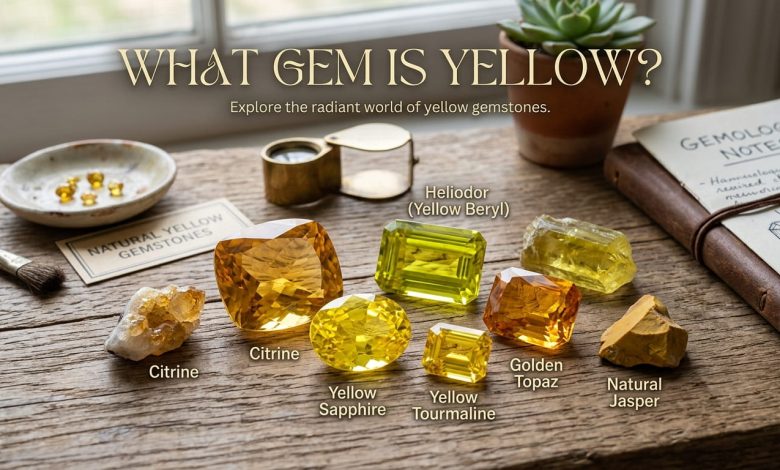
Citrine is the most widely available yellow gemstone, prized for its affordability and warm, honey-toned color. Most citrine on the market today is actually heat-treated amethyst, since natural citrine is fairly rare.
Yellow sapphire ranks among the more durable and valuable options, scoring a 9 on the Mohs hardness scale, just behind diamond. It’s often chosen for engagement rings and daily-wear jewelry because it resists scratching so well.
Yellow topaz occurs naturally in a range of yellow shades, from pale lemon to deep golden-brown. It’s softer than sapphire, so it suits pendants and earrings better than rings that see daily wear.
Yellow diamond carries the highest price tag on this list, with color grading that ranges from faint yellow to vivid “canary” tones. The more saturated and even the color, the higher the value.
Heliodor, a yellow variety of beryl (the same mineral family as emerald and aquamarine), has a clean, golden-green tint that’s less common in mainstream jewelry but popular with collectors.
Amber isn’t a mineral at all, it’s fossilized tree resin, but it produces some of the warmest, most recognizable yellow-orange tones used in jewelry.
Yellow zircon offers a bright, high-luster yellow at a fraction of the cost of yellow diamond, making it a popular budget-friendly alternative for people who want sparkle without the price.
Comparing Yellow Gemstones
| Gemstone | Hardness (Mohs) | Typical Price Range | Best For |
| Citrine | 7 | Budget-friendly | Everyday jewelry, larger statement pieces |
| Yellow Sapphire | 9 | Mid to high | Engagement rings, daily wear |
| Yellow Topaz | 8 | Mid-range | Earrings, pendants, occasional wear |
| Yellow Diamond | 10 | High to very high | Engagement rings, investment pieces |
| Heliodor | 7.5 to 8 | Mid-range | Collector pieces, statement jewelry |
| Amber | 2 to 2.5 | Budget-friendly | Pendants, brooches, low-impact wear |
| Yellow Zircon | 6 to 7.5 | Budget to mid-range | Earrings, occasional-wear rings |
How to Choose the Right Yellow Gemstone
Your choice usually comes down to three factors: how often you’ll wear the piece, your budget, and whether you want a natural or lab-created or treated stone.
For daily wear, like an engagement ring or a ring you won’t take off, yellow sapphire is the strongest pick, since its hardness holds up to daily bumps and scratches far better than topaz or amber.
For occasional wear, like earrings or a necklace, softer stones like citrine, topaz, or amber work well, since they’re not exposed to the same daily wear and tear as a ring.
To do investment or heirloom pieces, yellow diamond carries the strongest resale value and grading standards, though it comes at a significantly higher price than the other options on this list.
What Affects the Price of a Yellow Gemstone
A few factors drive price differences between yellow gemstones, beyond just which type you choose.
- Treatment status: Untreated, natural stones cost more than heat-treated or irradiated versions of the same gem.
- Color saturation: Deeper, more even yellow tones command higher prices than pale or uneven color.
- Origin: Certain sources, like Ceylon for sapphires, carry a reputation premium even when the stone’s actual quality is comparable to other origins.
- Clarity and cut: Fewer visible inclusions and a well-proportioned cut both increase a stone’s value, regardless of which gem family it belongs to.
FAQS
What is the yellow gemstone called?
There isn’t one single yellow gemstone. Citrine, yellow sapphire, yellow topaz, yellow diamond, heliodor, amber, and yellow zircon are all distinct yellow gemstones, each with different hardness, price, and origin.
What is the most valuable yellow gemstone?
Yellow diamond typically holds the highest value among yellow gemstones, especially in vivid, saturated color grades. Yellow sapphire follows as a more affordable option that still offers strong durability and value.
Is citrine the same as yellow topaz?
No, citrine and yellow topaz are different minerals with different chemical compositions, despite looking similar in color. Citrine is a variety of quartz, while topaz belongs to its own separate mineral family.
What yellow gemstone is best for an engagement ring?
Yellow sapphire is generally the best choice for an engagement ring, since its hardness (9 on the Mohs scale) holds up well to daily wear. Yellow diamond also works well but comes at a significantly higher price point.
Are yellow gemstones natural or usually treated?
Both exist, but treatment is extremely common. Most citrine on the market is heat-treated amethyst, and many yellow sapphires and topaz stones undergo heat treatment to enhance or stabilize their color.
What’s the difference between citrine and yellow zircon?
Citrine is a variety of quartz with a softer hardness rating (7) and a warmer, honey-toned color. Yellow zircon is a separate mineral with higher brilliance and sparkle, closer in appearance to diamond, though softer and less durable.
Can amber really be considered a gemstone?
Yes, amber is classified as an organic gemstone since it comes from fossilized tree resin rather than a mineral. It’s valued for its warm color and is commonly used in pendants, beads, and other low-impact jewelry.