127.0.0.1:8080: 10 Essential Facts, Fixes & Common Issues

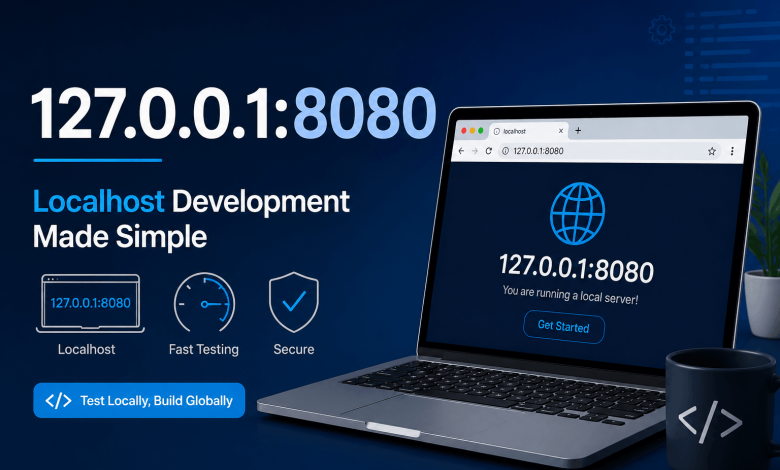
You typed a web address, launched a local app, or checked a router setting, and 127.0.0.1:8080 showed up somewhere on your screen. Maybe it worked fine. Maybe you got a “connection refused” error instead. Either way, that string of numbers doesn’t explain itself, and most explanations online jump straight into developer jargon without answering the basic question: what is this, and why am I seeing it? This page breaks down what 127.0.0.1:8080 actually is, why it’s different from a random port number, where it commonly shows up, and exactly what to do if it’s not working the way you expected.
What Is 127.0.0.1?
127.0.0.1 is a loopback address. It’s a special IP reserved on every device that runs TCP/IP networking, which covers pretty much every computer, phone, and router in use today.
When a program sends data to 127.0.0.1, that data never leaves your device. It doesn’t touch your router, your ISP, or the internet. It loops right back to the machine that sent it, which is where the name comes from.
You’ll also see this address written as “localhost.” Both point to the same place. Typing either one into a browser tells your device to talk to itself instead of reaching out to a remote server.
Why Every Machine Has a Loopback Address
Operating systems and developers rely on 127.0.0.1 constantly. It lets internal processes communicate without touching a real network connection, and it gives developers a safe space to run and test software before anyone else sees it.
You can think of it as an internal intercom system. Messages sent on it never leave the building.
What Does Port 8080 Actually Mean?
If 127.0.0.1 is the address of your machine, 8080 is the specific door that traffic uses to get in. Ports let one device run dozens of services at once, each listening on its own number so traffic doesn’t get mixed up.
Port 8080 has a specific reputation, and it’s different from most other numbers you’ll come across. It’s registered as an alternate HTTP port, meaning it’s the go-to backup when port 80 (the standard web traffic port) is already taken or intentionally avoided.
That’s why 8080 shows up so often. It’s not random. Software picks it on purpose because it’s a well-known, widely recognized substitute for standard web traffic.
Where You’ll Commonly See Port 8080 in Use
A handful of tools and setups default to this port specifically:
- Apache Tomcat, which uses 8080 as its standard port straight out of the box
- Jenkins, the automation server, which also defaults to 8080 for its web interface
- Many home routers and modems, which serve their admin login page on this port
- Local development servers and proxy tools that avoid port 80 to prevent conflicts with other web services
- Docker containers, which frequently map internal web services to 8080 on the host machine
Because so many different tools default to the same number, it’s common to run into port conflicts if you try to run two of these at once without changing the configuration.
Why Did 127.0.0.1:8080 Show Up on Your Screen?
The context you saw it in usually explains why it’s there.
You Saw It in a Browser Address Bar
If http://127.0.0.1:8080 appeared in your browser, something on your own machine is serving a webpage on that port. This is standard behavior for local development environments, admin dashboards for installed software, and setup wizards for apps that use a browser-based interface instead of a native one.
You’re viewing content hosted locally. Nothing about this involves the public internet.
You Saw It on Your Router’s Login Page
Some routers open their configuration page on 127.0.0.1:8080 or ask you to enter that address manually when you’re troubleshooting a network from the same machine the router software is installed on. This is separate from the router’s actual local network IP (something like 192.168.1.1), which is what most people use to log in from a browser.
You Saw It in a Terminal or Startup Log
Anyone running Tomcat, Jenkins, or a local Node or Python server sees a line like “Listening on 127.0.0.1:8080” the moment the service starts. That line is confirmation the service launched correctly and is telling you exactly where to find it.
Is 127.0.0.1:8080 Safe?
The loopback address itself carries no risk. Since 127.0.0.1 only works on the device it’s running on, nobody outside your machine can reach anything hosted there unless they already have access to your computer directly.
A few practical points still matter here.
Nobody Else Can Reach Your Localhost
If someone on a different device tries to open 127.0.0.1:8080, they’ll land on whatever is running on their own machine on that port, not yours. Sharing something running on your localhost with another person requires your device’s actual network IP, or a tunneling tool built for that purpose.
Port 8080 Can Still Be Abused
The port itself isn’t dangerous, but attackers occasionally target it because it’s so commonly open on servers, routers, and IoT devices for admin panels. Leaving an admin interface exposed on 8080 with default credentials is a known weak point, especially on routers and smart devices that ship with factory logins nobody bothers to change.
If you’re unsure what’s using this port on your own machine, you can check directly.
On Windows, open Command Prompt and run:
netstat -ano | findstr :8080
On Mac or Linux, use:
lsof -i :8080
Both commands return a process ID tied to whatever’s using the port, which you can then look up in Task Manager or Activity Monitor.
What to Do If Port 8080 Is Already in Use
This is one of the most common headaches developers run into with this specific port, mostly because so many tools try to claim it by default.
If you’re getting an “address already in use” error, work through this in order:
- Run the netstat or lsof command above to see what’s currently holding the port
- Close that process if you don’t need it running right now
- If you do need both services active, change one of them to a different port through its config file or startup command
- Restart the service and confirm it launches without the same error
Most frameworks make this a one-line fix. Tomcat’s port setting lives in its server.xml file, Jenkins can be launched with a –httpPort flag, and most Node or Python frameworks accept a port argument directly at startup.
Can You Access 127.0.0.1:8080 From Another Device?
Not directly, no. The loopback address only resolves to the machine running the service. To reach a local server on 8080 from your phone or another computer on the same network, you’d need to:
- Find the host machine’s actual local network IP using ipconfig (Windows) or ifconfig/ip addr (Mac/Linux)
- Confirm the service is configured to listen on all interfaces (often written as 0.0.0.0) rather than only localhost
- Check that your firewall allows inbound traffic on port 8080
Tools like ngrok can also generate a temporary public URL tunneling to your local port 8080, which developers use to demo a project without deploying it anywhere first.
Frequently Asked Questions About 127.0.0.1:8080
What is 127.0.0.1?
127.0.0.1 is the loopback IP address, also known as localhost. It refers to your own machine. Traffic sent here never reaches your local network or the internet, no matter what’s running on it.
What is port 8080 used for?
Port 8080 is the standard alternate for HTTP web traffic when port 80 is unavailable or intentionally avoided. Tomcat, Jenkins, many router admin panels, and countless local development servers use it by default.
Why do so many apps use the same port number?
Port 8080 is a widely recognized, registered alternate for web traffic, so software developers default to it rather than picking a random number. This convenience is exactly why port conflicts happen so often between different local tools.
Is 127.0.0.1:8080 the same as my router’s IP address?
No. 127.0.0.1 only refers to your own device. Your router has a separate address, usually something like 192.168.1.1 or 192.168.0.1, which is what most people use to open router settings from any device on the network.
Why does my browser say “127.0.0.1 refused to connect” on port 8080?
This means nothing is currently listening on that port. Either the service you expected hasn’t started yet, it crashed, or it’s running on a different port than you assumed. Check your terminal or app logs to confirm the actual port in use.
Can someone hack my computer through port 8080?
Not through the loopback address alone, since outside devices can’t reach it. Risk comes in when a service on port 8080 is deliberately exposed to your local network or the internet with weak or default login credentials, which is a known issue on some routers and IoT devices.
How do I change which port my local server uses?
Most frameworks accept a port setting in their configuration file or as a startup flag. Tomcat uses server.xml, Jenkins accepts –httpPort=XXXX, and Node or Python servers typically take a port argument directly in the code or command line.
Is 8080 always used for Tomcat or Jenkins specifically?
It’s the default for both, but it’s not exclusive to either one. Any application can be configured to use port 8080, which is exactly why conflicts happen when two unrelated tools both try to claim it at once.
Now You Know What This Address Is Doing
127.0.0.1:8080 means your own machine is running a service on the standard alternate web port, and nothing about that address itself is dangerous. Whether you’re troubleshooting a router login, running Tomcat or Jenkins, or fixing a port conflict between two local tools, you now know exactly what’s happening and how to check it yourself.
If you want to go deeper, check out our guides on how IP addresses work, understanding common port numbers, and setting up a local development environment from scratch. These fill in the broader networking picture that makes addresses like this one make complete sense.