

Picture this: you’re setting up a freelance rate, comparing job offers, or just trying to figure out if your salary actually adds up to what you thought it would per hour. The math gets confusing fast once you start asking how many hours are in a year, and it gets even trickier once you narrow that down to a working year instead of a calendar year. This guide breaks down every version of that number you’ll need — calendar hours, work hours, work weeks, and work days — so you can use the right one for the right situation. By the end, you’ll know exactly how these figures are calculated and how to apply them to your own paycheck, project, or planning.
How Many Hours Are in a Calendar Year
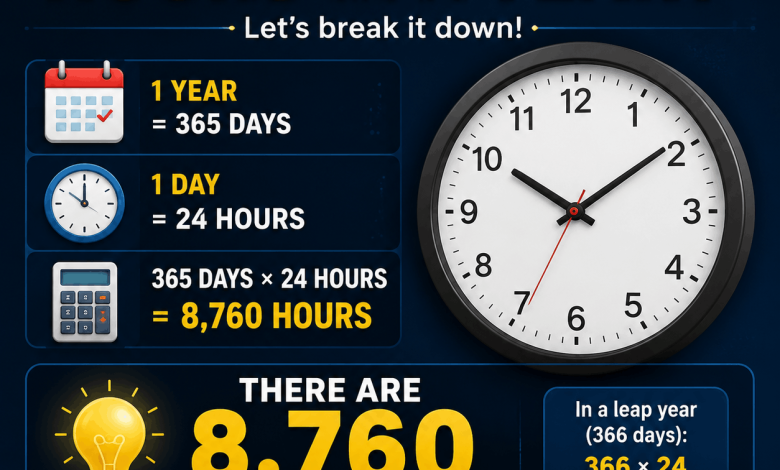
A standard calendar year has 365 days. Multiply that by 24 hours a day, and you get 8,760 hours in a year.
Leap years add one extra day, bringing the total to 8,784 hours. That happens roughly once every four years, most recently in 2024, with the next one coming up in 2028.
This number represents every hour that exists in the year, not just the ones you spend working. It’s the figure you’d use for things like calculating annual subscription costs per hour, or working out uptime percentages for a server or a business.
How Many Work Hours Are in a Year
Now for the number most people actually search for: how many work hours in a year. The standard answer used across payroll departments and HR systems in the United States is 2,080 hours.
Here’s the math behind it:
- A typical full-time schedule is 40 hours a week
- There are 52 weeks in a year
- 40 x 52 = 2,080 hours
That 2,080 figure assumes you work every single week with no time off. In reality, most employees get paid holidays and vacation days, which lowers the actual hours worked, even though salaries are still often calculated using the 2,080 baseline.
Work Hours in a Year After Subtracting Holidays and PTO
If you want a more realistic picture, subtract time off from that base number. The average U.S. worker gets around 10 paid holidays and 10 vacation days a year, totaling 20 days off.
- 20 days x 8 hours = 160 hours
- 2,080 – 160 = 1,920 actual work hours in a year
This is closer to what most salaried employees really clock, and it’s a better number to use if you’re calculating your true hourly rate from an annual salary.
How Many Work Weeks Are in a Year
A calendar year has 52 weeks and one extra day (52.14 weeks, to be exact). For payroll and scheduling purposes, most businesses round this to 52 work weeks in a year.
If your job includes two weeks of vacation, your actual working weeks drop to 50. This matters when you’re negotiating a salary, since a “52-week year” and a “50-week working year” produce different hourly rate calculations for the same annual pay.
How Many Working Days Are in a Year
A basic five-day workweek gives you 260 working days a year (5 days x 52 weeks). That number shifts slightly depending on how the calendar falls and how many holidays land on weekdays versus weekends.
After removing the 10 federal holidays observed by most U.S. employers, the realistic number lands closer to 250 working days a year. Some employers add company-specific closures, like the day after Thanksgiving or the last week of December, which can push that number down to around 240 to 248 days.
Working Days in a Year by Country
Working days vary quite a bit by country, mostly based on how many public holidays each nation observes:
- United States: around 250 working days, 10 federal holidays
- United Kingdom: around 253 working days, 8 bank holidays
- Canada: around 251 working days, varies by province
- Australia: around 251 working days, plus state-specific holidays
- India: around 245 working days, with regional and religious holidays factored in
If you’re comparing job offers across borders or managing a remote team spread across countries, these differences affect how you calculate contractor rates or project timelines.
How Many Work Hours Are in a Month
Break the annual number down further, and the average work month comes out to about 173.33 hours (2,080 divided by 12).
Since months don’t have equal numbers of weekdays, this fluctuates. A 31-day month with five weekends might give you 23 working days, while a shorter month like February could give you as few as 19 or 20. Payroll systems typically use the flat 173.33 average to keep monthly salary calculations consistent, even though the real number shifts month to month.
Why Knowing These Numbers Actually Matters
These figures aren’t just trivia. People use them for real financial and planning decisions, and getting them wrong can cost money or create scheduling headaches.
- Freelancers and contractors use annual work hours to set an hourly rate that matches their target income.
- HR teams use them to calculate PTO accrual, overtime thresholds, and salary-to-hourly conversions.
- Project managers use working days to build realistic timelines and deadlines.
- Remote and international teams use country-specific working day counts to schedule meetings and deliverables fairly across time zones.
- Anyone comparing a salaried job to an hourly one needs the real work hours per year to make an honest comparison.
If you’ve ever wondered why a $60,000 salary doesn’t always feel like $28.85 an hour in your pocket (60,000 / 2,080), taxes and benefits aside, this is the math that explains the gap.
Frequently Asked Questions About How Many Hours Are in a Year
How many hours are in a year?
A standard calendar year has 8,760 hours, based on 365 days multiplied by 24 hours. A leap year has 8,784 hours because it includes one extra day.
How many work hours are in a year?
A full-time work year is typically 2,080 hours, based on a 40-hour workweek across 52 weeks. After subtracting typical holidays and vacation time, the real number most employees work lands closer to 1,920 hours.
How many working days are in a year?
Most calendar years have 260 potential working days, based on five weekdays across 52 weeks. Once federal holidays are removed, the realistic figure for U.S. workers drops to around 250 days.
How many work weeks are in a year?
A calendar year contains 52 work weeks, plus a fraction of an extra day. Employees with two weeks of paid vacation effectively work 50 weeks a year.
How many hours in a work month?
An average work month contains about 173.33 hours, calculated by dividing the 2,080 annual work hours by 12. The actual number changes slightly depending on how many weekdays fall in a given month.
How do you calculate hourly pay from an annual salary?
Divide your annual salary by 2,080, the standard number of work hours in a year. For example, a $50,000 salary divided by 2,080 comes out to roughly $24.04 an hour before taxes.
Does a leap year add extra work hours?
Not directly for salaried employees, since most companies still calculate pay based on the standard 2,080-hour year. Hourly workers, however, may clock one additional working day if the extra date in a leap year falls on a weekday.
How many weekdays are in a year?
A typical year has 261 or 262 weekdays, depending on how the calendar falls, before any holidays are subtracted. This differs slightly from the “260 working days” estimate because it doesn’t yet account for holidays taken off.
What is the difference between a calendar year and a working year?
A calendar year counts every day and hour that exists, totaling 365 days and 8,760 hours. A working year only counts the days and hours an employee actually works, which is a much smaller number once weekends, holidays, and vacation are removed.
Put These Numbers to Work
Knowing the real difference between calendar hours, work hours, and working days puts you in a much better position to set rates, plan projects, and compare job offers accurately. The 2,080-hour standard is a useful starting point, but your actual working year is almost always a bit shorter once time off is factored in. Next time you’re setting a freelance rate or reviewing a job offer, come back to these numbers so your math lines up with reality instead of a rough guess.