
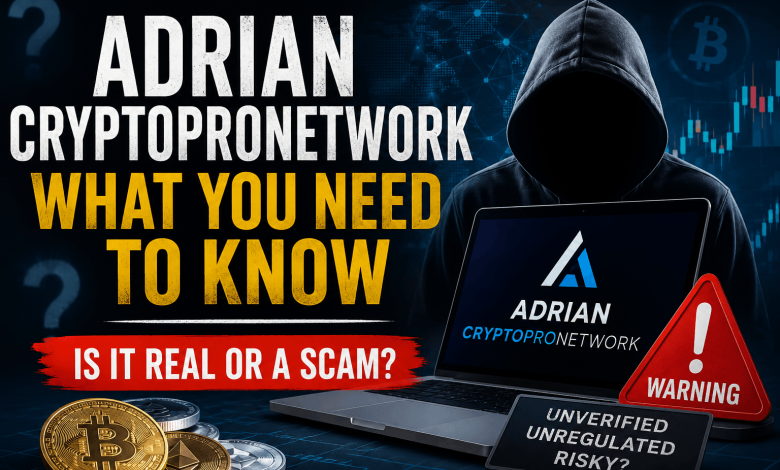
You typed “adrian cryptopronetwork” into Google because you saw the name somewhere: a comment, a social post, maybe a link promising trading signals or crypto insights. Now you want a straight answer. Is this a real company? A real person? Something you should sign up for, or something you should avoid?
Here’s the honest answer: adrian cryptopronetwork isn’t a documented company, exchange, or regulated financial platform. It’s a phrase, and depending on which article you read, that phrase gets attached to a wildly different story. This guide walks through what’s actually out there, why the term is so hard to pin down, and exactly how to check any crypto platform or “network” before you hand over your email, your wallet address, or your money.
What Is Adrian CryptoProNetwork, Exactly?
That question has no single answer, and that’s the first red flag. Search results describe it as a blockchain network with its own token, an AI-powered trading platform, a crypto education blog, a private trading signals group, and a personal brand built around someone named Adrian. Real platforms don’t have five contradictory identities depending on which site you land on.
A legitimate exchange or blockchain project has a fixed story: a website with a team page, a whitepaper, a registered business entity, and consistent branding wherever it’s mentioned. When a name shows up attached to a different product every time you search it, you’re usually looking at content built to rank for a keyword, not a company built to serve customers.
Where the Name Actually Comes From
Most of the pages ranking for this term read like they were generated to capture search traffic rather than to document something real. They repeat the same vague phrases: “empowering traders,” “community-driven,” “AI-integrated analytics,” without linking to an actual registered platform, a named company, or a verifiable founder with a public track record.
A few of these pages do something useful: they run the term through scam-checking tools and report back a low or medium trust score, along with warnings about hidden site ownership. That’s worth paying attention to. When independent trust-scanning tools flag a domain for hidden ownership or spam signals, treat that as a serious warning, not background noise.
Red Flags That Show Up With Names Like This
Crypto “networks” built around a single first name and vague promises tend to share a pattern. Watch for these signs with adrian cryptopronetwork or anything similar:
- No registered business name. A real financial platform operates under a legal entity you can look up in a corporate registry, not just a first name and a logo.
- No regulatory license. Legitimate exchanges serving U.S. or European customers register with bodies like FinCEN, hold state money transmitter licenses, or comply with MiCA in the EU. Claims of compliance without a license number you can check mean nothing.
- Contradictory descriptions across the web. If ten articles about the same “platform” describe ten different products, that’s a sign the content exists to rank, not to inform.
- Pressure toward a private group or direct message. Any crypto contact that redirects you from a public post into a private chat before explaining what you’re actually signing up for deserves extra scrutiny.
- Guaranteed or “daily profit” language. No legitimate trading service can guarantee returns. Crypto prices swing hard, and anyone promising steady daily profit is either overselling or lying.
- A domain with a low trust score. Run any unfamiliar crypto site through a scam-checking tool before you engage with it further.
How to Verify Any Crypto Platform in Under 10 Minutes
Before you trust a name like this with your time or your money, run through these steps:
- Search the company name plus “SEC” or “FinCEN” to see if it shows up in any regulatory database. U.S. money services businesses are required to register.
- Check domain age and ownership. Tools like WHOIS lookups show how old a site is. A domain registered a few months ago claiming to be an established “network” is a mismatch worth noting.
- Run the URL through a trust-score checker. Sites like ScamAdviser give you a quick read on spam signals, hidden ownership, and reported complaints.
- Look for a real team page. Named founders with LinkedIn profiles, prior work history, and public presence outside the platform itself are a good sign. A single first name with no last name or verifiable background is not.
- Search the name plus the word “scam” or “complaint.” If forums like Reddit or Trustpilot have complaint threads, read them before you read the platform’s own marketing.
- Check for a whitepaper, if it claims to be a blockchain project. A real blockchain network publishes technical documentation you can read and, ideally, has its code available for public review.
If a platform fails more than one or two of these checks, that’s reason enough to walk away.
What Legitimate Crypto Education Actually Looks Like
Real crypto education resources share a few traits that “networks” like this one usually lack. They cite specific, checkable sources rather than vague claims. They disclose risk clearly instead of promising outsized returns. They’re transparent about who runs them, and they don’t require you to join a private chat to access basic information.
Established platforms such as Coinbase, Kraken, and Binance publish licensing information, maintain public compliance pages, and have years of trading history you can independently verify. That doesn’t make them risk-free, crypto itself remains volatile no matter which platform you use, but it does mean you’re dealing with an entity that actually exists and answers to regulators.
If You Were Sent This Link by Someone You Met Online
If someone you connected with on social media, a dating app, or a messaging platform directed you to a site or group tied to this name, slow down before sending any funds. Romance and investment scams frequently use a “mentor” figure and a private trading group to build trust before asking for money. Losing contact with the person the moment you stop investing, or being unable to withdraw funds you’ve deposited, are strong signs you’re dealing with fraud rather than a slow platform.
If you’ve already sent money, contact your bank or the platform you used to send it (wire transfer, crypto exchange, gift cards) as soon as possible, and file a report with the FTC at reportfraud.ftc.gov or the FBI’s IC3 at ic3.gov. Acting quickly sometimes makes a difference in recovering funds, especially with bank transfers caught early.
Frequently Asked Questions About Adrian CryptoProNetwork
Is Adrian CryptoProNetwork a real company?
No verified corporate registration, regulatory license, or named founder with a public track record has turned up for this term. It appears across dozens of articles with contradictory descriptions, which is typical of content built to rank in search rather than to represent an actual business.
Is Adrian CryptoProNetwork a scam?
There’s no direct proof it’s a scam, but it shows several common warning signs: vague branding, no regulatory registration, and low trust scores from scam-checking tools. Treat any request for money or private financial information tied to this name with serious caution.
Who is Adrian, the person behind CryptoProNetwork?
No public, verifiable biography exists for a person by this name connected to a real crypto company. Articles describe “Adrian” as a founder, but none link to a LinkedIn profile, prior work history, or independent confirmation.
How can I check if a crypto platform is legitimate?
Look for regulatory registration (FinCEN, SEC, or MiCA compliance in the EU), a named team with public track records, a checkable domain history, and independent reviews outside the platform’s own site. Run the domain through a trust-score tool like ScamAdviser as a quick first check.
What should I do if I already gave money to a platform like this?
Contact your bank or payment provider immediately to ask about reversing the transaction, and file a report with the FTC at reportfraud.ftc.gov and the FBI’s IC3 at ic3.gov. The sooner you report it, the better your odds of recovering funds.
Are AI-powered crypto trading tools legitimate?
Some are, but the term gets used loosely. A legitimate AI trading tool discloses its methodology, comes from a company with a verifiable track record, and never guarantees profit. Guaranteed returns are the clearest sign something is overselling what it can actually do.
Why do so many different articles describe this platform differently?
Because much of what ranks for this search term looks like it was written to capture traffic around a trending phrase rather than to document one consistent, real product. That’s why cross-checking any single article against independent sources matters so much before you trust it.
Check Before You Trust, Every Time
The pattern here is a common one in crypto: a catchy name, vague promises, and no verifiable paper trail behind it. Before you engage with adrian cryptopronetwork or any similar platform, run the domain through a trust checker, search for a regulatory license, and look for a named team you can independently confirm.