
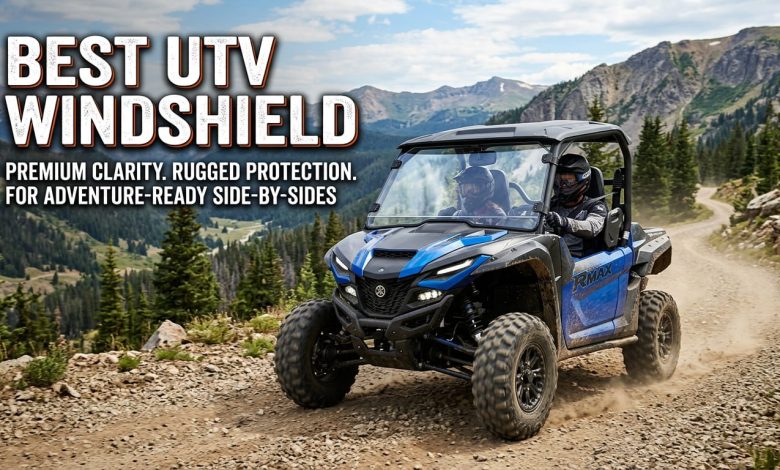
You’re halfway down a trail, dust kicking up off the tires ahead of you, and you realize you’re squinting through half-closed eyes for the third time that ride. That’s the moment most Polaris RZR and Polaris General owners start searching for the best UTV windshield instead of just living with bugs, mud, and wind chill every time they go out. This guide breaks down the windshield types, materials, and specific models worth your money, along with the tradeoffs nobody mentions in the sales copy.
Why a UTV Windshield Matters More Than You’d Think
Stock RZR and General models come with an open front end, which is fine on a warm, dry day and miserable everywhere else. A windshield cuts wind chill on cold rides, keeps mud and rocks off your face at speed, and stops the bug-in-the-teeth problem that every rider complains about eventually. It also changes how much heat builds up in the cab, so the type you pick matters as much as whether you get one at all.
The Three Windshield Materials, Explained Simply
Polycarbonate
Polycarbonate is roughly 250 times more impact resistant than glass, which makes it the go-to pick for aggressive trail riding where rocks and branches are a real concern. It’s also lighter than glass, so it won’t add noticeable weight to your machine. The tradeoff is scratch resistance. Uncoated polycarbonate scratches easily, so look for a hard coating like SuperATV’s XR Optic or EMP’s MR10 finish if you want it to stay clear past your first season.
Glass
Glass wins on optical clarity and long-term scratch resistance. If you spend a lot of time driving straight into low sun, glass cuts glare noticeably better than poly, based on what riders consistently report in owner forums. It’s heavier, pricier, and more likely to crack on a hard impact, which makes it a better fit for cruising and trail work than rock crawling or high-speed racing.
Acrylic
Acrylic sits in the middle. It’s more scratch-resistant than uncoated polycarbonate but not as tough as glass or hard-coated poly, and it’s usually the cheapest of the three. One genuine advantage: light surface scratches on acrylic can often be polished out, which isn’t true for the other two materials.
Windshield Styles and Which One Fits Your Riding
- Full windshield – Covers the entire front opening for maximum wind, rain, and debris protection. Best for cold-weather riding and highway or road-adjacent use.
- Half windshield – Blocks debris while letting airflow through the top, which helps with cab heat and fogging on warmer days.
- Flip-up or vented windshield – Adjusts between open and closed positions, giving you a full windshield for bad weather and a vented setup for dusty or hot conditions.
- Rear windshield – Reduces the vacuum effect that pulls dust forward into the cab, especially useful when running a full front windshield.
Best UTV Windshields for Polaris RZR and Polaris General
| Windshield | Material | Style | Best For |
| SuperATV Standard Polycarbonate | Hard-coated polycarbonate | Full | All-around trail protection at a moderate price |
| EMP Flip Up (MR10 coated) | Polycarbonate | Flip-up/vented | Riders who want one windshield for both hot and cold days |
| SuperATV MaxDrive Power Flip Glass | Glass | Powered flip | Riders who want glass clarity with adjustable venting |
| Double Ott Half Windshield | Polycarbonate | Half | Warm-climate riders who mainly need debris protection |
| Pro Armor Asylum | Polycarbonate | Full (cage-specific) | Owners running a Pro Armor cage system |
| EMP DOT-Rated Laminated Glass | Safety glass | Full, wiper-equipped | On-road-legal riding where state DOT rules apply |
| Kemimoto Hard-Coated Poly | Hard-coated polycarbonate | Full | Budget-focused riders who still want scratch resistance |
Fitment varies by model year and trim, so confirm your exact RZR or General year before ordering. A windshield built for a 2014 to 2018 RZR XP 1000 won’t necessarily bolt onto a newer chassis without a different mounting kit.
Best RZR Windshield vs. Best Windshield for a General
RZR owners tend to prioritize impact resistance and low weight, since RZRs see more high-speed and rock-strewn terrain. Polycarbonate with a hard coating is the more common choice here. General owners often use their machine for a wider mix of trail riding, hauling, and low-speed work, which is where a glass or acrylic option’s clarity and scratch resistance start to matter more than sheer impact strength.
If you split your time evenly between both styles of riding, a flip-up polycarbonate windshield gives you the flexibility to adjust for the moment rather than committing to one material’s tradeoffs full time.
Installation and Fitment Tips
Most aftermarket windshields, including offerings from SuperATV and EMP, arrive close to fully assembled and bolt on with clamps, gaskets, and included hardware in under an hour. A few things to check before you order:
- Confirm your exact model, trim, and year, since even small chassis changes affect fitment
- Check whether the windshield requires a specific cage system, as some cage-specific designs like Pro Armor’s Asylum only fit matching cages
- Look for a rubber seal or gasket at the base to prevent hood damage and reduce noise
- If you’re riding in a state with on-road UTV rules, check for a DOT-rated option before buying a standard trail windshield
Frequently Asked Questions About the Best UTV Windshield
What is the best material for a UTV windshield?
It depends on your riding style. Polycarbonate offers the best impact resistance for rough trail riding, glass offers the best clarity and scratch resistance, and acrylic is a budget-friendly middle ground that can be polished if scratched.
Is glass or polycarbonate better for a Polaris RZR windshield?
Polycarbonate is generally better for RZR owners doing aggressive or high-speed riding because of its impact resistance. Glass suits RZR owners who prioritize visibility and don’t want to worry about scratches over time.
Do I need a full or half windshield for my UTV?
Choose a full windshield if you ride in cold weather or want maximum protection from rain and debris. A half windshield works well in warmer climates where airflow and reduced cab heat matter more.
How much does a good UTV windshield cost?
Prices typically range from around $75 for basic unbranded polycarbonate windshields to $300 or more for glass or powered flip options from established brands. Fitment-specific and DOT-rated glass windshields sit at the higher end of that range.
Can I install a UTV windshield myself?
Yes, most aftermarket windshields are designed for owner installation and include mounting clamps, gaskets, and hardware. Installation typically takes under an hour with basic tools.
Will a windshield make my UTV cab too hot?
A full, always-closed windshield does trap more heat, especially with glass. A vented or flip-up design lets you open it up on hot days while keeping full protection available when you need it.
Are aftermarket UTV windshields DOT-approved?
Some are, but not all. If you plan to ride on public roads where DOT approval matters, confirm the specific windshield is rated for that use before you buy, since standard trail windshields typically are not.
Pick the Windshield That Matches How You Actually Ride
The right choice comes down to three questions: how rough is your typical terrain, how much do you care about optical clarity versus impact strength, and do you need to flex between hot and cold conditions. A hard-coated polycarbonate flip-up covers most riders well, while dedicated glass makes sense if clarity and long-term scratch resistance top your list.
If you’re outfitting your RZR or General beyond the windshield, check out our guides on UTV roof options and side-by-side doors and nets for the rest of your cab setup.