

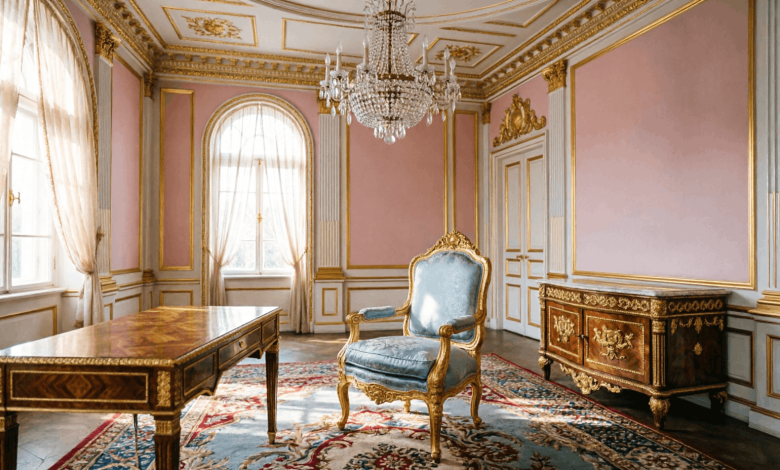
Somewhere between the gilded halls of the Winter Palace and centuries of whispered rumor, Catherine the Great’s furniture became one of the most talked-about subjects in decorative arts history. Not just because of the craftsmanship, and not entirely because of the myths either, but because the two are nearly impossible to separate. One search for Catherine the Great’s furniture and you’ll find yourself caught between serious art history and scandalous legend.
This article cuts through both. You’ll get the full picture of what her actual furniture looked like, who made it, which palaces it lived in, what materials and styles defined it, and why the myths surrounding it tell you more about political power than they do about an empress’s bedroom. Whether you’re a history enthusiast, an interior design fan, or just someone who’s curious about what’s actually true, this is the most complete guide you’ll find on the subject.
Who Was Catherine the Great, and Why Did Her Furniture Matter?
Catherine II ruled Russia from 1762 to 1796. Born in Prussia, she came to power after overthrowing her husband, Peter III, and spent more than three decades reshaping one of the largest empires on earth. She expanded Russian territory, established state-funded education for women, corresponded with Voltaire, and positioned Russia as a serious European cultural power.
None of that happened by accident, and neither did her furniture choices.
Catherine understood something that most rulers of her era grasped only vaguely: how a room looks tells visitors who you are before you speak a single word. She used art, architecture, and interior design as instruments of diplomacy. Foreign dignitaries walking into her palaces weren’t just seeing beautiful objects. They were receiving a message: Russia is refined, modern, and not to be underestimated.
Every chair, writing desk, and gilded console she commissioned was part of that message.
The Two Dominant Styles of Catherine the Great’s Furniture
Catherine’s reign covered more than three decades, and her aesthetic tastes shifted noticeably over that time. Two styles defined her collection.
Rococo (Early Reign)
When Catherine came to power, the prevailing taste in European courts favored Rococo, a style that had flourished under Louis XV of France. Rococo furniture is immediately recognizable: curved, asymmetrical, playful, and heavily ornamented with floral motifs, gilded scrollwork, and carvings that seem to move across the surface.
Early furniture associated with Catherine’s court shows these hallmarks. Chairs with graceful curved legs, commodes with asymmetrical inlaid panels, gilded mirrors with elaborate frames, and upholstered pieces covered in silk and velvet all appeared in her palaces. The French furniture maker Nicolas-François Gillet produced chairs in this style that are now considered notable examples of Rococo in a Russian context.
Catherine respected this aesthetic, but as the Enlightenment gathered force across Europe, she started looking toward something different.
Neoclassicism (Later Reign and Lasting Legacy)
By the 1770s, Neoclassicism had started to replace Rococo across Europe’s cultural centers, and Catherine moved with the shift, actually ahead of it in Russia. She saw Neoclassicism as a better reflection of the values she wanted to project: reason, order, symmetry, and a connection to the classical civilizations of Greece and Rome.
Neoclassical furniture under Catherine favored straight, fluted legs that echoed Doric columns, symmetrical layouts, geometric patterns, and motifs drawn from antiquity: laurel wreaths, acanthus leaves, eagles, and mythological figures. The materials shifted too. Rich, dark mahogany replaced lighter Rococo woods. Ormolu, or gilded bronze mounts, added restrained decoration without the exuberance of earlier carvings.
This became the defining look of Catherine the Great’s furniture, and it went on to influence Russian decorative arts well into the 19th century, eventually evolving into what historians call the Russian Empire style.
The Master Craftsmen Behind Catherine the Great’s Furniture
Catherine didn’t simply buy furniture. She maintained direct relationships with the finest craftsmen in Europe, corresponded with architects and designers personally, and reportedly approved or rejected designs based on her own strong opinions. Letters from her reign reveal an empress who asked for “less gilding, more walnut” on a secretary cabinet and pushed makers to revise work she found too ornate.
David Roentgen
The German cabinetmaker David Roentgen stands out as the most celebrated furniture maker in Catherine’s collection. His specialty was mechanical furniture: pieces that appeared simple on the outside but concealed extraordinary engineering within. A single turn of a key could silently open hidden compartments, reveal a writing surface, or even trigger a miniature musical clock.
Catherine bought from Roentgen in significant quantities, acquiring entire shipments of his work. His most celebrated piece for her collection is the Cameo Cabinet, designed specifically to house her collection of carved gems. The craftsmanship in Roentgen’s pieces was so precise that joints were nearly invisible, and the marquetry, made from colored wood veneers arranged in complex pictorial patterns, was among the finest produced anywhere in Europe.
Charles Cameron
The Scottish architect Charles Cameron arrived in Russia at Catherine’s personal invitation in 1779. His assignment was to create interiors that felt, as Catherine reportedly described it, like “a new Rome.” The results at Tsarskoye Selo and Pavlovsk Palace are among the finest surviving examples of Neoclassical interior design anywhere in the world.
Cameron’s furniture was designed as part of the rooms themselves, not placed inside them as separate objects. Slender chairs with painted beech frames and silk upholstery in soft tones were built to complement the wall moldings above them. The Green Dining Room chairs at the Catherine Palace are still cited as models of understated Neoclassical refinement: straight legs, classical proportions, nothing excessive.
He also designed wrought-iron terrace furniture in the Greek style for outdoor use, extending Catherine’s aesthetic sensibility from inside the palace all the way to the gardens.
Jean-Henri Riesener
The French ébéniste Jean-Henri Riesener had served as royal cabinetmaker to Louis XVI before his work reached Catherine’s court. His contribution lay in exquisitely precise marquetry and gilded bronze mounts. Like Roentgen, his joinery was so refined it became a point of pride among connoisseurs.
The Gambs Brothers and Russian Craftsmen
Catherine didn’t rely only on imported talent. She actively encouraged Russian artisans to develop alongside the European masters she brought to St. Petersburg. The Gambs brothers ran one of the most significant furniture workshops in the city and produced pieces that became closely associated with her court, including the so-called “Catherine armchair” with its mahogany frame and oval medallion back.
Heinrich Gambs, German-born but trained in Russia, became one of the most celebrated furniture makers the empire produced. Andrey Voronikhin, who started life as a serf, became a master of marquetry using up to 15 different wood types to create trompe-l’oeil architectural scenes. Matvey Veretennikov specialized in pietra dura, embedding jasper and lapis lazuli directly into tabletops.
Catherine also sent promising Russian artisans to Paris and Rome to train, then brought them back to St. Petersburg. The result was a generation of craftsmen who understood both European Neoclassicism and local Russian materials, and could blend them in ways no purely imported designer could replicate.
The Materials That Defined Her Collection
The raw materials used in Catherine’s furniture collection were as carefully chosen as the designs themselves.
Woods included Cuban mahogany for its deep, rich color; satinwood for lighter, airy marquetry work in drawing rooms; amaranth and rosewood for contrasting veneers; and Karelian birch, a locally sourced speckled wood used in veneers that gave Russian pieces a distinctive character unavailable elsewhere in Europe.
Metalwork took the form of ormolu mounts, gilded bronze fittings that depicted classical themes: laurel wreaths, acanthus scrolls, urns, and mythological figures rendered with precision. Gold leaf appeared on ceremonial pieces. Silver accents featured in cabinet interiors.
Stonework set Catherine’s collection apart from anything produced in France or England. Russian craftsmen sourced green malachite and blue lapis lazuli from domestic mines, embedding them into tabletops and console surfaces. Jasper, porphyry, and labradorite appeared in the Agate Pavilion at Tsarskoye Selo, where the stonework was itself the furniture in many cases.
Upholstery fabrics ran to silk, velvet, and brocade, often woven in France but tailored to Russian imperial specifications. White silk with subtle tints was a preference in Catherine’s personal rooms, based on accounts from the time.
The Palaces and Where the Furniture Lived
Catherine’s furniture collection wasn’t concentrated in one location. It spread across several major palaces, each furnished to serve a specific purpose.
The Winter Palace, St. Petersburg
The official imperial residence, the Winter Palace served as the center of state power. Its rooms were furnished to impress visiting dignitaries and foreign ambassadors. Gilded chairs, carved consoles, and ornate chandeliers filled rooms designed by Jean-Baptiste Vallin de la Mothe and others. The furniture here communicated authority above all else.
The Winter Palace eventually became the home of the State Hermitage Museum, where many of Catherine’s most significant pieces are still preserved today.
Tsarskoye Selo (Catherine Palace)
Catherine’s summer retreat outside St. Petersburg is where Cameron did his most celebrated work. The Green Dining Room featured English-made mahogany tables combined with Russian-made gilded bronze mounts, a deliberate hybrid that Catherine used as a signature of her approach. The Blue Drawing Room combined Adam-style architecture with Chinoiserie details, white-and-blue silk wallpaper framing porcelain displays.
A secretaire in her bedroom featured hidden drawers in a style associated with Roentgen’s influence. The Agate Pavilion used stones as primary decorative material, with vases of Ural porphyry, jasper, and malachite placed around furniture designed to complement them.
Pavlovsk Palace
Designed largely by Charles Cameron for Catherine’s son Paul, Pavlovsk became a showcase of what his Neoclassical vision looked like at its most complete. The Greek Hall housed chairs with klismos curves alongside settees draped in Lyon silk. Cameron’s work there is often described as achieving a standard equal to anything produced in France.
The Hermitage (Private Retreat)
Before it became the great museum the world knows today, the Hermitage began as Catherine’s personal retreat, connected to the Winter Palace but reserved for her private use. She furnished her chambers there with writing desks and reading chairs that reflected her intellectual life more than her imperial role. Pieces from this space emphasized functional elegance: Roentgen’s mechanical tables, refined seating, and the kind of marquetry work suited to a woman who spent long hours reading and writing.
The Famous Myths About Catherine the Great’s Furniture
No article on this subject can honestly skip the myth, because a large part of why people search for Catherine the Great’s furniture in the first place is the persistent legend of erotic or scandalous pieces hidden somewhere in her palaces.
The story goes like this: German soldiers during World War II’s Operation Barbarossa, who occupied Tsarskoye Selo in 1941, claimed to have discovered a room filled with furniture and decorations featuring explicit imagery. Photographs supposedly existed. The pieces, if they existed at all, disappeared when the palace was bombed and burned.
Historians treat this account with significant skepticism. No Wehrmacht report confirming the discovery has ever surfaced. Hermitage staff have acknowledged a Romanov collection of erotic art cataloged in the 1930s, but it’s believed to have been destroyed by 1950. No verified photographs of any explicitly erotic furniture attributed to Catherine have emerged. Any surviving images from the 19th century carry questions about their authenticity and who they actually belonged to.
What’s clear from historical research is that Catherine had a famously liberated private life and that her political enemies, both during her reign and after, exploited that fact to undermine her authority. Scandals were easier to spread than legal reforms were to acknowledge. The erotic furniture myth fits a long tradition of using sexuality to discredit powerful women rather than engage with their actual accomplishments.
The verified furniture in Catherine’s collection focuses on artistic excellence, mechanical innovation, and cultural ambition. That story is, honestly, more interesting.
What Happened to Catherine the Great’s Furniture During World War II
The war caused devastating losses across Russia’s palace collections. When German forces advanced into Soviet territory in 1941, curators at the Hermitage and the Catherine Palace made frantic efforts to evacuate as many pieces as possible. Many succeeded. Significant parts of the collection were moved to safer locations before the occupation.
What couldn’t be moved was lost. The Catherine Palace at Tsarskoye Selo was occupied, looted, and partially burned. Furniture was taken to Germany, destroyed in fires, or simply disappeared. The Amber Room, one of the most celebrated decorative installations of Catherine’s era, was dismantled and removed by German forces and has never been found, despite decades of searching.
Post-war restoration work began in the late 1940s and continued for decades. Soviet craftsmen worked from historical photographs, written descriptions, and surviving fragments to recreate lost interiors. The reconstructed Amber Room, which opened to visitors in 2003, represents the most ambitious of these efforts, rebuilt over decades using amber sourced from the same Baltic regions as the original.
Where to See Catherine the Great’s Furniture Today
Several institutions hold significant collections of authentic and restored furniture from Catherine’s era.
The State Hermitage Museum in St. Petersburg is the primary destination. It holds Roentgen pieces, Cameron-designed items, and a broad selection of furniture from across her reign. Some pieces are on permanent display; others appear in rotating exhibitions.
The Catherine Palace at Tsarskoye Selo (Pushkin, Russia) has been extensively restored and displays rooms as they appeared during Catherine’s time, including surviving and recreated furniture from Cameron’s Neoclassical interiors.
Pavlovsk Palace retains much of its original furniture and is considered one of the best-preserved Neoclassical interiors in the world.
Outside Russia, the Metropolitan Museum of Art in New York and the Victoria and Albert Museum in London hold examples of furniture from Catherine’s era. Waddesdon Manor in the UK also has significant pieces. Authenticating furniture as genuinely Catherine-era rather than later reproduction requires provenance documentation, which is rare given the disruptions of the 20th century.
When period pieces do appear at auction, prices reflect their rarity. A pair of Catherine-era armchairs sold at Sotheby’s in 2009 for over $1.2 million.
The Legacy of Catherine the Great’s Furniture in Modern Design
Catherine’s approach to interior design didn’t stop influencing things when she died in 1796. The Russian Empire style that emerged in the early 19th century drew directly from the Neoclassical foundations she established. The blend of mahogany, gilded bronze, and classical motifs she championed became the template for imperial Russian interiors for generations.
Today, designers working in what’s broadly called Russian Neoclassical or imperial style are drawing from the same visual language Catherine helped establish. High-end reproduction workshops produce museum-quality pieces using traditional techniques. The Tsarskoye Selo Lapidary Workshop still crafts reproductions using 18th-century methods.
Modern interpretations are available at various price points, from specialty antique stores and luxury furniture dealers who offer Neoclassical-inspired pieces, to mass-market versions that borrow the aesthetic if not the craftsmanship. If you want to bring something of this style into your home, the key details to look for are symmetrical proportions, classical motifs such as laurel wreaths or acanthus leaves, dark wood veneers, gilded metal accents, and upholstery in silk or velvet.
Frequently Asked Questions About Catherine the Great’s Furniture
What style of furniture did Catherine the Great prefer?
Catherine the Great strongly preferred Neoclassical furniture, particularly from the 1770s onward. She moved away from the ornate Rococo style that preceded her reign and favored clean lines, symmetry, classical Greek and Roman motifs, and dark wood veneers like mahogany. Her early collection included Rococo pieces, but Neoclassicism became her defining aesthetic.
Did Catherine the Great really own erotic furniture?
There is no verified historical evidence that she did. The most prominent claims originate from German soldiers who occupied Tsarskoye Selo during World War II in 1941. No official Wehrmacht report confirming such a discovery has surfaced. Historians widely regard the erotic furniture legend as a myth that grew from political efforts to discredit a sexually liberated woman who held significant power.
Who made furniture for Catherine the Great?
Her most celebrated craftsmen included David Roentgen of Germany, known for mechanical furniture with hidden compartments; Jean-Henri Riesener of France, known for precise marquetry; Charles Cameron of Scotland, who designed integrated Neoclassical interiors; and the Gambs brothers, who ran a major workshop in St. Petersburg. Russian artisans like Andrey Voronikhin and Matvey Veretennikov also produced significant work.
Where can I see Catherine the Great’s furniture in person?
The State Hermitage Museum in St. Petersburg holds the largest collection. The Catherine Palace at Tsarskoye Selo and Pavlovsk Palace display restored and original furniture in their historic settings. Outside Russia, the Metropolitan Museum of Art in New York and the Victoria and Albert Museum in London hold relevant examples.
What materials were used in Catherine the Great’s furniture?
Primary woods included Cuban mahogany, satinwood, rosewood, amaranth, and Karelian birch. Metal accents included gilded bronze ormolu mounts, gold leaf, and silver. Stone elements incorporated green malachite, blue lapis lazuli, jasper, and porphyry. Upholstery used silk, velvet, and brocade, often in soft tones with subtle color.
What happened to Catherine’s furniture during World War II?
German forces occupied and damaged several of Catherine’s palaces during Operation Barbarossa in 1941. Many pieces were looted or destroyed. Curators evacuated significant numbers of pieces before the occupation. The Amber Room was dismantled and removed and has never been recovered. Post-war restoration efforts rebuilt many interiors using historical documentation, with the reconstructed Amber Room opening in 2003.
Is Catherine the Great-style furniture available to buy today?
Yes. High-end reproduction workshops produce pieces in the Neoclassical or Russian Empire style using traditional techniques. Specialized antique dealers occasionally offer period pieces, though authenticating them requires provenance documentation. Authentic Catherine-era furniture rarely appears at auction, and when it does, prices typically run into six or seven figures.
What is Roentgen’s Cameo Cabinet?
The Cameo Cabinet is one of the most celebrated pieces David Roentgen created for Catherine. It was designed specifically to house her collection of carved gems and features the hidden mechanical compartments and precise marquetry work that made Roentgen the most technically admired cabinetmaker of the 18th century. It remains one of the most famous individual pieces associated with her reign.
How did Catherine’s furniture differ from French royal furniture of the same period?
Both drew from Neoclassical principles, but Catherine’s Russian versions tended to be bolder in scale. They incorporated darker woods, more substantial ormolu mounts, and local stone materials like malachite and jasper that weren’t available in France. The blend of imported European design with locally sourced Russian materials gave her collection a character that French royal furniture couldn’t replicate.
Did Catherine design her own furniture?
She didn’t draft designs herself, but she functioned as a demanding creative director. Her correspondence shows she reviewed proposals from craftsmen, specified materials and colors, insisted on changes, and rejected pieces that didn’t meet her standards. Her letters reveal an empress with genuine aesthetic opinions, not someone who simply signed off on whatever arrived.
The Furniture Tells the Whole Story
Catherine the Great’s furniture collection is one of the most complete expressions of who she was as a ruler. It’s where her Enlightenment values, her political ambition, her genuine love of craftsmanship, and her determination to place Russia at the center of European culture all become visible in physical form. The pieces she commissioned weren’t decoration for their own sake. They were arguments made in wood, bronze, and stone.
The myths that surround her furniture are worth understanding too, not because they’re true, but because they show how effectively rumor can overshadow a real legacy. The actual story is richer: an empress who knew that a well-made chair could carry the weight of an empire’s reputation.
If this piece sparked your curiosity about imperial design and historical interiors, explore more on Reuterings.com. You might enjoy our guides to Baroque and Rococo interior design, the history of royal palaces, and how Enlightenment ideas shaped art and architecture across Europe.