
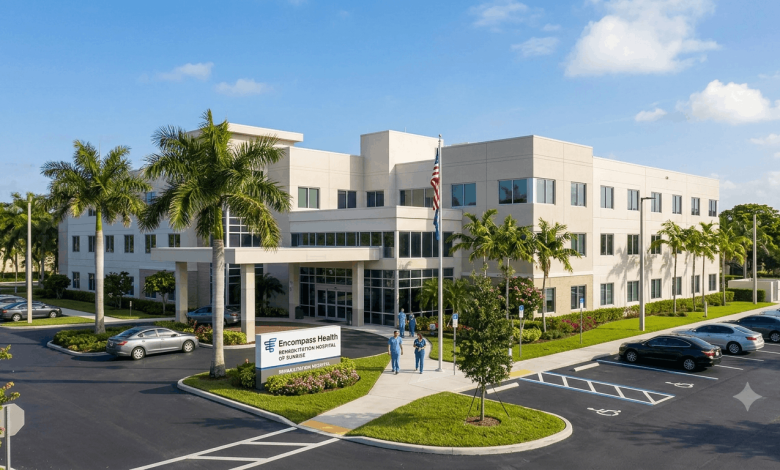
Imagine leaving a hospital after a stroke, a hip replacement, or a traumatic brain injury, and wondering what comes next. For millions of Americans, that “what comes next” question gets answered by facilities like the Encompass Health Rehabilitation Hospital of Sunrise and a rapidly expanding home healthcare industry that’s reshaping how people recover, manage chronic illness, and maintain independence. This article breaks down exactly how Encompass Health fits into this picture, what the home healthcare market segments actually look like right now, which forces are driving them, and what patients and families need to understand before making care decisions.
What Is Encompass Health Rehabilitation Hospital of Sunrise?
Located at 4399 Nob Hill Road in Sunrise, Florida, the Encompass Health Rehabilitation Hospital of Sunrise is a 126-bed inpatient rehabilitation hospital offering both inpatient and outpatient services. It sits inside the broader Encompass Health network, which the company describes as the largest network of inpatient rehabilitation hospitals in the United States.
The facility treats a wide range of conditions, including stroke recovery, orthopedic rehabilitation after hip fractures and joint replacements, traumatic brain injury, spinal cord injury, neurological disorders like Parkinson’s disease and multiple sclerosis, cardiac rehabilitation, pulmonary conditions, amputation recovery, and pain management. Patients receive at least three hours of physical, occupational, or speech therapy per day, five days a week, along with 24/7 nursing care and regular physician visits.
Accreditations and Recognition
The hospital holds accreditation from The Joint Commission, the Commission on Accreditation of Rehabilitation Facilities (CARF), and the Centers for Medicare and Medicaid Services (CMS). It’s also state-designated in both spinal cord injury and brain injury rehabilitation by the Florida Department of Health. That last designation matters because it means the facility meets Florida’s specific standards for some of the most medically complex rehab cases.
Encompass Health as a national organization was named America’s Most Awarded Leader in Inpatient Rehabilitation by Newsweek and Statista for the sixth consecutive year, with 66 of its hospitals appearing on the 2025 America’s Best Physical Rehabilitation Centers list.
Services and Specialties at the Sunrise Location
The Sunrise hospital runs several ongoing support programs, including monthly stroke support groups, brain injury support groups, Parkinson’s support groups, and caregiver support programs. These aren’t just boxes checked on a list. They reflect a model of care that extends beyond the patient’s discharge date, which is increasingly important as the healthcare system shifts toward measuring outcomes over longer recovery windows.
The facility also offers outpatient rehabilitation through its Bridge and Day Rehabilitation programs, which are certified for the Adult Brain Injury Rehabilitation Program. This creates a continuum from acute inpatient care to outpatient therapy that helps patients avoid gaps in their recovery.
How Encompass Health Connects to the Broader Home Healthcare Market
The Encompass Health Rehabilitation Hospital of Sunrise doesn’t operate in isolation. It’s a key transition point between acute hospital care and home-based recovery, which puts it squarely inside a home healthcare market that’s growing fast and getting more complex every year.
When a patient finishes their inpatient stay at a facility like Encompass Health Sunrise, they often move into some form of home healthcare. That might mean skilled nursing visits, outpatient therapy, remote patient monitoring, or personal care assistance. Understanding the market segments driving that next phase of care helps patients and families make smarter decisions and helps healthcare professionals connect the dots between inpatient rehab and long-term outcomes.
Analysis of Key Market Segments Influencing the Home Healthcare Industry
The global home healthcare market sat at roughly $420 billion to $458 billion in 2024 depending on the research source, and analysts across multiple firms project it will reach somewhere between $500 billion and $900 billion by the early-to-mid 2030s, growing at a compound annual growth rate of roughly 7% to 9%. North America accounts for approximately 40% of that global market, with the United States as the single largest contributor.
That growth isn’t happening in one direction. It’s being shaped by several distinct market segments, each with different dynamics, different patient populations, and different implications for facilities like Encompass Health Sunrise.
Skilled Nursing and Rehabilitation Services
This is the backbone of the home healthcare market. The services segment accounted for more than 74% to 85% of total market share in 2024 depending on how the category is defined, and skilled nursing services led within that group.
Skilled nursing at home involves licensed nurses providing wound care, medication management, post-surgical monitoring, IV therapy administration, and chronic disease management for patients who need clinical-level attention but don’t require a hospital bed. It’s the direct extension of what inpatient rehabilitation facilities do. After a patient leaves Encompass Health Sunrise, skilled nursing visits often bridge the gap between the structured therapy environment and full independence at home.
Rehabilitation therapy services, which include physical therapy, occupational therapy, and speech therapy delivered at home or in outpatient settings, are the natural continuation of the kind of care offered inside Encompass Health. This segment is growing as more insurers recognize that continued outpatient therapy after discharge reduces hospital readmissions.
Neurological and Mental Health Conditions
The neurological disorder segment held the largest revenue share in this indication category in 2024. That’s not surprising when you look at the numbers. The Alzheimer’s Association reported in April 2025 that approximately 6.9 million Americans aged 65 and older are living with Alzheimer’s disease, with projections showing that figure could reach 13 million by 2050.
Neurological conditions like Parkinson’s disease, multiple sclerosis, epilepsy, stroke, and traumatic brain injury all require ongoing, specialized care that rarely ends when a patient leaves an inpatient facility. The Encompass Health Rehabilitation Hospital of Sunrise explicitly lists these among its specialty areas, and its support groups for Parkinson’s and brain injury patients reflect an understanding that neurological recovery is long-term work.
This segment is particularly relevant because neurological patients often cycle between inpatient rehabilitation and home-based care multiple times over the course of their illness. Each readmission or regression represents both a clinical problem and a cost problem for the healthcare system, which is one reason why strong discharge planning and home healthcare coordination are so important.
Cardiovascular Disease and Hypertension
Cardiovascular disorders and hypertension held a 38.6% share in the indication segment of the home healthcare market in 2024. Heart disease remains the leading cause of death in the United States, and stroke, which is a cardiovascular event, is one of the primary admission diagnoses at rehabilitation hospitals like Encompass Health Sunrise.
Post-cardiac event patients often need skilled nursing for monitoring, medication titration, wound care after cardiac procedures, and physical therapy to rebuild stamina and function. Cardiac rehabilitation programs, whether inpatient or home-based, have a solid evidence base for reducing mortality and readmission after heart attacks and cardiac surgeries.
The infusion therapy services segment, which is heavily used in cardiovascular and oncology cases, showed the highest growth rate in the services subsegment during the study period, driven largely by the complexity of outpatient treatment protocols that patients can now manage at home.
Diabetes Management at Home
The diabetes indication segment dominated the device and product market with a 38.4% revenue share in 2024. Continuous glucose monitors, smart insulin delivery systems, and connected medication management tools have made home-based diabetes management more effective and more accessible than it was even five years ago.
For patients at Encompass Health Sunrise who have diabetes as a comorbid condition alongside their primary rehab diagnosis (which is extremely common), the transition to home healthcare needs to account for ongoing diabetes management. This is where skilled nursing and dietitian services become especially important post-discharge.
In August 2024, Abbott announced a global partnership with Medtronic to develop an integrated continuous glucose monitoring system, a signal that major device manufacturers are investing heavily in making home-based diabetes care more seamless. These technologies directly affect how effectively patients manage their conditions between therapy appointments.
Therapeutic Devices and Remote Monitoring Technology
The therapeutic products segment held the largest share of the home healthcare product market in 2024. This category includes infusion pumps, respiratory therapy devices like oxygen concentrators and CPAP machines, dialysis equipment, and mobility assistance devices.
What’s changed in recent years is the integration of connectivity. Remote patient monitoring, where devices send real-time data to a care team, is shifting from a niche tool to a standard expectation in post-discharge care planning. In August 2024, LG and Amwell launched the Carepoint TV Kit, which allows healthcare providers to engage with patients remotely through existing hospital-grade televisions, enabling virtual consultations and care coordination from a central location.
For rehabilitation patients specifically, wearable sensors that track gait, balance, and mobility are increasingly used to monitor recovery progress outside the clinical setting. This kind of real-time data gives therapists at outpatient programs (like those connected to Encompass Health) a clearer picture of how patients are actually functioning between appointments.
Hospice, Palliative Care, and End-of-Life Services
This is a market segment that doesn’t get as much attention in general coverage but represents a meaningful portion of home healthcare utilization. Palliative care services allow patients with serious illness to receive pain management, symptom control, and emotional support at home rather than in a hospital.
For some patients coming through a rehabilitation facility, particularly those recovering from cancer treatment or managing late-stage neurological disease, the goal of care shifts from full recovery to quality of life. Having a clear understanding of when rehabilitation services transition into palliative support is something that good discharge planning at facilities like Encompass Health Sunrise should address directly.
The cancer segment, driven by growing prevalence and a preference for home-based care during advanced stages, held the largest share of the home healthcare market by indication in 2024 according to some market analyses. Home oncology services, particularly infusion therapy and palliative nursing, are among the fastest-growing components of this segment.
The Aging Population and Its Role in Market Growth
Every data point in the home healthcare market points back to demographics. According to a World Health Organization report published in October 2024, one in six people globally will be aged 60 or older by 2030. The global senior population stood at 1 billion in 2020, is projected to reach 1.4 billion by 2030, and is expected to surpass 2.1 billion by 2050.
In North America specifically, approximately 60 million people are aged 65 and above, and a large portion of that group are managing two or more chronic conditions simultaneously. The American Cancer Society estimates that over 2 million new cancer cases will be reported in North America in 2025 alone.
This demographic reality is what makes facilities like the Encompass Health Rehabilitation Hospital of Sunrise so important to the broader healthcare ecosystem. They sit at the intersection of acute care and long-term recovery, handling exactly the patient populations that are growing fastest: stroke survivors, hip fracture patients, cardiac event recoveries, neurological disease management, and post-surgical rehabilitation.
What Makes Inpatient Rehabilitation Different From Home Healthcare?
It’s worth being clear about the distinction because the two are related but not interchangeable. Inpatient rehabilitation, like what’s provided at Encompass Health Sunrise, is an intensive, hospital-level program for patients who need complex medical oversight alongside therapy. The benchmark is three or more hours of therapy daily with physician oversight and round-the-clock nursing.
Home healthcare refers to the range of clinical and non-clinical services delivered in a patient’s residence after they no longer require that hospital-level intensity. This might include:
- Skilled nursing visits several times per week
- Physical, occupational, or speech therapy in the home
- Home health aides for personal care like bathing and dressing
- Remote monitoring through connected devices
- Infusion therapy administered at home
- Palliative or hospice care
The transition from inpatient rehab to home healthcare is one of the highest-risk periods in a patient’s recovery. Gaps in care, medication errors, falls, and infections during this transition account for a significant portion of preventable readmissions. This is why the quality of discharge planning at a rehabilitation hospital directly affects home healthcare outcomes.
Insurance Coverage and Reimbursement for Rehabilitation and Home Healthcare
One of the most practical concerns for patients and families is what insurance will actually pay for. Encompass Health Sunrise accepts Medicare and Medicaid, and the facility has contracts with most major private insurance companies.
Medicare coverage for inpatient rehabilitation requires that a patient can tolerate and benefit from intensive therapy, which is assessed by the admitting physician. Medicare Part A covers inpatient rehab stays under specific conditions, while Medicare Part A also covers skilled home health services when ordered by a physician and delivered by a Medicare-certified agency.
For home healthcare more broadly, insurers are increasingly offering coverage for home-based services because the cost comparison favors them. A 2022 study published by NCBI found that home-based treatment was approximately $5,000 more affordable than hospital stays for comparable conditions. That cost difference, multiplied across millions of patients, gives insurance companies a clear financial reason to support home healthcare as an alternative to prolonged inpatient care.
What patients often don’t realize is that coverage for home healthcare typically requires the services to be ordered by a physician, that the patient must meet homebound status criteria for Medicare coverage, and that coverage for personal care assistance (non-skilled care) is often more limited than coverage for skilled services. Knowing these distinctions before discharge from a facility like Encompass Health Sunrise can prevent unpleasant surprises.
Key Players and Organizations in the Home Healthcare Ecosystem
The home healthcare market isn’t dominated by a single type of provider. It’s a mix of large corporate networks, regional agencies, technology companies, and device manufacturers, many of which interact with patients who’ve come through inpatient rehabilitation.
Major home healthcare service providers include names like Amedisys, Bayada Home Health, Enhabit Home Health and Hospice, and LHC Group (now part of UnitedHealth Group after a $6 billion acquisition in 2023). On the device and technology side, companies like Philips, OMRON Healthcare, Medtronic, Abbott, and GE Healthcare are all active in the home monitoring and therapeutic device space.
The consolidation happening in this market matters for patients. Larger networks often have more resources for specialized care, better technology infrastructure, and broader insurance contracts. But smaller regional agencies sometimes provide more consistent staffing and more personalized attention. Neither is universally better. The right choice depends on the specific condition, geography, and what the discharge team at a rehabilitation hospital recommends.
Telehealth and Digital Health’s Growing Role
Telehealth adoption accelerated significantly after 2020 and has remained a meaningful part of home healthcare delivery. For rehabilitation patients managing chronic conditions at home, telehealth offers follow-up appointments with physicians, virtual check-ins with therapists, and remote monitoring review without requiring transportation to a clinic.
The integration of telehealth with remote patient monitoring creates what the industry calls a “virtual care loop” where data from a patient’s home devices feeds into the care team’s dashboard and triggers follow-up when something looks off. This model is particularly valuable for stroke patients, cardiac patients, and anyone managing a progressive neurological condition where early warning signs can be caught before they become emergency situations.
OMRON Healthcare added new educational components to its OMRON Connect app in February 2024, including study summaries and guidance on identifying AFib (atrial fibrillation), a common cardiac complication in stroke patients. These kinds of tools sit at the intersection of consumer health technology and clinical home healthcare, and they’re becoming part of what post-discharge care looks like for patients who’ve completed inpatient rehabilitation.
Frequently Asked Questions About Encompass Health Rehabilitation Hospital of Sunrise and Home Healthcare
What conditions does Encompass Health Rehabilitation Hospital of Sunrise treat?
The hospital treats a broad range of diagnoses, including stroke, traumatic brain injury, spinal cord injury, Parkinson’s disease, multiple sclerosis, hip fractures, joint replacements, cardiac conditions, pulmonary disease, amputation, and chronic pain. It holds state designations specifically for brain injury and spinal cord injury rehabilitation, which are among the most complex cases in inpatient rehabilitation.
How many beds does the Encompass Health Sunrise hospital have?
The facility is a 126-bed inpatient rehabilitation hospital. Patients receive private rooms with televisions, telephones, and wireless internet access, which matters more than it might seem since a comfortable, connected environment supports both mental health and the recovery process during extended stays.
How much therapy will a patient receive at Encompass Health Sunrise?
Patients receive a minimum of three hours of physical therapy, occupational therapy, and/or speech therapy per day, at least five days per week. This intensity level is what distinguishes inpatient rehabilitation hospitals from skilled nursing facilities, which typically provide lower therapy volumes.
Does Encompass Health Sunrise accept Medicare and Medicaid?
Yes. The facility accepts Medicare, Medicaid, and most major private insurance plans. It also contracts with many insurance companies individually and is willing to negotiate coverage arrangements for patients whose primary insurer isn’t already contracted.
What is the home healthcare market projected to be worth?
Depending on the research firm and how the market is defined, the global home healthcare market was valued between $420 billion and $458 billion in 2024 and is projected to grow to somewhere between $500 billion and $900 billion by 2034. North America accounts for roughly 40% of the global market, with the United States as the dominant country within that region.
What are the fastest-growing segments in home healthcare?
The Alzheimer’s and dementia care segment is projected to grow at the fastest rate through 2032, with a projected compound annual growth rate of 19.3%. Infusion therapy services and therapeutic device segments are also growing rapidly. Telehealth-enabled home monitoring is expanding across all condition categories.
How does home healthcare differ from a skilled nursing facility?
Home healthcare brings clinical services to the patient’s residence, while a skilled nursing facility is a care institution outside the home. Home healthcare is generally preferred when a patient can manage daily living with some support, while a skilled nursing facility is appropriate for patients who need a higher level of daily medical oversight and personal care than home allows.
What support programs does Encompass Health Sunrise offer families?
The facility runs monthly support groups for stroke survivors, Parkinson’s disease patients, brain injury patients, and caregivers. These include both daytime and evening sessions to accommodate working family members. Caregiver support programs are particularly relevant because family caregiver strain is one of the underappreciated factors in successful long-term home healthcare outcomes.
What is CARF accreditation and why does it matter for rehabilitation hospitals?
CARF stands for the Commission on Accreditation of Rehabilitation Facilities. It’s an independent accrediting body that evaluates rehabilitation programs against specific quality standards. CARF accreditation signals that a facility meets rigorous criteria for care delivery, patient outcomes, and operational practices. Encompass Health Sunrise holds CARF accreditation alongside Joint Commission accreditation, meaning it’s been evaluated by two separate credentialing organizations.
Can patients receive outpatient rehabilitation after leaving Encompass Health Sunrise?
Yes. The hospital offers outpatient programs including Bridge Rehabilitation and Day Rehabilitation. The Adult Brain Injury Rehabilitation Program at the outpatient level is certified by the Florida Department of Health. This continuity from inpatient to outpatient care within the same system is one way to reduce the risk of care gaps during the transition home.
Making the Right Decision for Inpatient and Post-Discharge Care
Choosing where to recover after a serious medical event is one of the most consequential decisions a patient or family member will make. The Encompass Health Rehabilitation Hospital of Sunrise gives patients in South Florida access to a nationally recognized inpatient rehabilitation system with specialized programs, strong accreditation, and a range of support services that extend beyond discharge.
The broader home healthcare market that patients enter after leaving a facility like this is large, complex, and growing fast. Skilled nursing, therapy services, remote monitoring, telehealth, and specialized programs for neurological, cardiovascular, and oncological conditions are all expanding in response to an aging population and a healthcare system that’s increasingly rewarding care delivered outside the hospital walls.
If you’re researching rehabilitation options or planning post-discharge care, the next step is understanding what your insurance covers, what your physician recommends, and which services are available in your specific area. Related topics worth exploring on Reuterings.com include guides to understanding Medicare coverage for home healthcare, how to evaluate skilled nursing facilities versus home health agencies, and what to expect from post-stroke rehabilitation timelines.