Laughter and Laughter: The Difference Between Real Laughter and the Kind You Fake

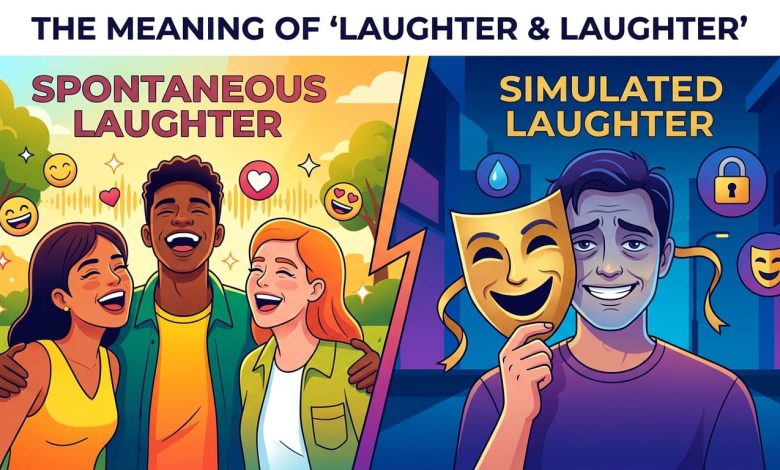
“Laughter and laughter” sounds like a repetition, but the two words often refer to very different things. One is the spontaneous, involuntary laugh that escapes you when something is genuinely funny. The other is simulated laughter, the deliberate “ha ha ha” used in laughter yoga, therapy sessions, and awkward social moments. The distinction matters because the research treats them differently, the benefits are not identical, and confusing the two can lead you to expect more from a forced laugh than it can deliver. This guide explains the difference, what the science says about each, and why the phrase appears in contexts from poetry to clinical research.
The Two Kinds of Laughter the Research Distinguishes
Academic literature on laughter separates spontaneous laughter from simulated laughter, and the gap between them is significant.
Spontaneous laughter is triggered by something: a joke, a funny video, a moment of shared absurdity. It is involuntary, hard to fake convincingly, and associated with genuine mirth. A scoping review of 410 laughter studies categorised research into spontaneous physiological laughter, simulated physiological laughter, and simulated psychosocial laughter, alongside laughter therapy and laughter yoga studies . The fact that the review separates them at all tells you the researchers consider them distinct phenomena.
Simulated laughter is deliberate. It is the laugh you produce without a trigger, often in a group setting, and it is the foundation of laughter yoga and laughter therapy. The same review notes that laughter therapy and laughter yoga studies form a substantial body of research, with 41 physiological studies and 169 psychosocial studies . These practices rely on the idea that the body does not always distinguish between real and fake laughter, and that the physiological benefits can follow even when the laughter is initiated deliberately.
The practical implication is this: if you are laughing because something is funny, you are in one category. If you are laughing because a therapist or a YouTube video told you to, you are in the other. Both may have benefits, but they are not the same behaviour.
What the Benefits Actually Cover
The list of claimed benefits for laughter is long, and it has been repeated in popular media for decades. The same scoping review quotes a summary of mental benefits that includes reducing stress, anxiety and tension, elevating mood, enhancing memory and creative thinking, improving interpersonal interaction, and promoting psychological well-being . That is an attractive list, and it is the reason laughter therapy has grown into a recognised practice.
But the review is careful. It notes that there are “so many questions on laughter’s mental and physical benefits for which we do not have answers” . That is not a dismissal of the benefits. It is an acknowledgement that the evidence base is uneven, and that the popular claims have sometimes run ahead of the research.
A separate study on solitary laughter, published in 2025, found that over 10% of laughter occurs when people are alone, and that solitary laughter is often regarded with suspicion even though it can serve important roles in supporting health and wellbeing . That finding complicates the assumption that laughter is primarily a social behaviour. It also supports the idea that laughter, whether triggered or deliberate, has functions beyond simple amusement.
Laughter as a Shield: The Poetic Meaning
The phrase “laughter and laughter” also appears in a different register: poetry and personal writing about using laughter to hide pain.
A poem by Nyoka Mitchell, published on Poem Hunter, uses the repetition to build a persona. The speaker describes laughter as a protector: “Me and Laughter together always,” and “I cover Me up with Laughter.” The poem’s final lines reveal the function of the laughter: “They can’t see through my Laughter / And if you should happen to see Me / I won’t need Laughter to hide anymore” .
This is not the laughter of joy. It is the laughter of concealment, the social mask that prevents others from seeing hurt or vulnerability. The repetition in the phrase “laughter and laughter” captures that duality: the sound is the same, but the purpose is opposite. One laugh is an expression. The other is a defence.
That use of laughter is not a scientific category, but it is a real human behaviour. The research on solitary laughter notes that laughing alone can be perceived as problematic when done in public, which suggests that the social function of laughter is tightly regulated even when the emotional function is private .
A Literary Example: Tagore’s Laughter
Rabindranath Tagore, the Bengali poet and Nobel laureate, wrote about laughter in a way that bridges the physical and the spiritual. In one passage, a speaker asks, “Do you hear that laughter? Yes, yes, it is laughter.” The laughter is described as a relief, something the listeners had been “choking for want of.” It comes “like the April rain” and is “like a waterfall” that “dashes all the black stones out of the path” .
Tagore’s laughter is not a joke. It is a force that clears obstacles. That is a different framing from the clinical research, but it points at the same thing: laughter does something, whether it is triggered by humour or by relief, and the something is not purely cognitive.
Why the Phrase “Laughter and Laughter” Keeps Appearing
The repetition is useful because it holds two ideas at once. It can mean:
Laughter as a spontaneous response and laughter as a deliberate practice. The research distinguishes them, the therapies rely on the second, and most people experience the first without thinking about it.
Laughter as joy and laughter as concealment. The poem uses the same word for the sound that hides pain and the sound that expresses it.
Laughter as a private experience and laughter as a social one. The research on solitary laughter shows that the two are not as separate as they seem, and that laughing alone is more common than most people assume .
The phrase does not resolve those tensions. It names them.
Frequently Asked Questions
What does “laughter and laughter” mean?
It is not a single fixed phrase. It is used to contrast spontaneous laughter with simulated or deliberate laughter, and in poetry to describe laughter that hides pain as well as laughter that expresses joy. The meaning depends on context.
Is simulated laughter as good as real laughter?
The research treats them as distinct phenomena. Simulated laughter is the basis of laughter yoga and laughter therapy, and studies have examined its physiological and psychosocial effects . Whether it produces identical benefits to spontaneous laughter is not settled. The body may respond to the physical act of laughing regardless of the trigger, but the evidence is not uniform.
Why do people laugh when they are not happy?
Laughter can function as a social mask, a way of concealing vulnerability or deflecting attention. The poem by Nyoka Mitchell describes laughter as a protector that hides the true self from others . This is a recognised human behaviour, not a contradiction of the idea that laughter is connected to joy.
Is laughter really good for your health?
The claimed benefits include reduced stress and anxiety, improved mood, and enhanced interpersonal interaction, among others . However, the research base is uneven, and a comprehensive review noted that many questions about laughter’s benefits remain unanswered. The evidence supports some benefits, but the popular claims are sometimes stronger than the science.