
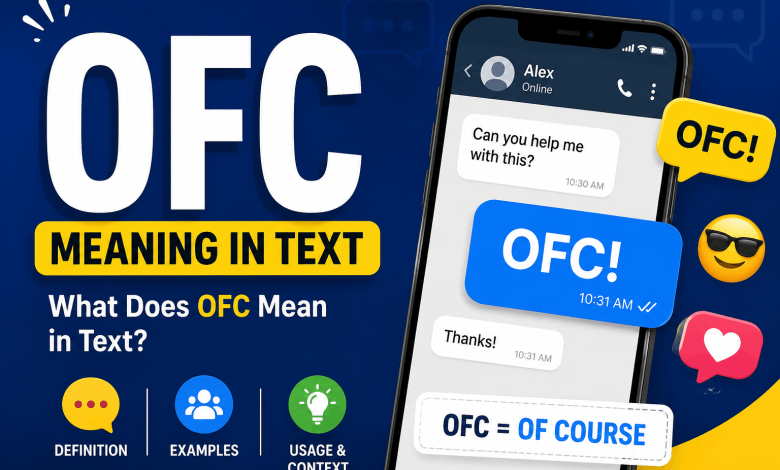
You’re scrolling through your messages and someone replies with “ofc!” You kind of know what it means, but you’re not 100% sure. Or maybe you’ve seen it pop up in group chats, social media comments, and even work Slack channels and you want to make sure you’re reading it right. Either way, you’re in the right place. This guide breaks down what does ofc mean in text, where it came from, how people actually use it, and when it’s totally fine to use it yourself versus when you probably shouldn’t.
What Does OFC Mean in Text Messages?
OFC stands for “of course.” That’s it. Short, simple, and one of the most used abbreviations in texting today.
When someone sends you “ofc,” they’re saying “of course” in the fastest way possible. It’s a quick agreement, a confident yes, or a way of saying something is obvious without typing out all three words.
Think of it like this: if your friend asks “Can you help me move this weekend?” and you reply “ofc,” you’re telling them you’re absolutely on board, no hesitation.
What Does O F C Mean When Spaced Out?
Sometimes you’ll see it written as “o f c” with spaces between the letters. It means exactly the same thing as “ofc.” People write it that way to add emphasis or just out of habit. There’s no difference in meaning whether it’s written together or spaced apart.
What Does OFC Stand For Beyond Texting?
In everyday digital conversation, ofc almost always means “of course.” But like many abbreviations, it can carry different meanings depending on context:
- Of course (most common use by far)
- Original female character (used in fan fiction communities)
- Official (rare, usually in gaming or forum settings)
Unless you’re deep in a fan fiction forum or a very niche online community, assume ofc means “of course” every single time.
How OFC Is Actually Used in Texting and Online Chats
Knowing the definition is one thing. Seeing how people actually drop it into conversation is another. OFC shows up in a lot of different ways depending on what someone’s trying to say.
As a Quick Agreement
This is the most common use. Someone asks a question, and the reply is a fast “ofc” to confirm without overthinking it.
“Are you coming tonight?”
“Ofc, I’ll be there at 8.”
To Emphasize Something Is Obvious
Sometimes “ofc” is used to signal that the answer should go without saying. There’s a slight eye-roll energy to it in this context, but not always in a rude way.
“Did you eat today?”
“Ofc I did, what kind of question is that?”
As a Reassurance
People also use it to make someone feel better about asking something they might feel embarrassed about.
“Is it okay if I bring my dog?”
“Ofc!! We love dogs.”
The double exclamation point turns it into something warm and enthusiastic rather than flat.
In Social Media Comments
On platforms like Instagram, TikTok, and Twitter/X, you’ll see “ofc” all the time in comment sections. It’s often used to agree with a post, validate a take, or respond to a question in the shortest way possible.
OFC Meaning in Text: The Tone Changes Everything
One thing that trips people up is that “ofc” can sound different depending on how it’s written. The same three letters carry completely different energy based on capitalization, punctuation, and context.
- “ofc” — casual, relaxed, normal agreement
- “Ofc” — slightly more formal, still friendly
- “OFC” — can read as sarcastic or emphasized, like you’re saying “obviously”
- “ofc!!” — enthusiastic, warm, happy to agree
- “ofc…” — hesitant, maybe reluctant, something’s off
If someone replies to your message with “OFC.” and a period, there’s a chance they’re being dry or sarcastic. Context from the rest of the conversation is what tells you which version you’re getting.
Where Did OFC Come From?
Text abbreviations like ofc took off in the late 1990s and early 2000s when SMS messaging had character limits and typing on a number pad was slow. Shortening “of course” to three letters just made practical sense.
As smartphones became common and apps like AIM, BBM, and later WhatsApp and iMessage took over, these abbreviations stuck around not because typing was hard anymore, but because they’d become part of how people talk online.
OFC became especially popular on social platforms in the 2010s. It fit perfectly into the casual, fast-paced style of platforms like Tumblr, Twitter, and eventually TikTok, where brevity is built into the culture.
Today it’s one of those abbreviations that people use without even thinking about it, similar to “lol,” “tbh,” or “imo.”
Is OFC Formal or Informal?
OFC is informal. Full stop.
It belongs in casual conversations with friends, family, and close colleagues you have a relaxed relationship with. You wouldn’t type “ofc” in a professional email to a client, a cover letter, or a formal report.
That said, in modern workplaces where communication happens over tools like Slack or Teams, the line can blur. Some office cultures are casual enough that “ofc” fits right in. Others aren’t. Read the room based on how your coworkers already communicate.
A good rule: if you’d write “of course” in the context, you can use “ofc.” If you’d write “certainly” or “absolutely,” stick with the full words.
OFC vs. Similar Slang: What’s the Difference?
There are a few abbreviations that show up in similar situations to ofc. Knowing the difference helps you respond the right way.
OFC vs. IKR
“IKR” means “I know, right?” It’s used to agree with something someone already said, usually something relatable or surprising. OFC is used to confirm you’ll do something or that something is obvious. They’re both agreements, but in different directions.
[H3] OFC vs. YEP or YUP
“Yep” and “yup” are also casual confirmations, but they’re simpler and carry less weight. OFC implies a stronger sense of certainty or obviousness. “Yep I’ll come” vs. “ofc I’ll come” — the second one sounds more committed.
[H3] OFC vs. OBVI
“Obvi” is short for “obviously” and overlaps a lot with the sarcastic or emphasis use of OFC. “Obvi she knew” vs. “ofc she knew” — almost interchangeable in casual use.
When You Should and Shouldn’t Use OFC
Using ofc in the right place makes you sound natural and fluent in modern digital communication. Using it in the wrong place can read as unprofessional or confusing.
Good places to use ofc:
- Text messages with friends or family
- Group chats and casual conversations
- Social media replies and comments
- Informal messaging apps in casual workplace cultures
Places to avoid ofc:
- Professional emails
- Job applications or formal correspondence
- Text messages to people who may not know the slang (older relatives, new contacts)
- Any situation where misunderstanding could cause a problem
If you’re ever unsure, just type it out. “Of course” never goes out of style and nobody reads it wrong.
How to Reply When Someone Sends You OFC
If someone sends you “ofc,” they’ve confirmed something or agreed with you. You don’t always need to reply at all. But if you do, keep it in the same casual register:
- “Perfect, see you then!”
- “Thanks!”
- “Lol glad we agree”
- A simple thumbs up or emoji
Don’t overthink it. OFC is meant to make communication faster and lighter, not to require a deep response.
Frequently Asked Questions About OFC in Text
What does ofc mean in texting?
OFC means “of course” in texting and online messaging. It’s a fast, casual way to agree with someone, confirm something, or signal that the answer should be obvious. It’s one of the most widely used abbreviations in digital communication today.
What does o f c mean when someone texts it?
When someone writes o f c with spaces, it means the same thing as “ofc” — “of course.” The spacing is just a stylistic choice some people make. There is no difference in meaning.
What does ofc stand for in slang?
In everyday slang, ofc stands for “of course.” In niche communities like fan fiction, it can stand for “original female character,” but that meaning only applies in very specific contexts. In general texting and social media, it always means “of course.”
Is ofc rude to use?
OFC is not rude on its own. The tone depends on how it’s written. A lowercase “ofc” with an exclamation point reads as warm and agreeable. All caps “OFC” with a period can come across as sarcastic or cold. Pay attention to context and punctuation.
Can you use ofc at work?
It depends on your workplace culture. In casual, informal office environments where people text or use Slack freely, ofc fits in fine. In formal settings or with clients, it’s better to write out “of course” to keep communication professional.
Where did ofc come from?
OFC grew out of the SMS and early internet chat era in the late 1990s and early 2000s, when people shortened common phrases to save time and character space. It became mainstream as social media platforms made short, fast replies part of everyday communication.
What does ofc mean on TikTok or Instagram?
On TikTok, Instagram, and other social platforms, ofc means “of course.” It’s used in comments and captions to agree with something, validate a take, or respond to a question casually.
How is ofc different from “obvi”?
Both express that something is obvious, but “obvi” (short for obviously) has a slightly more dismissive or sarcastic edge in some contexts. OFC tends to feel more like a warm agreement, while obvi leans more toward “you should already know this.”
Does ofc always mean “of course”?
In almost every situation outside of fan fiction communities, yes. “Of course” is the meaning 99% of the time. If you see it in a fan fiction context, it might mean “original female character,” but that’s a very specific use.
Is it okay to use ofc with someone you just met?
That depends on how casual the conversation already is. If you’re messaging someone new in a relaxed setting like a dating app or a friend-of-a-friend group chat, ofc is probably fine. If it’s a new professional contact or someone in a more formal context, typing out “of course” is the safer move.
Now You Know Exactly What OFC Means
OFC means “of course,” and now you know how to read it in every context — whether it comes with enthusiasm, sarcasm, or a completely neutral tone. It’s a small abbreviation with a lot of flexibility, and once you start noticing it, you’ll see it everywhere.
Slang like this evolves fast. If you want to stay current on what other common text abbreviations mean, check out related articles on reuterings.com about what “NGL” means in text, what “IMO” stands for, and a full breakdown of the most common texting slang terms people use today.