

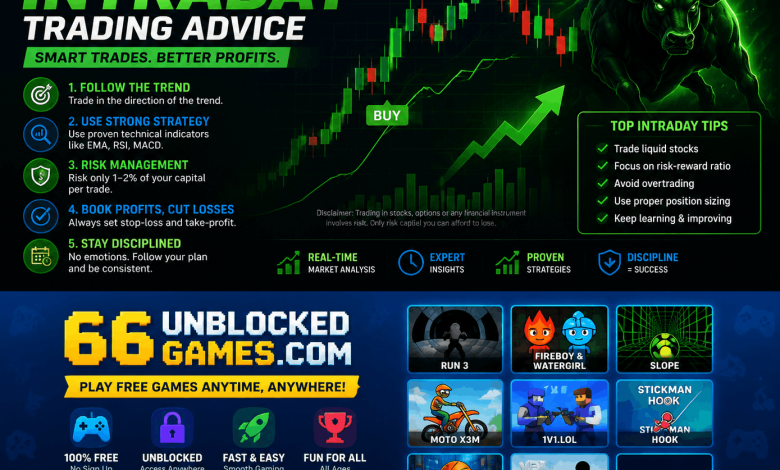
You watch the market open, your finger hovers over the buy button, and your heart rate spikes before you’ve even placed the trade. That moment of hesitation is where most beginners either learn discipline or lose their shirt. Profitable intraday trading isn’t about luck or a secret indicator nobody else knows about. It comes down to a repeatable process: picking liquid stocks, managing risk on every single trade, and following a plan instead of your gut. This guide walks through the strategies, tools, and habits that separate traders who last from traders who blow up their account in the first month.
What Intraday Trading Actually Means
Intraday trading, also called day trading, means buying and selling a stock within the same session. You open a position after the market starts and close it before the closing bell, so you never carry risk overnight. That’s the whole point: no gap risk from overnight news, earnings surprises, or a market that opens 5% against you.
This is different from swing trading, where positions stay open for days or weeks, and worlds apart from long-term investing. Intraday traders are chasing small, fast moves. A 1% to 2% gain on a liquid stock, captured a few times a week, adds up. Chasing home runs on every trade is how accounts get wiped out.
Pick Liquid Stocks Before You Pick a Strategy
No strategy works on the wrong stock. Before you even think about entries and exits, you need shares that trade with tight bid-ask spreads and enough volume that you can get in and out without moving the price yourself.
Look for:
- Average daily volume in the millions of shares
- A tight spread between bid and ask, ideally a cent or two on lower-priced stocks
- Enough volatility to move 1% to 3% in a session, but not so wild it whipsaws you out immediately
Large-cap names in the S&P 500 tend to check these boxes. Micro-cap and thinly traded stocks might look tempting because of dramatic percentage swings, but slippage on entry and exit can eat your entire profit margin before you even get a clean fill.
Five Intraday Trading Strategies Worth Learning
Momentum Trading
Momentum trading means finding stocks moving hard in one direction on above-average volume and riding that move. You’re not trying to call the top or bottom. You’re jumping on a trend that’s already confirmed and getting out before it stalls. Relative Strength Index (RSI) and volume spikes are the standard tools traders use to confirm a momentum move rather than a fakeout.
Breakout Trading
A breakout happens when price pushes through a well-established support or resistance level, usually on a surge in volume. Traders enter as the breakout confirms and place a stop just below the broken level in case it fails. This strategy works particularly well in the first hour after the market opens, when volume and volatility are both elevated.
Gap and Go
Stocks that gap up or down at the open, often on earnings or news, create some of the most tradable setups of the day. The gap and go strategy means watching pre-market volume and price action, then entering as the stock continues in the direction of the gap once the market opens. This one demands fast execution, since the best moves often happen in the opening minutes.
Pullback Trading
Rather than chasing a stock at its peak, pullback traders wait for a temporary retracement within an established trend, then enter as the trend resumes. It’s a lower-stress way to trade momentum since you’re buying a dip instead of chasing strength, but it requires patience and a clear read on where the trend is likely to hold.
Scalping
Scalping is the fastest style on this list. You’re targeting tiny price moves, sometimes just a few cents, and making several trades in a short window. It demands a fast broker platform, tight spreads, and split-second decision-making. Most beginners should master a slower strategy first, since scalping leaves almost no room for hesitation or error.
Risk Management: The Part Beginners Skip
Here’s what separates traders who survive from traders who don’t: risk management, not strategy selection. You can have a mediocre strategy with strict risk rules and still come out ahead over time. A brilliant strategy with no risk control eventually blows up an account.
A few non-negotiable rules:
- Never risk more than 1% to 2% of your account on a single trade.
- Set a stop-loss order the moment you enter, not after the trade starts moving against you.
- Square off every position before the market closes to avoid overnight gap risk.
- Use a risk-reward ratio of at least 1:2, meaning your potential profit should be double your potential loss.
- Stop trading for the day after two or three consecutive losses. Emotional trading after a loss is how small mistakes become big ones.
Technical Indicators That Actually Help
You don’t need fifteen indicators cluttering your chart. A handful used consistently will tell you more than a dozen used sporadically.
- Moving Averages (5-period and 20-period): help confirm trend direction and crossover signals
- RSI: flags overbought or oversold conditions, useful for reversal and momentum setups
- MACD: confirms momentum shifts and trend strength
- Volume: confirms whether a price move has real conviction behind it or is likely to fade
Combine two or three of these rather than relying on any single signal. A moving average crossover paired with a volume spike carries far more weight than either one alone.
Paper Trading Before You Risk Real Money
Every experienced trader will tell you the same thing: practice on a demo account first. Paper trading lets you test a strategy across dozens or even hundreds of trades without risking a dollar. Most brokers, including Thinkorswim, Webull, and Interactive Brokers, offer a simulated trading mode built into their platform.
Aim to back-test a strategy over at least a few hundred trades and a 6 to 12 month window before committing real capital. If a strategy can’t hold up in simulation, it has no business running with your savings.
Common Mistakes That Wreck New Traders
- Trading without a stop-loss and hoping the price recovers
- Overtrading out of boredom or the urge to make back a loss immediately
- Following anonymous stock tips instead of doing your own research
- Ignoring position sizing and risking too much on a single trade
- Holding a losing position past your original plan because you don’t want to admit you were wrong
None of these mistakes are complicated to avoid on paper. In the middle of a live trade with money on the line, they’re the ones that trip up almost everyone at some point.
Where Intraday Trading Fits Your Bigger Financial Picture
Intraday trading carries real risk, and most retail traders don’t outperform a simple buy-and-hold approach over the long run. That’s not a reason to avoid it if you’re genuinely interested, but it’s worth going in with realistic expectations rather than a get-rich-quick mindset. Treat the capital you trade with as money you can afford to lose, keep it separate from your long-term investments or emergency savings, and track your results honestly so you know whether your strategy is actually working. This article is educational and not financial advice, so any strategy you use should fit your own risk tolerance and financial situation.
Frequently Asked Questions About Profitable Intraday Trading Advice
Is intraday trading actually profitable for beginners?
Yes, but only with discipline and risk management. Most beginners lose money in their first several months because they skip stop-losses and risk too much per trade. Profitability tends to come after months of practice on a demo account and refining one or two strategies rather than jumping between many.
How much money do you need to start intraday trading?
You can technically start with a few hundred dollars, though pattern day trading rules in the US require a minimum account balance of $25,000 if you place four or more day trades within five business days using a margin account. Traders with smaller accounts often use a cash account instead to avoid that threshold.
What is the best time of day to day trade?
The first hour after the market opens, roughly 9:30 to 10:30 AM Eastern, and the final hour before close tend to have the highest volume and volatility. The middle of the trading day is often quieter and offers fewer clean setups.
What indicators do professional day traders use most?
Moving averages, RSI, MACD, and volume are the most widely used indicators among day traders. Professionals typically combine two or three rather than relying on a single signal to confirm a trade.
Can you day trade with a small account?
Yes, using a cash account rather than a margin account avoids the $25,000 pattern day trader minimum. Position sizes will be smaller, so gains and losses will also be smaller in dollar terms while you build experience.
What is the safest intraday trading strategy?
Scalping is often considered lower-risk per trade since positions are held for a very short time, but it demands fast execution and tight spreads. Pullback trading is generally easier for beginners to manage emotionally since it doesn’t require chasing price.
How do you choose the right stock for intraday trading?
Look for high liquidity, tight bid-ask spreads, and enough daily volatility to move 1% to 3% in a session. Large-cap stocks in major indexes typically meet these criteria more reliably than thinly traded small caps.
Should beginners use stop-loss orders on every trade?
Yes, a stop-loss should be set the moment a trade is entered, not after it starts moving against you. Skipping this step is one of the most common reasons beginner accounts lose money quickly.
Put a Plan Together Before Your Next Trade
Profitable intraday trading advice ultimately comes down to three habits: trade liquid stocks, manage risk on every position, and test your strategy before you risk real capital. Beginners who skip the demo account and jump straight into live trading are the ones who tend to give back their early wins. Start small, track every trade, and build from there.
If you’re still refining your approach, check out our guides on choosing a trading platform, understanding technical indicators for day trading, and building a risk management plan that fits your account size on reuterings.com.