
PVC Tape: Ultimate Guide to Uses, Types & Amazing Application Tips

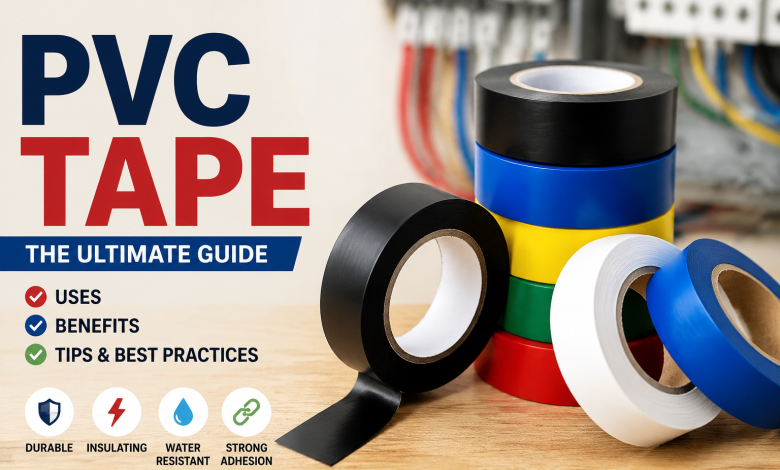
You’re standing in the tape aisle at the hardware store, staring at a wall of black rolls that all look the same. Some say “electrical,” some say “insulation,” one just says “PVC tape” in small print on the label. Picking the wrong one can mean a repair that peels off in a week, or worse, a wire that isn’t properly insulated. This guide walks through what PVC tape actually is, the types you’ll run into, and how to apply it so it holds.
By the end, you’ll know how to read a spec sheet, which type fits your job, and the small application mistakes that cause most tape failures.
What Is PVC Tape?
PVC tape is a pressure-sensitive tape made from a flexible polyvinyl chloride film, coated on one side with an adhesive layer. The PVC backing gives it stretch, weather resistance, and a decent amount of electrical insulation, which is why it shows up everywhere from electrical panels to plumbing repairs to sports gear.
Most rolls come in a standard 3/4-inch (19mm) width and 60-foot (20m) length, though wider rolls exist for heavy-duty jobs. It’s sold in dozens of colors, and color isn’t just cosmetic. In wiring work, color tells you what a conductor does before you even touch it.
What’s Inside a Roll of PVC Tape
A roll of tape looks simple, but it’s built in layers, and each one has a job:
- PVC film backing. This is the flexible plastic base. Better tapes use a thicker, plasticized film that resists cracking in the cold and softening in the heat.
- Adhesive layer. Almost always a rubber-based pressure-sensitive adhesive. It bonds under light pressure and sticks to itself, which is what lets you wrap a splice tightly.
- Release coating. The back of the film gets a treatment so the roll unwinds cleanly instead of tearing.
Cheaper tapes skimp on film thickness or use a weaker adhesive, and it shows almost right away. The tape unwinds unevenly, the edges curl, and the wrap loosens after a few weeks in a hot attic or a cold garage.
Types of PVC Tape
“PVC tape” covers a few different products built for different jobs. Here’s how the main types break down:
| Type | Main Use | Typical Thickness | Notes |
| PVC electrical insulation tape | Wire splicing, insulation, harnessing | 5-8 mil (0.13-0.20mm) | Rated for voltage insulation, UL/CSA listed on quality brands |
| PVC marking/color tape | Phase identification, cable labeling | 5-7 mil | Same base material, chosen for color rather than voltage rating |
| PVC security tape | Tamper-evident sealing | 3-5 mil | Leaves a “VOID” or “OPENED” pattern on removal, used in logistics and evidence handling |
| PVC pipe wrap tape | Corrosion protection on pipe joints | 10-20 mil | Thicker, often self-fusing, built for buried or outdoor pipework |
Most people asking about “PVC tape” mean the electrical insulation type, and that’s the focus for the rest of this guide, though the same core material shows up in the other three.
What PVC Tape Is Actually Used For
The electrical version is the one you’ll find in almost every toolbox, and its jobs go beyond wiring:
- Electrical insulation. Wrapping bare splices, terminals, and connectors to stop current from arcing or leaking where it shouldn’t.
- Cable harnessing. Bundling loose wires into a single, manageable run in a car, boat, or appliance.
- Color coding. Marking conductors so anyone opening the panel later knows what each wire does without testing it first.
- Temporary repairs. Patching a nicked cable jacket or a cracked hose until a permanent fix happens.
- Automotive and marine work. PVC tape holds up to oil, road grime, and salt spray far better than paper-based tapes, which is why mechanics reach for it constantly.
- Sports and gear. Athletes wrap it around bat handles, hockey sticks, and shin pads because it grips well and stretches with movement.
One thing PVC tape doesn’t do well: waterproofing. It resists moisture for a while, but it’s not a true seal. If a splice needs to survive constant water exposure, pair it with heat-shrink tubing or a dedicated waterproof sealant instead of relying on tape alone.
PVC Tape Color Codes You Actually Need to Know
This is the part most guides skip, and it’s the part that matters most if you’re doing any electrical work in the US. The colors on your tape aren’t decoration. They’re how electricians avoid working on a live wire by mistake.
The National Electrical Code (NEC) mandates only two colors directly: white or gray for the neutral (grounded) conductor, and green, green-with-yellow stripe, or bare copper for the ground. Every other color is industry convention, not a legal requirement, but it’s followed almost everywhere because the alternative is guesswork.
| System | Common Colors |
| 120/208V, 3-phase (residential/commercial) | Black, red, blue for the three hot legs |
| 277/480V, 3-phase (industrial) | Brown, orange, yellow for the three hot legs |
| High-leg delta systems | Orange marks the high leg per NEC Article 110.15 |
| Neutral (any system) | White or gray, mandated by code |
| Ground | Green, green/yellow stripe, or bare copper, mandated by code |
If you’re re-marking a wire with colored tape instead of using factory-colored insulation, wrap it fully around the exposed section at every point it’s visible, not just at the ends. An inspector checking a panel should be able to identify every conductor without guessing.
Outside the US, expect different conventions entirely. The IEC standard used across most of Europe assigns brown, black, and gray to the three phases, with blue for neutral. If you’re working on equipment imported from another region, check its origin before you touch a wire based on color alone.
How to Apply PVC Tape So It Actually Holds
Bad tape jobs almost always come down to technique, not the tape itself. Here’s the sequence that gets a wrap to last:
- Clean and dry the surface. Dust, oil, and moisture stop the adhesive from bonding properly. Wipe the area down and let it dry fully before you start.
- Start the wrap on clean insulation, not on the bare splice. Anchor the tape about an inch before the exposed section so it has something solid to grip.
- Stretch as you wrap. PVC tape is built to stretch to roughly 60-70% of its original width while you apply it. That tension is what makes it conform tightly and self-fuse into a single layer instead of a loose spiral.
- Overlap each wrap by half the tape’s width. This half-lap pattern is standard practice for a reason: it doubles up coverage everywhere without wasting tape.
- Extend past the splice onto clean insulation on the other side. The tape needs an anchor point at both ends, not just one.
- Press the tail down firmly. A loose tail is where a wrap starts unraveling. Smooth it flat and hold pressure for a few seconds so the adhesive sets.
For high-voltage splices or anything going into a wall, pair PVC tape with a rubber splicing tape underneath for extra insulation, then finish with PVC tape on top for the weather barrier. This two-layer method is standard on commercial jobs and costs almost nothing extra.
PVC Tape vs. Other Tapes
People often reach for whatever tape is closest, and that’s usually a mistake. Here’s how PVC tape compares to the tapes it gets confused with most:
| Tape Type | Best For | Weak Point vs. PVC Tape |
| PVC electrical tape | Wire insulation, harnessing, color coding | N/A (baseline) |
| Duct tape | Temporary patching, non-electrical repairs | Poor electrical insulation, adhesive degrades faster outdoors |
| Vinyl electrical tape | Same category as PVC, often used interchangeably | “Vinyl tape” is usually just another name for PVC tape; check the backing material on the label to confirm |
| Rubber splicing tape | High-voltage or waterproof splices | Doesn’t self-adhere as cleanly on its own, usually needs a PVC or friction tape topcoat |
| Washi/masking tape | Painting, labeling, light-duty use | No insulation rating at all, not rated for outdoor exposure |
The mix-up between “PVC tape” and “vinyl tape” trips people up constantly. In practice, they’re the same product. PVC is the plastic, vinyl is just another common name for it, so don’t expect a functional difference between tapes labeled either way.
What to Check Before You Buy
Not every roll on the shelf is built the same, even at a similar price. Before you buy, check for:
- Voltage rating. Quality electrical tape carries a dielectric strength rating, usually printed on the packaging or spec sheet. If it’s not listed anywhere, treat that as a red flag.
- Temperature range. Cheap tape gets brittle in cold garages and gooey in hot attics. Look for a stated operating range, typically somewhere around -10°F to 176°F (-23°C to 80°C) on better brands.
- Certifications. UL listing (US) or CSA certification (Canada) means the tape has been independently tested for electrical use. RoHS compliance confirms it’s free of restricted substances like certain heavy metals.
- Thickness. Measured in mils. Thinner tape (5 mil) is easier to wrap tightly around small connectors; thicker tape (7-8 mil) holds up better on heavy-duty splices and outdoor runs.
- Flame retardancy. Most name-brand electrical PVC tape is self-extinguishing, meaning it won’t keep burning once the ignition source is removed. Check for this on anything going near a panel or motor.
Brands like 3M Scotch and Nitto show up constantly in professional toolkits, and it’s worth knowing why: their spec sheets list every one of the numbers above, while a lot of unbranded rolls list none of them.
Storage and Common Mistakes to Avoid
PVC tape degrades faster than people expect if it’s stored wrong. Keep unused rolls in a cool, dry place, out of direct sunlight. Heat and UV exposure dry out the adhesive over time, and a roll that’s been sitting on a sunny shelf for a year won’t stick the way a fresh one does.
A few mistakes cause most of the tape failures we see:
- Wrapping without stretching it. A loose wrap looks fine on day one and unravels within weeks.
- Skipping the anchor points. Starting or ending a wrap right at the bare splice, instead of on clean insulation, leaves the weakest point of the job unsupported.
- Using it as a waterproof seal. It resists splashes, not submersion. For anything below a waterline or buried outdoors, use heat-shrink tubing or a dedicated sealant instead.
- Ignoring the color code. Re-taping a wire in the wrong color creates a hazard for whoever opens that panel next, even if your splice itself is solid.
Frequently Asked Questions About PVC Tape
Is PVC tape the same as electrical tape?
Yes, in almost every case. “PVC tape” describes the backing material, while “electrical tape” describes the use. Most electrical tape on the market is PVC-backed, so the terms get used interchangeably.
Is PVC tape waterproof?
No, not fully. It resists moisture and light splashing well, but it isn’t a true waterproof seal. For splices exposed to standing water or buried underground, pair it with heat-shrink tubing or a rated sealant.
How long does PVC tape last once applied?
A properly stretched and overlapped wrap typically holds for several years indoors, and 1-3 years in direct outdoor exposure before the adhesive starts to weaken from UV and temperature swings. Check outdoor splices annually.
Can I use PVC tape instead of heat-shrink tubing?
For low-voltage, indoor, dry applications, yes. For anything outdoors, underwater, or carrying higher voltage, heat-shrink tubing gives a tighter, more permanent seal and should be the first choice.
What voltage can PVC electrical tape handle?
Most name-brand PVC electrical tape is rated for insulation up to 600V, which covers standard household and light commercial wiring. Always check the specific product’s dielectric strength rating before using it on anything above that.
Does PVC tape color actually matter, or is it just for looks?
It matters. In the US, white/gray is reserved for neutral and green for ground by code, while black, red, blue, brown, orange, and yellow follow widely used conventions for hot conductors. Mixing this up creates a real shock hazard for the next person working on that circuit.
What’s the difference between PVC tape and vinyl tape?
There isn’t one functionally. Vinyl is another name for the same polyvinyl chloride material, so a roll labeled “vinyl electrical tape” and one labeled “PVC electrical tape” are typically the same product.
Can PVC tape be used outdoors?
Yes, quality PVC tape resists UV, moisture, and temperature swings well enough for outdoor use, but check the product’s rated temperature range first and inspect outdoor splices once a year for cracking or lifting edges.
Pick the Right Roll for the Job
PVC tape earns its spot in every toolbox because it insulates, bundles, and color-codes wiring in one flexible material, but the type and quality you pick changes how long the job lasts. Match the tape to the voltage and environment, check for a real dielectric rating before you buy, and stretch it properly when you wrap. Get those three things right and the splice will outlast the rest of the repair around it.
If you’re working on a wiring project at home, our guide on reading NEC wire color codes goes deeper into panel labeling, and our automotive wiring harness guide covers the tools worth having on hand for car and trailer repairs.