
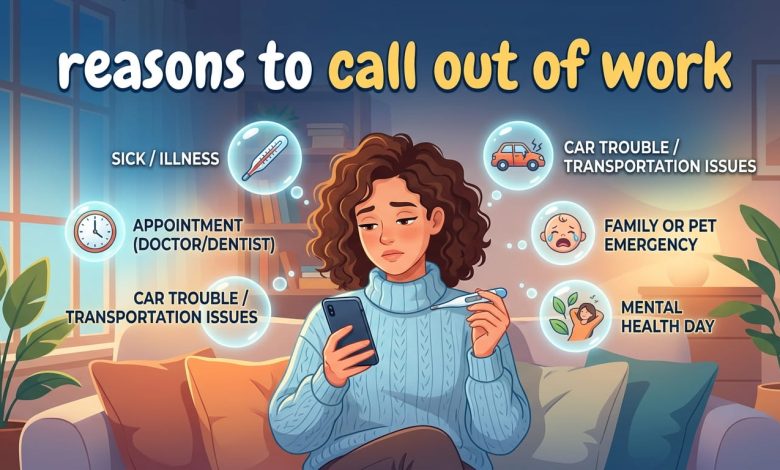
Your alarm goes off, and something’s clearly wrong. Maybe it’s a fever, a kid who threw up on the way to school, or a car that won’t start. Whatever it is, you need reasons to call out of work that your manager will actually respect, and you need the right words to say it fast. This guide covers 12 legitimate reasons people miss work at the last minute, plus exactly how to phrase the message so you don’t spend your sick day worrying about how it landed.
You’ll also get a quick breakdown of what makes an excuse believable versus what raises eyebrows, along with sample scripts you can copy directly into a text or email.
What Makes a Reason to Call Out of Work Actually Good
A good excuse to call out of work is one that’s true, reasonably specific, and communicated early. Employers generally understand that life happens. What damages trust isn’t the reason itself, it’s vague last-minute stories that don’t add up or a pattern of absences that always seems to land on Fridays.
Before you send that message, ask yourself two things. Does this situation genuinely stop you from working today? And can you say it out loud to your manager’s face without flinching? If both answers are yes, you’re in solid territory.
12 Good Excuses to Call Out of Work
Each of these covers a different situation, from your own health to circumstances completely out of your control.
1. You’re Genuinely Sick
Fever, stomach bugs, migraines, and bad colds are the most common and most accepted reason to miss work. Most employers would rather you stay home than show up contagious and slow down the whole team.
Sample message: “Hi [Name], I woke up with a fever and body aches. I don’t want to risk spreading anything, so I’m going to stay home today and rest.”
2. A Family Emergency
Family emergencies cover everything from a parent’s sudden hospitalization to a spouse’s car accident. You don’t owe your employer a detailed explanation here.
Sample message: “I have a family emergency I need to handle this morning. I’ll keep you posted on my availability.”
3. Your Child Is Sick or School Is Closed
Sick kids, snow days, and school closures are one of the most common and most accepted reasons parents call out on short notice. Daycare cancellations count too.
Sample message: “My daughter woke up sick and can’t go to school today. I need to stay home with her, but I’m reachable by phone for anything urgent.”
4. A Pet Emergency
A dog that ate something toxic or a cat that suddenly can’t walk qualifies as a real emergency, not an excuse. Most managers who own pets themselves will understand instantly.
Sample message: “My dog got into something he shouldn’t have, and I need to get him to the emergency vet right away.”
5. A Car Won’t Start or You’ve Been in an Accident
Transportation failure is sudden, disruptive, and completely out of your control. Whether it’s a dead battery or a fender bender, this one rarely gets questioned.
Sample message: “My car won’t start this morning and I’m waiting on a tow. I’ll update you once I know how long this will take.”
6. Severe Weather
Ice storms, flash flooding, and blizzards can make the drive to work genuinely unsafe. Most companies would rather you miss a shift than risk an accident on the way in.
Sample message: “The roads near me are covered in ice and several accidents have already been reported. I don’t feel safe driving in yet.”
7. A Last-Minute Medical or Dental Appointment
Sometimes a specialist calls with a same-day cancellation opening, and waiting months for another slot isn’t realistic. Taking that appointment is a smart move, not a bad excuse.
Sample message: “My doctor’s office called with an opening this morning after a cancellation. I need to take it since my next available slot isn’t for months.”
8. A Death in the Family
Bereavement is one of the few reasons almost every workplace accepts without question. You’re not expected to give details about the relationship or the circumstances.
Sample message: “I just found out a close family member passed away. I need to take today off and will follow up on the details soon.”
9. A Mental Health Day
More companies now treat mental health the same as physical health, especially when burnout starts affecting focus and performance. Check your company’s policy first, since not every workplace frames this the same way.
Sample message: “I’m feeling overwhelmed and need to take a mental health day to reset. I’ll be back and fully focused tomorrow.”
10. A Legal or Court Obligation
Jury duty, a subpoena, or a court date isn’t optional, and employers are legally required to accommodate most of these situations. A brief mention is usually enough.
Sample message: “I’ve been called in for a legal matter I have to attend today. I can share documentation if needed.”
11. A Home Emergency
Burst pipes, a gas leak, or a break-in all require your presence right away, and they’re not something you can schedule around. These situations tend to get immediate sympathy.
Sample message: “There’s a water pipe that burst in my apartment and I need to be here for the repair crew and insurance adjuster.”
12. Physical Injury
A twisted ankle, a bad fall, or a strained back can make it unsafe or impossible to do your job, especially in physical roles. Even desk jobs become difficult with certain injuries.
Sample message: “I hurt my back moving something heavy last night and can barely sit up today. I need to rest it and will check in tomorrow.”
How to Call Out of Work Without Burning Bridges
The reason matters less than how you deliver it. Managers remember the employees who communicate clearly far more than the ones who had a slightly unusual excuse.
- Reach out as early as possible. A message sent the night before or first thing in the morning reads as far more credible than one sent an hour after your shift started.
- Keep it short. One or two sentences with the reason and your expected return is plenty. Over-explaining often makes an excuse sound less believable, not more.
- Offer a plan for coverage. Mention who can pick up anything urgent, or say you’ll check messages periodically if that’s realistic for your situation.
- Match the channel to the severity. A routine sick day is usually fine over text or email. A bereavement or medical emergency generally deserves a phone call.
- Follow up once you’re back. A quick thank-you to whoever covered for you goes a long way toward keeping goodwill intact.
Reasons That Don’t Hold Up
Some excuses tend to backfire, especially if they get used more than once. Oversleeping, a bad hair day, wanting to catch a sale, or “just not feeling like it” all read as poor planning rather than a genuine need to be absent.
If you’re using PTO for something personal, it’s usually better to say so directly rather than inventing a story. Most managers respect honesty about needing a day off far more than they respect a shaky excuse they can’t quite verify.
FAQS
What is the best excuse to call out of work last minute?
The best excuse is the true one, delivered as early as possible. A genuine illness, family emergency, or transportation problem communicated clearly and early is far more effective than an elaborate story.
What should I say when calling out of work?
State the reason briefly, give your expected return date if you know it, and offer to help with anything urgent from a distance. Keep the message to one or two sentences and send it as soon as you know you can’t come in.
Do I need a doctor’s note to call out sick?
It depends on your employer’s policy. Some workplaces only require documentation after a certain number of consecutive sick days, while others may ask for it any time. Check your employee handbook to confirm your company’s specific rule.
Is calling out for a mental health day acceptable?
Many employers now accept mental health as a valid reason for a sick day, though policies vary by workplace. If your company doesn’t explicitly list it, framing the message around feeling unwell is a safer approach.
How early should I call out of work?
As early as possible, ideally before your shift starts. Notifying your manager the night before or first thing in the morning gives your team the most time to adjust coverage.
Can my employer fire me for calling out of work?
It depends on your company’s attendance policy, your employment status, and local labor laws. Legitimate reasons communicated properly and within policy rarely lead to termination, though repeated unexplained absences can create issues over time.
What’s the difference between calling out and using PTO?
Calling out typically refers to an unplanned absence communicated on short notice, while PTO usually covers pre-scheduled time off. Many companies pull sick calls from the same PTO or sick leave bank, so check how your employer classifies each.
Should I text or call when I can’t make it to work?
Text or email works fine for routine situations like a cold or minor appointment. Serious matters like a death in the family or a medical emergency generally warrant an actual phone call.
Send That Message and Take Care of Yourself
Whatever’s keeping you home today, a short, honest message sent early beats a long explanation sent late every time. Stick to the truth, keep your manager in the loop, and offer to help where you reasonably can.
If you’re dealing with recurring absences and want to understand your rights around sick leave or medical accommodations, check out our guide on workplace leave policies on reuterings.com before your next conversation with HR.