
It’s 2 AM and you’re flipping your pillow to the cool side again, wondering why you can’t just sleep through the night without overheating. If this sounds familiar, you’re not alone. Millions of people struggle with mattresses that trap heat, turning bedtime into a sweaty battle. A cooling memory foam mattress can actually change how you sleep, but finding the right one means understanding what cooling really does and matching it to your specific needs.
This guide walks you through the best cooling memory foam mattresses available today, explains the technology that makes them work, and shows you exactly how to choose one that fits your sleep style and budget. Whether you’re a hot sleeper, a side sleeper who needs support, or someone sharing a bed with a partner who runs warm, you’ll find what you need here.
What Makes a Cooling Memory Foam Mattress Actually Cool?
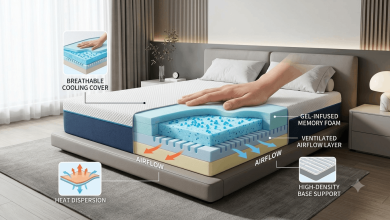
This might sound obvious, but most cooling mattresses don’t work the way people think. The mattress isn’t creating cold air like an air conditioner. Instead, cooling memory foam uses several strategies to pull heat away from your body and dissipate it into the room.
The most common approach is gel infusion. Manufacturers mix cooling gel particles or liquid gel into the foam during production. These particles absorb body heat and distribute it across a larger surface area, preventing heat from building up directly under your body. The effect is real, though subtle. You won’t feel like you’re sleeping on a cold surface, but you’ll notice you’re not waking up sweaty.
Copper-infused foam works similarly. Copper is an excellent heat conductor, meaning it moves warmth away from your body faster than standard memory foam. Some mattresses combine both gel and copper for maximum heat management.
Open-cell foam structure also matters more than you’d expect. Think of it like a sponge with larger, more connected pores. This design lets air flow through the foam more easily, preventing the “stuck in foam” feeling that traps heat. When you shift your body at night, air moves through these cells more freely.
A few premium mattresses use phase change materials (PCM). These are chemicals that absorb heat when your body gets too warm and release it when your body temperature drops. It sounds like magic, but it’s actually proven technology borrowed from aerospace and athletic gear. The cooling effect is more noticeable than gel alone, though these mattresses typically cost more.
How Cooling Performance Changes Over Time
Here’s something most articles skip over: cooling performance doesn’t stay the same forever. Gel particles can migrate or degrade, especially in lower-quality mattresses. After 5-7 years, you might notice your “cooling” mattress isn’t as cool as it once was.
Higher-density memory foam holds cooling properties longer because the structure breaks down more slowly. Budget mattresses with lower-density foam often show noticeable cooling degradation by year four or five. This doesn’t mean the mattress fails, just that the cooling edge diminishes.
Temperature and humidity affect how cooling technology performs too. In humid climates, gel infusion and copper cooling work better because moisture helps with heat dissipation. In dry climates, your cooling mattress might feel less noticeably cool. This isn’t a product flaw, just physics.
Cooling vs. Firmness: The Tradeoff Nobody Talks About
This is where shopping gets tricky. The best cooling mattresses don’t feel like sleeping on a block of ice. In fact, adding cooling layers often makes the mattress feel softer or less supportive than a traditional memory foam bed.
Why? Cooling gels and copper-infused layers are typically softer than standard memory foam. They provide less push-back, which feels more comfortable at first but can mean less lumbar support for back sleepers. If you need firm support and cooling, you’re choosing between two competing needs.
Some brands solve this by putting cooling materials only in the top layers (comfort layers) while keeping deeper support layers traditional and firmer. This balance works well for most people. However, if you’re a back sleeper who needs maximum support or a heavier person who needs significant push-back, a cooling mattress might feel too soft compared to what your body needs.
Side sleepers actually benefit from this softness because it cushions pressure points at shoulders and hips.
The 5 Best Cooling Memory Foam Mattresses
1. Tempur-Pedic TEMPUR-Cloud Breeze Dual Cooling
Tempur-Pedic builds the most consistent cooling experience. The TEMPUR-Cloud Breeze uses their proprietary cooling cover and gel-infused proprietary foam. What sets this mattress apart isn’t a single technology but how well all the pieces work together.
The cooling cover uses woven cooling fibers that actively wick moisture away from your skin. Most mattresses have static covers. Tempur’s weave continuously moves heat out. The underlying foam uses a combination of gel particles and open-cell structure, so cooling starts at the surface and continues deeper.
The feel is comfortable without being soft. This mattress gives you support and cooling, which rarely happen together. You won’t sink so far into the bed that you feel stuck, but you also get real pressure relief.
The downside is cost. This mattress sits at the premium price tier, typically $2,000-3,000 for a queen. The cooling benefit justifies it for serious hot sleepers, but it’s not an entry-level option.
Warranty: 10 years. Trial: 100 nights.
2. Purple Hybrid Premier
Purple took a different approach to cooling. Instead of gel-infused foam, they use a grid of flexible polymer in the top layer. This grid is filled with air, creating thousands of tiny channels that promote airflow.
The difference you feel immediately is responsiveness. This mattress doesn’t have the “memory” sinking feeling of traditional memory foam. Instead, you feel supported and cool almost simultaneously. The polymer flexes as you move, so it constantly repositions to maximize air circulation under your body.
The cooling is noticeable and sustained. Even after years, the grid structure doesn’t degrade the way gel particles can. Purple owners report consistent cooling performance well beyond five years.
This mattress works exceptionally well for hot sleepers who also want to avoid the “stuck” feeling of dense memory foam. The firmness level is medium, making it suitable for all sleep positions though side sleepers might want to test it first because some find it too responsive rather than conforming.
Price is mid-to-premium, typically $1,500-2,500 for a queen. The grid technology is proprietary to Purple.
Warranty: 10 years. Trial: 100 nights.
3. Helix Wedge Luxe
If you’re looking for excellent cooling without the premium price tag, Helix Wedge Luxe is the value choice. This mattress uses gel-infused memory foam in the top comfort layer combined with an open-cell base foam design.
The cooling isn’t quite as aggressive as Tempur or Purple, but it’s significantly better than a standard memory foam mattress. Most hot sleepers report waking up dry and comfortable rather than their previous experience of waking in the middle of the night overheated.
What you’re really paying for with Helix is consistency. The company has been focused on cooling specifically, so they’ve optimized the foam blend through multiple iterations. There’s no gimmick here, just solid engineering.
The mattress feels medium-firm, which appeals to back and side sleepers. Stomach sleepers might find it slightly too soft. The gel doesn’t make it feel cold; it just prevents heat from accumulating.
Price is accessible: typically $1,200-1,800 for a queen. This is where you start to get serious cooling without a premium investment.
Warranty: 10 years. Trial: 100 nights.
4. Saatva Rx Memory Foam
Saatva positions the Rx as a medical-grade cooling mattress, which sounds like marketing until you look at the construction. The top layer uses copper-infused memory foam. Copper conducts heat faster than gel, so the cooling effect happens more quickly after you lie down.
This mattress is noticeably firmer than the previous options, which makes it excellent for back sleepers and heavier people who need significant support. If you’re 200+ pounds, this mattress gives you the push-back you need without the sinking feeling that can cause back strain.
The copper also has antimicrobial properties, which matters for people with dust mite sensitivities or allergies. It’s not a medical cure, but it does reduce bacterial growth in the foam layer.
Price sits in the mid-range: around $1,400-2,000 for a queen. For a firmer cooling mattress, this represents good value.
The trade-off: firmness means less pressure relief for side sleepers, especially at the hips and shoulders. This mattress is built for back sleepers first.
Warranty: 15 years. Trial: 120 nights.
5. Nectar Lush Memory Foam
Nectar Lush is the entry point to quality cooling without breaking the budget. This mattress uses gel-infused memory foam throughout the comfort layer and a responsive base foam layer.
The cooling is moderate. Don’t expect the aggressive cooling of a gel-flex hybrid mattress, but you will stay significantly cooler than in a standard memory foam bed. Most users report this mattress cuts their nighttime sweating in half.
The firmness is medium-soft, which feels comfortable immediately but might lack support for back sleepers over many hours. It’s a cloud-like feel that works best for side sleepers and combination sleepers.
Where Nectar excels is accessibility. At $800-1,200 for a queen, this is a cooling mattress that fits a reasonable budget. You’re not getting cutting-edge technology, but you’re getting proven gel cooling in a well-constructed mattress.
Quality is consistent. Nectar has been through multiple versions and has refined their formula. That consistency matters when you’re buying online without testing the mattress first.
Warranty: Lifetime. Trial: 365 nights. This trial length is the most generous in the industry.
How to Choose the Right Cooling Mattress for You
Sleep position matters more than you’d think. Back sleepers need firm support with cooling, which narrows your options. The Saatva Rx and mid-firm options like Helix work best. Side sleepers benefit from the softer feel of gel-infused options that cushion shoulders and hips. Stomach sleepers need firmness to prevent lower back sag, which rules out the softest cooling mattresses.
Your budget determines your entry point. Under $1,000: Nectar Lush. $1,000-1,500: Helix Wedge Luxe or Saatva Rx. $1,500+: Purple or Tempur-Pedic. Each tier delivers real cooling, just with different technologies and supporting features.
Whether you share a bed changes everything. If your partner sleeps cool while you overheat, you need a mattress that doesn’t transfer motion and heat between zones. Purple’s grid design excels here because the cells respond independently. Memory foam mattresses with gel infusion work if the gel is distributed evenly throughout the foam.
Your climate affects cooling noticeability. In humid environments, cooling mattresses perform better. In dry climates, the effect is less dramatic but still significant. This isn’t a reason to skip cooling if you’re a hot sleeper, just realistic expectation-setting.
How hot you actually get matters. If you wake up drenched in sweat, you need premium cooling with technologies like copper or phase change materials. If you just feel uncomfortable and toss around, mid-tier cooling works fine. Real cooling problems require real cooling solutions, not budget options.
Frequently Asked Questions About Cooling Memory Foam Mattresses
Do cooling memory foam mattresses actually work?
Yes, cooling memory foam mattresses measurably reduce how much heat accumulates under your body. The cooling effect isn’t like an air conditioner, but it’s noticeably more comfortable than standard memory foam for hot sleepers. Most users report waking up cooler and staying asleep longer.
How long does cooling last in a memory foam mattress?
Cooling performance typically remains strong for 5-7 years, depending on mattress quality. Lower-priced mattresses show cooling degradation by year four. Premium mattresses maintain cooling effectiveness longer because the materials break down more slowly. This doesn’t mean the mattress fails, just that the cooling edge diminishes.
Are cooling memory foam mattresses good for side sleepers?
Yes, especially those with gel-infused foam. The softer feel of gel cooling layers provides excellent pressure relief at the shoulders and hips. Medium-firm cooling mattresses work well for side sleepers, though very firm options might feel too rigid unless you specifically need that support level.
What’s the difference between gel and copper cooling?
Gel infusion absorbs body heat and distributes it across a larger surface. Copper is a better heat conductor, pulling warmth away from your body faster. Copper cooling typically feels more noticeable immediately, while gel cooling feels more gradual. Copper also has antimicrobial properties that gel doesn’t offer.
Can you use a cooling mattress topper instead of buying a new mattress?
Yes, cooling toppers work and cost less than a new mattress. However, they typically cool less effectively than a mattress built with cooling technology throughout the structure. If you’re considering a topper, expect 50-70% of the cooling benefit of a dedicated cooling mattress. Toppers also move and bunch more than built-in cooling layers.
Do cooling mattresses work in hot climates?
Yes. While cooling is more noticeable in moderate climates, hot sleepers in warm regions still benefit from cooling mattresses. The mattress won’t cool your room, but it prevents additional heat buildup from your own body, which makes a real difference in how well you sleep.
How firm should a cooling mattress be?
There’s no single right firmness. Back sleepers generally prefer medium-firm to firm cooling mattresses for proper spinal alignment. Side sleepers do better with medium or medium-soft for pressure relief. Stomach sleepers need firm support to prevent lower back sagging. Test different firmness levels if possible, or choose brands with longer trial periods.
Are cooling mattresses more expensive?
Cooling mattresses cost 15-30% more than standard memory foam mattresses. Entry-level cooling options start around $800, while premium cooling mattresses reach $3,000+. The price reflects the technology and materials used. Mid-tier cooling mattresses ($1,200-1,600) offer the best value for most hot sleepers.
What’s the best cooling mattress for couples?
Purple Hybrid or gel-infused options work best for couples with different temperature needs because the cooling effect isn’t limited to one side. Look for mattresses with good motion isolation so your partner’s tossing doesn’t disturb you. Avoid super soft options that allow too much motion transfer between partners.
Can you make a regular memory foam mattress cooler?
Partially. Adding a cooling mattress topper, using breathable sheets, and keeping your bedroom cool helps. However, a regular memory foam mattress has inherent heat retention because of how the foam is structured. A cooling mattress addresses the problem at the source rather than around it.
Make the Right Choice for Your Sleep
Choosing a cooling memory foam mattress isn’t about finding the cheapest option or the one with the fanciest technology. It’s about matching cooling methods to your sleep position, budget, and how hot you actually get. Most hot sleepers find their answer in the mid-tier range where quality cooling technology meets reasonable pricing.