
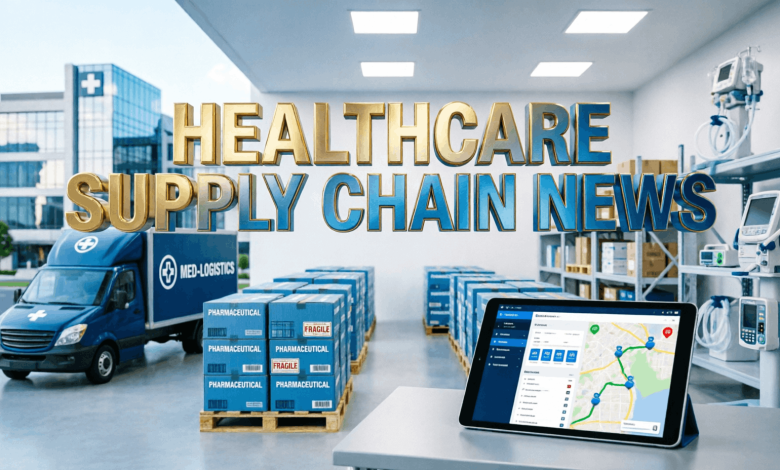
A hospital in Ohio ran out of a common IV fluid last winter, not because the fluid didn’t exist, but because nobody could track where the last pallet of it was sitting. That kind of breakdown is exactly why the healthcare supply chain management market has turned into one of the most closely watched corners of health tech. Spending on these tools is projected to reach roughly $4.5 billion globally in 2026, and industry analysts expect that figure to more than double by the early 2030s.
If you’re trying to understand why hospitals, drug makers, and logistics firms are pouring money into this space right now, this guide walks through the numbers, the players, and the practical changes happening on hospital loading docks and pharmacy shelves.
What Is Driving Growth in the Healthcare Supply Chain Management Market
The short answer: nobody wants a repeat of the shortages that defined the early 2020s. Hospitals got burned once by manual inventory tracking and fragmented supplier relationships, and now they’re paying to fix it.
Rising healthcare costs are pushing providers to cut waste anywhere they can find it, and supply spending is often the second-largest line item on a hospital’s budget after labor. Better tracking means fewer expired drugs, fewer emergency rush orders, and less money tied up in inventory sitting on a shelf.
Government policy plays a role too. The Drug Supply Chain Security Act pushed pharmaceutical companies and distributors to adopt unit-level serialization, which forced a lot of organizations to upgrade systems they’d been putting off for years.
Market Size and Growth Numbers You Should Know
Estimates vary depending on which research firm you check and how they define the category, but the general direction agrees. Several major reports place the global market somewhere between $3.9 billion and $4.5 billion in 2026, with growth rates ranging from about 5% to 12% a year through the early 2030s.
The wide range comes down to scope. Reports that count hardware like RFID tags and barcode scanners alongside software tend to land on lower growth figures. Reports focused mainly on cloud-based and AI-driven platforms show faster growth, since that’s where the bulk of new spending is happening.
Software now makes up more than half of total spending in this market. Hospitals are choosing platforms that connect procurement, inventory, and compliance into one system instead of running three separate tools that don’t talk to each other.
North America Still Leads, But Asia-Pacific Is Catching Up
North America holds close to half of global market share, thanks to a heavy concentration of major vendors, deep hospital budgets, and infrastructure that’s already digitized. Oracle and McKesson both have a strong footprint here.
Asia-Pacific is the region to watch. Countries like China, India, and Japan are expanding hospital networks fast, and government-backed digitization programs are pushing supply chain software adoption at a pace that outstrips North America’s growth rate, even though the region’s total spending is still smaller.
Key Players Shaping the Market
A handful of companies show up again and again across nearly every market report:
- Oracle – Cloud-based supply chain management through its Fusion SCM platform, with AI features added for demand forecasting and workforce visibility.
- McKesson – A distribution giant that also builds supply chain tools directly into its pharmaceutical logistics network.
- SAP – Enterprise resource planning software widely used by large hospital systems and manufacturers.
- Cardinal Health – Combines distribution with inventory management services for providers.
- TECSYS – Focused specifically on healthcare logistics and hospital-grade inventory software.
- Global Healthcare Exchange (GHX) – Runs a network connecting providers with suppliers for procurement and order accuracy.
- Blue Yonder – Known for AI-driven demand planning tools that hospitals use to predict supply needs before shortages happen.
Smaller, more specialized vendors like LogiTag and Jump Technologies compete by focusing narrowly on hospital point-of-use inventory, an area the bigger players sometimes overlook.
AI, Cloud, and Real-Time Visibility Are Changing How Hospitals Order Supplies
Roughly seven out of ten hospitals now run at least part of their supply operations on cloud platforms, and that share keeps climbing. Cloud systems let a supply chain director check inventory across ten different hospital sites from one dashboard instead of calling each location separately.
AI has moved past the buzzword phase in this market. Predictive models now look at surgery schedules, seasonal illness patterns, and past ordering data to flag when a hospital is about to run low on something before staff notice. Vendors report efficiency gains in the range of 20% when these systems are used well, though results depend heavily on how clean the underlying data is.
RFID tagging and barcode scanning are still doing a lot of the heavy lifting at the physical level. Japan in particular has invested heavily in this area to improve hospital compliance and cut down on manual counting errors.
The DSCSA Deadline and Why Traceability Matters Now
The Drug Supply Chain Security Act requires pharmaceutical products to carry unit-level serial numbers that can be tracked electronically from manufacturer to pharmacy shelf. That sounds bureaucratic, but the point is simple: if a batch of medication turns out to be contaminated or counterfeit, regulators and pharmacies need to trace it and pull it fast.
This mandate forced a lot of distributors and hospital pharmacies to adopt integrated tracking software they’d otherwise have delayed buying. It’s one of the clearest examples of regulation directly driving market growth rather than just following it.
Cold Chain Logistics and the Rise of Biologics
Specialty medicines, including biologics and cell-and-gene therapies, are expected to account for more than 40% of global drug spending within the next couple of years. These products often need strict temperature control from the moment they leave a manufacturing plant to the moment a nurse administers them.
That requirement is reshaping how supply chain software gets built. Cold chain monitoring, temperature logging, and chain-of-custody documentation are no longer optional add-ons. They’re becoming standard features baked into mainstream platforms, because a single temperature excursion can ruin a shipment worth tens of thousands of dollars.
Cost Pressures and the Push for Group Purchasing
Group Purchasing Organizations, or GPOs, pool buying power across multiple hospitals to negotiate better prices on supplies. Hospitals working with GPOs report average supply cost reductions around 13%, which explains why nearly every large health system in the U.S. belongs to at least one.
GPOs used to focus almost entirely on pricing. Now many of them offer data and analytics services too, helping member hospitals figure out where they’re overspending or duplicating orders across departments.
What This Means for Hospitals and Patients
Most coverage of this market stays at the corporate level and skips what actually changes at the bedside. Better supply chain software means fewer canceled surgeries because a specific implant wasn’t in stock, and fewer situations where a nurse has to substitute a less appropriate device because the right one didn’t arrive.
Patients rarely see the software directly, but they feel the difference when a hospital runs out of nothing on the day they need it most. Smaller rural hospitals, which often lack dedicated logistics staff, tend to benefit the most from cloud platforms that automate reordering, since they don’t have the headcount to manage it manually.
Challenges Slowing Adoption
None of this comes cheap or easy, and it’s worth being honest about that. Smaller hospitals and clinics often can’t justify the upfront cost of a full platform migration, which is why adoption still skews toward large, well-funded health systems.
Data privacy is another sticking point. Moving inventory and patient-adjacent data to the cloud raises real cybersecurity concerns, and a lot of IT teams cite training gaps as a bigger obstacle than the software itself. Getting staff comfortable with a new system takes months, not weeks, and rushed rollouts tend to produce messy data that undermines the AI features hospitals paid extra for.
Integration with older hospital record systems remains a genuine headache too. Plenty of hospitals are still running legacy software that wasn’t built to talk to modern supply chain platforms, and stitching the two together often costs more than the software license itself.
Frequently Asked Questions About the Healthcare Supply Chain Management Market
How big is the healthcare supply chain management market in 2026?
Most industry estimates place the global market between $3.9 billion and $4.5 billion in 2026. The exact figure depends on how a given report defines the category, since some include hardware like RFID scanners while others focus only on software and services.
What is driving growth in the healthcare supply chain management market?
Growth comes from hospitals trying to cut waste, government regulations like the DSCSA pushing traceability upgrades, and rising demand for cloud-based systems that give real-time visibility into inventory across multiple sites.
Who are the biggest companies in healthcare supply chain management?
Oracle, McKesson, SAP, Cardinal Health, TECSYS, and Global Healthcare Exchange are among the most frequently cited vendors. Each takes a slightly different approach, ranging from full enterprise platforms to hospital-specific logistics tools.
How does AI help with healthcare supply chains?
AI models analyze past ordering patterns, surgery schedules, and seasonal trends to predict when supplies will run low. This helps hospitals reorder before a shortage happens instead of scrambling after the fact, with some vendors reporting efficiency gains near 20%.
What is DSCSA and why does it matter for supply chains?
The Drug Supply Chain Security Act requires pharmaceutical products to carry trackable serial numbers so they can be traced from manufacturer to pharmacy. It matters because it makes drug recalls faster and helps prevent counterfeit medications from reaching patients.
Which region has the fastest-growing healthcare supply chain management market?
Asia-Pacific shows the fastest growth rate, driven by expanding hospital infrastructure and government digitization programs in countries like China, India, and Japan. North America still holds the largest overall share of global spending.
What is a Group Purchasing Organization and how does it fit into this market?
A Group Purchasing Organization, or GPO, negotiates bulk pricing on medical supplies on behalf of multiple hospitals. Member hospitals report average cost savings around 13%, and many GPOs now offer data analytics services on top of pricing.
Why do some hospitals struggle to adopt supply chain software?
Cost is the biggest barrier, especially for smaller hospitals without large IT budgets. Staff training gaps, cybersecurity concerns, and difficulty integrating new platforms with older hospital record systems also slow adoption.
Where This Leaves Hospitals and Buyers
The healthcare supply chain management market keeps growing because the alternative, running hospitals on spreadsheets and phone calls, has already proven too risky. Cloud adoption, AI-driven forecasting, and stricter traceability rules are pushing even smaller providers toward platforms that once only large health systems could afford.
If you’re researching vendors or trying to understand where hospital IT budgets are headed next, check out our related coverage on hospital cloud adoption trends and medical device compliance standards on Reuterings for a deeper look at how these shifts play out on the ground.