
Imagine extending your pool season without watching your electric bill skyrocket every month. That’s the reality for thousands of pool owners who’ve switched to solar heating systems. Whether you’re dealing with chilly spring mornings or trying to squeeze in September swims, an above ground swimming pool solar heater offers a practical solution that costs almost nothing to operate once it’s installed.
This guide walks you through everything you need to know about solar pool heaters, from how they actually work to whether one makes sense for your backyard setup. By the end, you’ll understand exactly what to look for and whether this investment pencils out for your situation.
How Above Ground Swimming Pool Solar Heaters Work
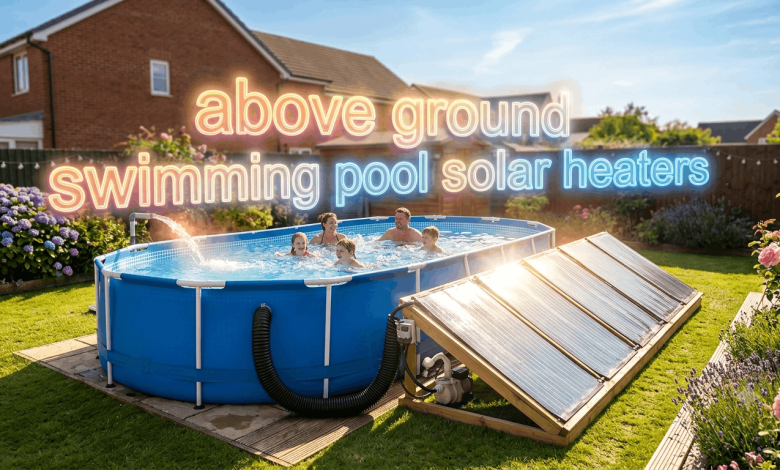
The concept is deceptively simple. Water from your pool circulates through black panels installed on your roof or nearby ground space. The sun heats those panels, and the warmed water flows back into your pool. No fuel needed. No complex moving parts. Just sunshine doing what it does best.
Most systems use your existing pool pump to push water through the solar collectors. That’s the key piece—if you already have a pump running, the solar panels just piggyback on that system. The pump creates the circulation, and the panels act as a heat exchanger. Some advanced setups include sensors and controllers that automatically stop circulation when panels are cooler than the pool water, which prevents heat loss during cloudy periods.
The efficiency depends heavily on panel material and design. Polypropylene panels work fine for mild climates and can handle cooler water temperatures. Glazed panels (usually glass and copper) perform better in colder climates but cost more. Unglazed panels sit somewhere in the middle, offering good performance for most situations without the premium price tag.
Types of Solar Heaters for Above Ground Pools
You’ve got three main options when shopping, and each serves different priorities.
Unglazed Solar Panels
These are the workhorses of the solar heating world. Unglazed panels use rubber or plastic materials that absorb heat and transfer it to your pool water. They’re affordable, durable, and surprisingly effective in warm climates. The tradeoff? They don’t perform as well in extremely cold conditions because they lose heat quickly to the air around them. Most pool owners in warmer regions find these perfect for their needs.
Installation is straightforward. You can mount them on your garage roof, ground area, or even on a frame built specifically for the purpose. The lack of heavy glass components means they’re lighter and easier to handle than other options.
Glazed Solar Panels
Think of these as the premium option. Glazed panels wrap copper tubing in a glass-fronted enclosure. That glass coating acts like insulation, trapping heat and letting it transfer to your pool water even during colder months. This makes them ideal if you live in a climate with significant temperature swings or want to heat your pool year-round.
The catch is cost. Glazed systems run two to three times more than unglazed alternatives, and they’re heavier, which means installation requires more structural support. But if you’re serious about maintaining warm water regardless of season, this investment pays dividends.
Solar Pool Blankets
Don’t overlook the humble solar cover. These floating blankets reduce evaporation and capture solar heat directly. They won’t warm your pool as aggressively as dedicated panels, but they’re incredibly cheap and require zero installation. Many pool owners use them as a supplementary tool alongside panel systems or as a standalone solution for pools in sunny climates where a 5-10 degree temperature boost is sufficient.
Calculating Pool Heating Requirements and Coverage
Here’s where math meets reality. The amount of solar panel area you need depends on three factors: your pool size, your climate, and how much you want to increase the temperature.
A general rule that works surprisingly well: you need solar panel area equal to 50-100% of your pool’s surface area. So if your pool is 10 feet by 20 feet (200 square feet), aim for 100-200 square feet of solar panels. The exact percentage depends on your location and how much sun exposure your panels get.
Let’s work through an example. You have a 200-square-foot pool in a moderate climate, and you want to raise water temperature by 10 degrees. A 150-square-foot panel system (about 75% coverage) would typically achieve this in late spring through early fall, with slower warming in shoulder seasons.
Your geography matters enormously. Pool owners in Phoenix or Miami can get away with smaller systems because they have more reliable sun throughout the year. Someone in the Pacific Northwest needs proportionally larger coverage to achieve the same temperature gain. If you’re unsure, overestimating coverage is better than underestimating—extra capacity just means faster heating and better performance on cloudy days.
Installation Considerations for Above Ground Pools
Most above ground pools have you mount solar panels on a roof or nearby ground area, not on the pool structure itself. That’s because above ground pools aren’t built to handle the weight and pressure of roof-mounted panels. Instead, installers create stands or use existing structures to position panels at an angle that optimizes sun exposure.
The ideal angle typically points panels toward true south (in the Northern Hemisphere) at a slope equal to your latitude. Don’t stress about perfect angles—panels work effectively across a fairly wide range. Even a mistake that seems off can still capture plenty of solar energy.
Plumbing matters too. Your pool pump pushes water through solar panels via a set of hoses or pipes. These connections need proper sizing so water flows at the right speed—typically 2-4 gallons per minute per 100 square feet of collector. Too slow and water doesn’t move heat efficiently. Too fast and pressure builds up unnecessarily.
Most installations take a day or two if you’re hiring professionals. DIY installation is possible if you’re comfortable with basic plumbing and electrical work, but mistakes in circulation flow can kill system performance. The hose routing, valve placement, and controller settings all need to be correct.
Cost Breakdown and ROI
A complete above ground pool solar heating system runs anywhere from $2,000 to $4,000 installed, depending on your system size and whether you hire professional installers. That might sound steep, but context matters.
A gas heater costs roughly $500-800 upfront but then costs $150-300 monthly to operate during heating season. A heat pump heater sits in the middle, with higher upfront costs ($2,500-4,000) but lower operating expenses ($30-100 monthly). Solar heaters have high upfront costs but virtually zero operating expenses beyond occasional maintenance.
Run the numbers for your situation. If you heat your pool 6 months per year with a gas heater at $200 monthly, you’re spending $1,200 annually. A $3,000 solar system pays for itself in roughly 2.5 years through energy savings alone. After that, heating becomes essentially free except for pump electricity, which you’d spend anyway to run your pool.
Maintenance and Lifespan
Solar panels are ridiculously low-maintenance. You’ll occasionally clean debris off them (leaves, dust, bird droppings reduce efficiency) and check that connections stay tight. That’s genuinely it for most owners. No moving parts mean nothing wears out. No fuel lines mean no clogging issues.
Quality systems last 15-20 years or longer. Some installations that went in during the 2000s are still running perfectly. As long as you check connections annually and keep panels relatively clean, you’re looking at incredibly reliable performance.
The weakest links tend to be hoses, which can crack in UV exposure or freeze in cold climates if water sits in them during winter. Replacing a hose costs $50-200 and takes an hour. Sensors and controllers occasionally need replacement after 10-15 years, but that’s also manageable expense-wise.
Solar Heaters Versus Other Pool Heating Methods
How does solar stack up against alternatives? Each option excels in different scenarios.
Gas heaters heat pools quickly, which appeals to people who use their pool sporadically. You turn them on, and water warms up in hours. But that speed costs money. Operating a gas heater annually can exceed $1,000-1,500 for regular use. Environmental impact matters too—gas heaters produce carbon emissions.
Heat pump heaters are the efficiency middle ground. They use electricity to move heat from air to water, so they’re much cheaper to operate than gas heaters. A heat pump costs $40-80 monthly to run. The tradeoff is they heat more slowly than gas and don’t perform well below 50 degrees outside. In climates where nighttime temperatures drop significantly, heat pumps struggle.
Solar heaters cost more upfront but offer the lowest operating expense by far. If you’re willing to accept that heating takes longer and plan pool time accordingly, solar saves you serious money over time. Many pool owners combine solar with a smaller gas heater or heat pump for backup on cloudy weeks. That hybrid approach gives flexibility without the full cost of a gas system.
Choosing the Right Solar Heater for Your Situation
Before buying, honestly assess three things: your budget, your climate, and how you use your pool.
Budget is straightforward. If you can afford $3,000-4,000 upfront and plan to keep the pool for 5+ years, solar makes financial sense. If you’re renting or keeping the pool short-term, the payback period might not justify the investment.
Your climate determines feasibility. Solar heating works in every climate but performs better in consistent sunshine. If you live in a region with many cloudy days or very cold winters, expect slower heating and smaller temperature increases. That doesn’t mean solar won’t work—it just means managing expectations matters. Someone in Florida gets 20+ degree temperature increases. Someone in Seattle might see 8-10 degrees. Both are valuable depending on your goals.
How you use your pool matters too. If you take casual swims whenever weather permits, a 5-10 degree boost might be enough for comfort. If you want to use the pool year-round, you need more aggressive heating and potentially a glazed system or hybrid approach.
Installation Tips if You’re Going the DIY Route
Hiring professionals costs more but saves headaches. That said, some pool owners handle installation themselves and save $500-1,500. If you’re considering DIY, understand what you’re getting into.
You need basic plumbing knowledge. The system requires connecting hoses between your pool pump, solar panels, and back to the pool. Threaded connections need to be sealed properly to prevent leaks. If you’ve never worked with PVC or hose clamps, now’s not the time to start on a system this expensive.
You also need the right tools. A pipe wrench, tubing cutter, and hose clamps are essential. You might need a drill if mounting panels to a roof. Make sure you understand your roof’s load capacity before installing panels, especially if you’re mounting on a structure that wasn’t designed to support additional weight.
Follow the manufacturer’s instructions exactly. The circulation rate, valve configuration, and sensor placement all need to be right. One mistake in the setup can reduce system efficiency significantly.
Frequently Asked Questions About Above Ground Swimming Pool Solar Heaters
How much warmer can a solar heater make my pool?
Most systems raise pool temperature by 8-15 degrees depending on system size, climate, and time of year. Larger systems in sunny climates can achieve more dramatic increases. You’ll see bigger temperature gains in spring and fall when the sun angle is favorable.
Do solar heaters work on cloudy days?
They work but less effectively. On overcast days, panels might warm water by 2-5 degrees rather than 10-15 degrees. Cloudy weeks will be slower, but the system still captures solar energy. Many owners schedule pool time for sunny periods and use solar alongside a backup heater for reliability.
What’s the lifespan of solar pool panels?
Quality unglazed panels last 15-20 years. Glazed panels often last 20-25 years. Some older systems are still performing fine after 25+ years. Lifespan depends heavily on climate, maintenance, and how much stress the system endures from weather.
Can I install solar panels on my above ground pool directly?
No. Above ground pools aren’t built to support mounted panels. Always mount panels on your roof, nearby ground structure, or a dedicated stand positioned away from the pool itself.
Does my existing pump have enough power for solar panels?
Most existing pool pumps work fine with solar systems. Panels don’t require a more powerful pump than your current setup. In fact, many owners use smaller, more efficient pumps after switching to solar because the system doesn’t need to run continuously.
Is solar heating tax-deductible?
Some states and municipalities offer tax credits or rebates for solar installations. Check your local government’s website or ask your installer about available incentives. Credits vary by location and update frequently, so don’t assume—verify what applies where you live.
What happens to my solar heater during winter?
In freezing climates, you need to drain the system or use freeze-protection technology. Many owners shut down their systems in winter rather than deal with freeze risk. In moderate climates where freezing rarely occurs, the system can run year-round with minimal protection.
Can I use a solar heater with a saltwater pool?
Yes, saltwater pools work fine with solar systems. The salt doesn’t damage panels or hoses significantly. Just ensure your connections are properly sealed since saltwater is more corrosive than chlorinated water.
Make Your Pool Season Longer and Cheaper
An above ground swimming pool solar heater sits at the intersection of comfort and savings. You get to extend your swimming season without the guilt of high energy bills. The system works quietly in the background, requiring almost no attention once installed.
The decision comes down to your climate, budget, and how much you value extending your pool season. If you’re paying $100+ monthly in heating costs, or if you keep your pool closed during shoulder seasons because water is too cold, solar heating answers a real problem.
Start by getting quotes from local solar installers. They can assess your roof, your pool size, and your climate to give you realistic expectations about how much temperature increase you’ll see. Most offer free consultations and can show you examples of similar installations in your area.