
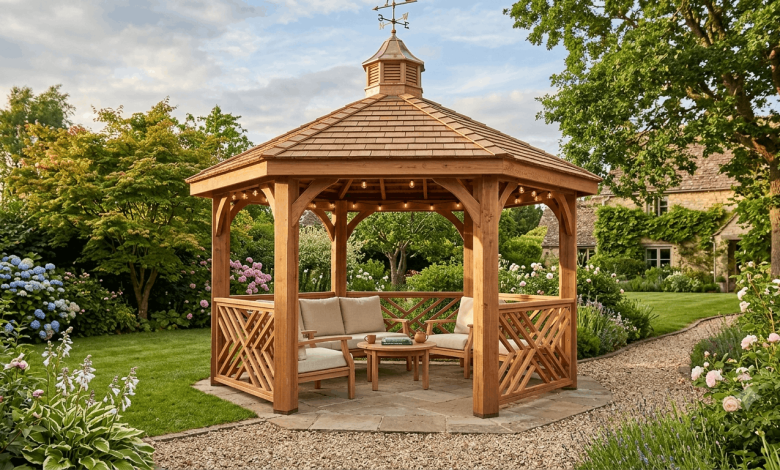
Picture a Saturday afternoon in your backyard. You’ve got a cold drink, a good book, and just enough shade to stay comfortable while the sun does its thing. That picture gets a whole lot better with a cedar gazebo anchoring the space. Cedar gazebos aren’t just attractive outdoor structures; they’re long-term investments that change how you use your yard, add real value to your property, and hold up in ways that cheaper materials simply don’t. This guide covers everything you need to know before you buy or build one, from wood grades and sizes to installation, maintenance, and cost.
What Makes Cedar the Right Wood for a Gazebo?
Not every wood belongs outdoors. Pine rots. Untreated lumber warps. But cedar, particularly Western red cedar, handles outdoor exposure better than almost any other domestic wood species.
Cedar contains natural oils that resist moisture, insects, and decay without chemical treatment. That’s why it’s been used in outdoor furniture, fencing, and siding for generations. Those same oils give cedar its characteristic smell and its warm reddish-brown color that ages gracefully into silver-gray if left untreated.
Western Red Cedar vs. Other Cedar Species
Western red cedar is the gold standard for outdoor structures. It’s lighter than most hardwoods, which makes it easier to work with, and it’s dimensionally stable, meaning it doesn’t expand and contract as dramatically as pine or oak when temperatures shift.
Northern white cedar is another solid option, especially in the Northeast United States where it grows abundantly. It’s slightly denser than Western red cedar, which some builders prefer for structural posts. Either species outperforms pressure-treated pine over the long run, despite pine being cheaper upfront.
Clear Cedar vs. Knotty Cedar: Why the Grade Matters
This is something most buying guides gloss over, and it makes a real difference to your wallet and the final look.
Cedar is graded by knot frequency and size. Clear cedar has few to no knots, giving a smooth, uniform appearance and slightly better resistance to splitting at stress points. Knotty cedar costs 20 to 40 percent less and still performs well structurally, but those knots can occasionally become weak points over time, especially in posts that carry weight.
For a gazebo’s decorative trim and railings, knotty cedar is perfectly fine. For load-bearing posts and beams, clear or select-grade cedar is worth the extra cost.
Types of Cedar Gazebos: Matching the Structure to Your Space
Cedar gazebos come in more shapes and configurations than most people realize. The right type depends on your yard size, intended use, and how much you want the structure to stand out.
Octagonal Gazebos
The classic eight-sided design is still the most popular for good reason. The shape distributes weight evenly across all sides, making it structurally sound without needing a complex foundation. Octagonal cedar gazebos fit naturally into round garden clearings and work well as standalone focal points in larger yards.
Standard sizes run from 10 feet to 14 feet in diameter, with 12-foot being the most common kit size. That gives you enough interior space for a round table and six chairs.
Rectangular and Square Cedar Gazebos
Rectangular gazebos are better suited to long, narrow yards or spaces adjacent to a pool or patio. A 10×12 or 10×16 footprint works naturally alongside existing hardscaping and gives you more usable interior square footage than a same-diameter octagonal model.
Square designs split the difference. They’re simpler to build than octagonal, often less expensive in kit form, and still work well for a dining setup or outdoor lounge area.
Oval and Custom Shapes
Some manufacturers offer oval cedar gazebos, though they’re less common in pre-built kit form. If you want something other than the standard shapes, a custom build from a local contractor or lumber yard is often the most practical path. Expect custom shapes to add 30 to 60 percent to the cost compared to equivalent kit structures.
Screened Cedar Gazebos
Screened models come with mesh panels between posts, keeping insects out while still allowing airflow. These are popular in humid climates where mosquitoes make unscreened outdoor spaces miserable from late spring through early fall. Screened cedar gazebos typically cost 15 to 25 percent more than open models of the same size.
How Much Do Cedar Gazebos Cost?
Cedar gazebos vary widely in price depending on size, grade, complexity, and whether you’re buying a kit or commissioning a custom build. Here’s how the numbers break down.
Pre-Built Cedar Gazebo Kit Prices
Kit prices have risen over the past few years due to lumber costs, but you can still find solid options across a range of budgets:
- Small kits (8 to 10 feet): $1,200 to $3,500
- Mid-size kits (12 feet): $3,500 to $6,500
- Large kits (14 feet and above): $6,500 to $12,000+
These prices cover the structure only. Shipping large gazebo kits can add $200 to $800 depending on location.
Professional Installation Costs
If you’re not going the DIY route, installation labor adds $1,500 to $5,000 or more depending on your region and the complexity of the project. A simple octagonal kit on flat ground with a pre-existing concrete pad falls toward the lower end. A custom structure with a site-built foundation on sloped terrain can easily exceed $5,000 in labor alone.
Foundation Costs
Most cedar gazebo kits assume you already have a level surface. If you don’t, add foundation costs to your budget:
- Concrete pad (poured): $500 to $1,500 for a 12-foot gazebo footprint
- Gravel base with concrete footings: $400 to $900
- Deck-mounted installation: varies based on existing deck condition
What Drives the Price Up?
Several factors push costs above the baseline:
- Roof complexity: Hip roofs and Victorian-style peaked roofs cost more than simple shed-style roofs. Shake shingles add to both material and installation costs compared to composite roofing.
- Accessories: Adding electrical wiring for lights or a ceiling fan, a built-in bar counter, or custom railings each adds to the total.
- Cedar grade: As mentioned, clear cedar commands a premium. A 12-foot kit in clear Western red cedar can run $2,000 to $3,000 more than the same structure in knotty grade.
Cedar Gazebo Kits vs. Custom Builds: Which One Makes Sense?
Both options are legitimate, and the right choice depends more on your situation than on which is objectively better.
When a Kit Makes Sense
Cedar gazebo kits from retailers like Home Depot, Costco, or specialty outdoor brands offer a few real advantages. The materials are pre-cut, labeled, and packaged with hardware. If you’re comfortable with basic construction and have a helper or two, a 12-foot octagonal kit can go up in a weekend.
Kits also give you predictable pricing. You know what you’re getting before any money changes hands.
The tradeoff is flexibility. Kits come in fixed sizes and standard configurations. If your yard is an unusual shape, or you want a specific post height to clear a fence line, a kit might not work without modification.
When to Go Custom
A custom-built cedar gazebo is the right call when you have specific site constraints, want a non-standard size, or want features that kits don’t offer, like custom lattice patterns, built-in benches, or a specific roof pitch.
Custom builds also let you specify the cedar grade across every component. You’re paying more, but you’re getting exactly what you designed.
Foundation Options for Cedar Gazebos
The foundation doesn’t get nearly enough attention in most cedar gazebo guides. Get it wrong, and your structure will shift, settle, or rot at the base points within a few years.
Concrete Slab
A solid concrete slab is the most stable option for permanent structures. It eliminates ground contact for wooden posts, which is the primary source of rot in any outdoor wood structure. If you’re building in a region with frost, the slab needs to be poured below the frost line to prevent heaving in winter.
Concrete Footings with Post Anchors
This approach uses individual concrete footings at each post location with metal post anchors set into the concrete. The posts sit above grade, reducing moisture exposure significantly. It’s a common choice for DIY projects because individual footings are less work than a full slab pour.
Deck-Mounted Installation
If you have an existing wood or composite deck in good condition, you can mount a cedar gazebo directly to the deck structure. This works well aesthetically, but you need to confirm your deck’s load capacity with a contractor before adding the weight of a gazebo and its occupants.
Gravel Pad
Some homeowners use compacted gravel as a base, especially for lighter structures. This is the lowest-cost option but also the least stable over time. Frost cycles push gravel around, and once one post settles even slightly, the whole structure becomes unlevel. Gravel works better as a decorative base around a concrete or footing foundation than as the foundation itself.
How Long Do Cedar Gazebos Last?
A well-maintained cedar gazebo can last 20 to 40 years. Some older structures exceed that with consistent care. Cedar’s natural oils do a lot of the work, but maintenance plays a big role in where on that range your gazebo ends up.
Structures left completely untreated will gray and weather. That weathered silver look is appealing to many people and doesn’t indicate structural failure, but unprotected cedar does become more vulnerable to checking (surface cracking) over time, especially in dry climates with strong UV exposure.
With regular sealing every two to three years, a cedar gazebo holds its color and stays structurally sound well beyond the 20-year mark.
Maintaining Your Cedar Gazebo Year After Year
Maintenance isn’t complicated, but it is consistent. Budget about a half-day of work every two to three years, plus occasional spot inspections after severe weather.
Cleaning
Start with a mild detergent wash and a soft brush or low-pressure washer (under 1,500 PSI). High-pressure washing damages cedar fibers and opens the surface to moisture infiltration. Let the wood dry completely, at least 48 to 72 hours, before applying any sealant or stain.
Sealing and Staining
A penetrating oil-based sealant does more for cedar than a film-forming product. It soaks into the wood rather than sitting on top, which means it doesn’t peel. Products designed for cedar and redwood work best. Apply one coat, let it absorb, and apply a second coat if the wood is very dry or weathered.
If you want to maintain the natural cedar color rather than letting it gray, use a product that includes UV inhibitors. Without UV protection, cedar grays quickly even when sealed against moisture.
Climate-Specific Maintenance Schedules
This matters more than most guides admit. In the Pacific Northwest where rain is constant but UV is moderate, moisture protection is the priority. Re-seal every two years, paying extra attention to end grain where water enters fastest.
In the Southwest or Mountain West, UV exposure is the bigger threat. A product with strong UV inhibitors, reapplied every 18 to 24 months, keeps the wood from checking and drying out excessively.
In the Southeast, humidity and heat stress the wood year-round. Annual inspections of the post bases and any horizontal surfaces where water can pool are worth adding to your routine.
Hardware and Structural Checks
Check all metal connectors, screws, and bolts annually. Dissimilar metals corrode faster in humid environments. Stainless steel or hot-dipped galvanized hardware lasts much longer than standard zinc-plated fasteners in outdoor applications.
Look for soft spots at post bases each spring. Catching rot early, when it’s limited to a small area, means a repair rather than a replacement.
Do You Need a Building Permit for a Cedar Gazebo?
In most U.S. jurisdictions, a gazebo requires a building permit if it exceeds a certain square footage or if it has a permanent foundation. The threshold varies by municipality. Many areas allow structures under 120 to 200 square feet without a permit, but that’s not universal.
Check with your local building department before you start. If you’re in a neighborhood with a homeowners association, check with them as well. HOAs often have rules about structure placement, roof color, and maximum height that go beyond what the city requires.
Unpermitted structures can create complications when you sell the property. Getting the permit upfront is easier than retroactively addressing it during a home sale.
Cedar Gazebos and Property Value
This is a topic almost no competitor covers, and it’s one that homeowners genuinely care about.
A cedar gazebo adds value in two ways: direct appraised value and marketability. Appraisers typically value permanent outdoor structures at a fraction of their installation cost, often 50 to 80 percent of the cost to build. A $10,000 cedar gazebo might add $5,000 to $8,000 to a formal appraisal.
The marketability impact can be harder to quantify but is real. A well-maintained cedar gazebo signals that a property has been cared for and creates immediate visual appeal in listing photos. In competitive markets, that distinction matters.
Poorly maintained structures cut the other way. A weathered, structurally questionable gazebo can actually lower buyer confidence. Maintenance matters not just for the structure itself but for what it communicates about how you’ve treated the rest of the property.
Cedar Gazebo vs. Vinyl and Aluminum Alternatives
Cedar isn’t the only option, and understanding the tradeoffs helps you make a confident decision.
Vinyl gazebos don’t rot, don’t need sealing, and keep their color for decades without painting. They’re low-maintenance in a genuine way. The tradeoffs are aesthetics (most buyers find vinyl looks less natural and less premium than wood) and feel (vinyl flexes more than wood, which can make large structures feel less rigid).
Aluminum gazebos are lightweight and rust-resistant, but they don’t carry the same warmth or structural presence as cedar. They’re popular for temporary or semi-permanent setups rather than permanent backyard structures.
Cedar sits at the intersection of natural beauty, structural integrity, and long-term durability. You’ll do more maintenance than with vinyl, but you’ll also end up with a structure that looks dramatically better and ages more gracefully.
Frequently Asked Questions About Cedar Gazebos
How long do cedar gazebos last?
Cedar gazebos last 20 to 40 years with regular maintenance. The natural oils in cedar resist rot and insects without chemical treatment, giving it a longer natural lifespan than most other softwoods. Sealing every two to three years extends that range considerably.
Are cedar gazebos worth the investment?
Yes, for most homeowners. Cedar gazebos add usable outdoor living space, improve property marketability, and hold up structurally for decades when maintained. The upfront cost is higher than vinyl or aluminum alternatives, but the longevity and appearance typically justify the difference.
What is the best wood for a gazebo?
Western red cedar is widely considered the top choice for residential gazebos in North America. It balances natural rot resistance, workability, and appearance in a way few other species match. Teak and ipe are technically more durable, but they cost significantly more and require different maintenance approaches.
Do cedar gazebos need to be sealed?
Sealing isn’t strictly required, but it’s strongly recommended. Unsealed cedar weathers to a silver-gray and becomes more susceptible to surface checking, especially in regions with high UV exposure or frequent freeze-thaw cycles. A penetrating oil-based sealant applied every two to three years keeps cedar looking and performing its best.
What size cedar gazebo do I need?
A 10-foot octagonal gazebo works for small seating groups of two to four people. A 12-foot model fits a round dining table and six chairs. If you want space for lounge furniture or a larger group, go 14 feet or choose a rectangular design that gives you more total square footage in the same footprint.
Can I build a cedar gazebo myself?
Pre-cut kits are genuinely DIY-friendly for someone with basic carpentry skills and a helper. The materials arrive labeled and pre-drilled. Most 12-foot kit builds take one to two weekends. The foundation work, however, is where most DIYers hit trouble, especially if the site isn’t level or requires concrete work.
How much does a cedar gazebo cost?
Kits range from $1,200 for small models to $12,000 or more for large, complex designs. Add $1,500 to $5,000 for professional installation and $500 to $1,500 for a concrete foundation if you don’t have one. Total installed cost for a quality 12-foot cedar gazebo typically lands between $6,000 and $12,000.
What is the difference between a gazebo and a pergola?
A gazebo has a fully enclosed roof that provides real shade and weather protection. A pergola has an open lattice or beam roof that provides partial shade but lets rain through. Cedar works beautifully for both structures. The choice comes down to whether you want shade and rain coverage (gazebo) or a more open, architectural look (pergola).
Do I need a permit to build a cedar gazebo?
In most U.S. jurisdictions, yes, if the structure exceeds 120 to 200 square feet or has a permanent foundation. Requirements vary by municipality and HOA. Check with your local building department before purchasing materials to avoid complications.
How does climate affect cedar gazebo maintenance?
Climate changes your maintenance priority. In rainy climates, focus on moisture-resistant sealants applied every two years. In sunny, dry regions, UV inhibitors matter most and re-sealing may need to happen every 18 months. In humid Southern climates, annual inspection of post bases and horizontal surfaces where water pools is worth adding to your routine.
Ready to Add a Cedar Gazebo to Your Outdoor Space?
Cedar gazebos reward the upfront investment with decades of use, great looks, and genuine property value. The key decisions are straightforward: choose the right size for your space, decide between a kit and a custom build based on your site and budget, get your foundation right from the start, and commit to a simple maintenance schedule that matches your climate.
If you’re still figuring out your total outdoor budget, check out our related guides on gazebo installation costs, backyard patio design ideas, and how to choose the right outdoor furniture for your space on reuterings.com.