

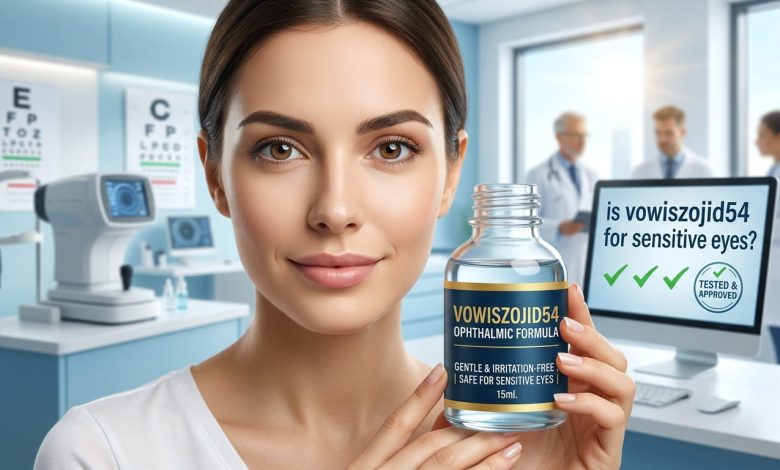
You searched “is Vowiszojid54 for sensitive eyes” because you saw the name somewhere and wanted an answer before putting anything near your eyes. That’s exactly the right instinct. Before you trust any claim about this product, it’s worth knowing that Vowiszojid54 doesn’t hold up as a real, verifiable eye care product at all.
This article explains why the name doesn’t check out, breaks down the specific claims floating around about it, and gives you a practical way to evaluate any eye product, whether it’s this one or something you find on a store shelf next week.
Why Vowiszojid54 Doesn’t Check Out as a Real Product
The name itself is the first sign something’s off. Vowiszojid54 reads like a randomly generated string of letters and numbers rather than a real brand name, ingredient name, or pharmaceutical designation. Legitimate eye care products, whether over-the-counter drops or prescription formulas, carry names registered with regulatory bodies and listed on manufacturer sites you can actually find and verify.
Search results describing Vowiszojid54 don’t agree on what it even is. Some call it lubricating eye drops. Others describe it as a serum or cream for the under-eye area. One source hedges entirely and calls it “a pharmaceutical compound under review.” A real product has one consistent identity, one manufacturer, and one clear category. This one has none of that.
There’s no listing for Vowiszojid54 in the FDA’s database of approved ophthalmic products, no manufacturer website, and no verifiable retailer selling it under this name. That absence matters. Any product intended for use in or around the eyes that’s sold legitimately in the United States needs to clear a real regulatory bar, and there’s no public record of this one doing that.
The Claims That Don’t Hold Up
A few specific claims about Vowiszojid54 deserve a direct look, because they’re the kind of thing that could genuinely mislead someone into a bad decision.
Some pages list specific ingredients, like chamomile extract and hyaluronic acid, presented as though they came from an actual product label. There’s no sourced formulation behind these claims, no batch information, and no way to confirm any real product uses this exact combination under this name.
Other pages include invented endorsements, phrases like “doctors suggest” or “ophthalmologist-tested,” without naming a single doctor, study, or clinical source. Real ophthalmologist endorsements come with a name, a credential, and usually a specific study or clinical observation behind them, not a vague, unattributed claim.
You’ll also find fabricated user stories, a mom whose kids stopped rubbing their eyes, a teacher who wears contacts more comfortably, an athlete who stopped experiencing wind-related dryness. None of these can be traced to a real person, a real review platform, or a verifiable purchase. Treat testimonials like this as fiction, not evidence.
One source goes further and directly compares Vowiszojid54 to Systane, a real, established eye drop brand, claiming faster absorption and a lighter feel. There’s no actual data behind that comparison, and making an unverified product sound superior to a known, regulated one is a common tactic for borrowing credibility it hasn’t earned.
How to Actually Evaluate an Eye Product’s Safety
Whether you’re looking at an unfamiliar product like this one or something new at the pharmacy, a few checks tell you a lot before you ever put it near your eyes.
- Look it up in the FDA’s database. Over-the-counter eye drops and ophthalmic products sold legally in the US should be listed. If you can’t find it there, that’s a serious red flag, not a minor gap.
- Check for a real manufacturer with a real address. A legitimate eye care brand has a findable company behind it, not just a product name floating across a handful of blog posts.
- Read the actual ingredient label, not a summary. If you can’t find a photo of a real label or box, you don’t actually know what’s in the product, no matter how many articles describe its “ingredients.”
- Be skeptical of vague endorsements. “Doctors recommend” without a name attached isn’t a credential. A real recommendation names the doctor, their specialty, and ideally the reasoning.
- Ask a pharmacist or your eye doctor directly. If you’re unsure whether something is safe for your eyes, a two-minute question to a pharmacist costs you nothing and gives you a real, accountable answer.
What to Use Instead If You Have Sensitive Eyes
If you’re dealing with irritation, dryness, or discomfort and looking for real relief, stick with established, regulated options. Preservative-free artificial tears from brands like Systane, Refresh, or TheraTears are widely available, FDA-registered, and backed by actual clinical use.
If your symptoms are persistent, don’t just search for a gentler product. Redness, dryness, or irritation that doesn’t improve with basic over-the-counter drops is worth mentioning to an eye doctor, since it can point to something like dry eye syndrome, an allergy, or an underlying condition that benefits from an actual diagnosis rather than a new product.
Trust What You Can Verify
Vowiszojid54 doesn’t show up in any FDA listing, doesn’t have a findable manufacturer, and the specific safety claims made about it, from its ingredients to its doctor endorsements, can’t be traced to any real source. Treat it as unverified, and don’t use it or anything like it near your eyes based on unattributed claims alone.
If you’re dealing with actual eye discomfort, our guide on choosing the right artificial tears for dry or sensitive eyes covers real, regulated options you can check off a pharmacy shelf with confidence.