
You’ve been waking up stiff, flipping to the cool side of the mattress at 2 a.m., or feeling your partner’s every move through the bed like a mini earthquake. If any of that sounds familiar, the mattress you’re sleeping on probably isn’t built the right way for how you sleep. A pocket coil mattress might be exactly what fixes it, or it might not be. That’s what this guide is actually going to help you figure out.
We’re covering what pocket coils are, how they compare to memory foam and traditional innerspring, which sleep positions they suit best, what to look for at different price points including solid picks under $1,000, and a few things most mattress guides won’t bother telling you.
What Is a Pocket Coil Mattress?
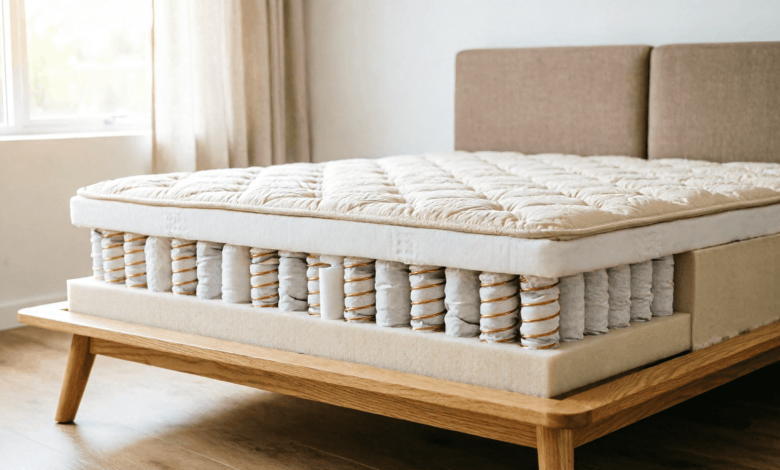
A pocket coil mattress, sometimes called a pocketed spring or wrapped coil mattress, is built using individual steel coils that are each wrapped in their own fabric pocket. Unlike older innerspring designs where all the coils are connected, pocket coils move independently.
That independence is the whole point. When you press down on one side of the bed, only the coils directly beneath that pressure compress. The coils a foot away barely move at all. That’s what gives pocket coil mattresses their reputation for motion isolation and pressure relief, two things connected coil systems genuinely struggle to deliver.
How Pocket Coils Are Made
Each coil is tempered steel, shaped into a cylinder, and sealed inside a fabric casing. These fabric pockets are then stitched or glued together in a grid pattern to form the support core of the mattress. The coil gauge, which refers to the thickness of the wire, ranges from around 12 to 16. A lower gauge number means thicker, firmer wire. A higher gauge number means thinner, softer wire.
Above the coil layer, manufacturers add comfort layers: foam, latex, cotton, wool, or proprietary materials depending on the brand and price point.
Coil Count: What It Actually Means
You’ll see coil count marketed heavily, with brands advertising 800, 1,000, or even 2,000 coils in a queen mattress. The truth is that coil count past a reasonable threshold doesn’t improve sleep quality. What matters more is coil quality and the comfort layers on top.
A queen mattress with 800 to 1,000 high-quality tempered steel coils will outperform one with 2,000 thin, low-grade coils. Don’t let coil count be the main number that drives your buying decision. Focus on the gauge, the number of turns per coil, and what the comfort layers are made from.
Pocket Coil vs. Innerspring vs. Memory Foam: The Real Differences
Most buyers are choosing between these three. Each one has a place, and none of them is universally better.
Pocket Coil vs. Traditional Innerspring
Traditional innerspring mattresses use a Bonnell or offset coil system where the coils are tied together with wire. They’re generally cheaper to produce, which is why entry-level mattresses often use them. The problem is that connected coils transfer motion easily. One person turning over wakes the other.
Pocket coils solve this. Because each coil moves on its own, motion stays more localized. You also get better contouring because individual coils can respond to different body weights and shapes across the sleep surface. Edge support is another area where pocket coils tend to win, since the perimeter coils can be reinforced independently without affecting the center of the bed.
If you share a bed, pocket coils are the better choice over traditional innerspring almost every time.
Pocket Coil vs. Memory Foam
This is where it gets more nuanced. Memory foam mattresses, including premium options from brands like Tempur-Pedic, are made entirely of foam layers with no coil system at all. They contour deeply, absorb motion well, and eliminate the bouncy feel entirely.
Pocket coils, by contrast, have a slight responsiveness to them. You can move around without feeling “stuck” in the mattress. For combination sleepers who switch positions through the night, this is a genuine advantage.
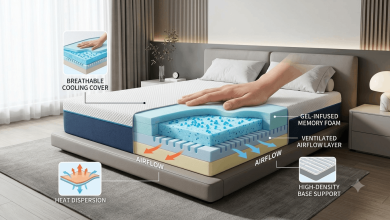
The most common complaint about memory foam, and the reason many people switch away from it, is heat retention. Foam traps body heat. Pocket coil mattresses have open air channels between the coils, which means airflow is built into the structure. If you sleep hot, pocket coils almost always win on temperature.
The trade-off is that all-foam mattresses, especially at the higher end, often isolate motion better than pocket coils do. It’s not a dramatic difference in most modern hybrid designs, but it’s worth knowing.
Where Hybrid Mattresses Fit
Many of the best mattresses today are hybrids: pocket coils on the bottom for support and airflow, foam or latex comfort layers on top for pressure relief. This is where brands like Saatva, Casper Hybrid, Brooklyn Bedding, and Leesa Hybrid live. You get the responsive support of coils with the pressure relief of foam. For most adults, a well-made hybrid is the sweet spot.
Which Sleep Position Is Right for a Pocket Coil Mattress?
Your sleep position should be one of the first filters you apply when choosing a mattress. Pocket coils come in a wide range of firmness levels, so this isn’t about whether to get a pocket coil. It’s about which firmness and which comfort layer to pair with it.
Side Sleepers
Side sleepers put the most pressure on their hips and shoulders. A pocket coil mattress that’s too firm will push back against those pressure points instead of letting them sink in slightly. Side sleepers usually do best with a medium to medium-soft pocket coil hybrid that allows the shoulder and hip to compress the top layers while the coils hold the spine in alignment underneath.
Back Sleepers
Back sleepers need support across the lower back and enough surface give to prevent the lumbar region from sagging. A medium to medium-firm pocket coil is the most common recommendation. The coils provide the even, responsive support that back sleepers need, and the firmness prevents the hips from sinking too deep.
Stomach Sleepers
Stomach sleepers need the firmest support of any position. Sinking too deeply into a soft mattress tilts the pelvis and stresses the lower back. A firm pocket coil mattress with thin comfort layers works well here. Stomach sleeping with a plush mattress, pocket coil or otherwise, tends to lead to back pain over time.
Combination Sleepers
This is the group that pocket coils serve particularly well, and it’s something most buying guides don’t address directly. Combination sleepers move between positions throughout the night. Memory foam can feel sticky and slow to respond when you shift positions. Pocket coils have enough spring-back to let you reposition without feeling like you’re pulling yourself out of a crater. A medium-firmness hybrid works for most combination sleepers.
Best Pocket Coil Mattresses Under $1,000
You don’t have to spend $3,000 to sleep well. The best mattress under $1,000 category has gotten genuinely competitive over the last few years. Online brands with direct-to-consumer models have cut out the showroom markup without cutting corners on the build.
What to Look for at This Price Point
At the under-$1,000 mark for a queen, look for a coil gauge between 13 and 15, at least 800 coils in a queen, a comfort layer of at least 2 inches of foam or latex, and a trial period of at least 90 nights. A 10-year warranty is standard at this price range and you should treat it as a baseline, not a bonus.
Top Options to Consider
Saatva Classic (sale pricing): Saatva regularly runs promotions that bring their Luxury Firm or Plush Soft options into the under-$1,000 range. It’s a dual-coil system with a layer of memory foam on top. The build quality punches above its category.
Brooklyn Bedding Signature Hybrid: Brooklyn Bedding builds their mattresses in Phoenix and sells direct. The Signature Hybrid uses a high-density foam base, pocketed coils, and a TitanFlex foam comfort layer. It’s available in Soft, Medium, and Firm, which is useful if you know your preference. The queen regularly comes in under $900 during sales.
Nectar Premier Copper: Nectar’s coil-based option uses copper-infused foam for cooling and a pocketed coil support core. Trial period is 365 nights, which is one of the longest in the category. It’s right at the $1,000 line for a queen but often discounted.
Casper Original Hybrid: Casper’s entry-level hybrid sits under $1,000 for a queen on sale. It’s a straightforward, well-made bed that balances support and comfort without being overly complicated.
If you’re buying through a retailer like 1800mattress rather than direct, keep in mind that the same mattress may be priced differently through different channels. 1800mattress sometimes carries exclusive pricing or bundles, so it’s worth checking before committing to a direct purchase.
Tempur-Pedic and the All-Foam Alternative: What You’re Trading
Tempur-Pedic makes all-foam mattresses, not pocket coil beds. They’re included in this guide because buyers frequently compare them when choosing between foam and coil systems. Understanding the Tempur-Pedic warranty also helps you calibrate what a quality guarantee should look like at any price.
What Makes Tempur-Pedic Different
Tempur-Pedic uses proprietary TEMPUR material, a viscoelastic foam developed originally for NASA applications. It responds to body heat and weight to conform closely to your shape. There’s no coil system, no bounce, and very little motion transfer.
The pressure relief is genuine, particularly for side sleepers with joint pain. The heat issue is real too. Despite cooling covers and open-cell foam formulations, Tempur-Pedic mattresses run warmer than pocket coil beds in most independent testing and owner reviews.
Tempur-Pedic Warranty Breakdown
The Tempur-Pedic warranty is 10 years and covers manufacturing defects and body impressions deeper than 0.75 inches. That threshold matters. Many owners report visible body impressions that don’t qualify under warranty because they fall just below that measurement. Keep in mind that the warranty requires a proper foundation or adjustable base and won’t cover damage from improper support.
If you’re comparing a Tempur-Pedic to a pocket coil hybrid, the warranty terms are similar in length but different in coverage specifics. Pocket coil mattresses with sagging issues are typically easier to assess visually, while foam impression claims can be harder to document.
Should You Choose Tempur-Pedic Over a Pocket Coil?
If you run cold, sleep primarily on your side, and have specific joint sensitivity, Tempur-Pedic may genuinely be worth the premium. If you sleep hot, change positions often, share the bed, or have a budget under $2,000, a high-quality pocket coil hybrid will likely serve you better.
Pocket Coil Mattresses and Temperature: Why It Matters More Than You Think
Heat is one of the most underrated factors in sleep quality. Research on sleep biology consistently shows that your core body temperature needs to drop slightly for deep sleep stages to occur. A mattress that retains heat around your body actively works against that process.
Pocket coil mattresses have a built-in structural advantage. The air channels between individual coils allow airflow through the mattress core. This is passive temperature regulation, and it works without any special cooling technology.
Memory foam, by contrast, tends to retain heat because the material is dense and there’s no airflow path through the core. Many foam brands add cooling gel layers or open-cell foam structures to counteract this, with varying success.
If you consistently wake up sweating or feel uncomfortably warm after the first few hours of sleep, and you’re currently on a foam mattress, switching to a pocket coil or hybrid is one of the most direct fixes available.
Edge Support: The Feature Nobody Talks About Until They Sit on the Side of the Bed
Edge support refers to how well the perimeter of the mattress holds up under weight. It matters in two situations: when you sit on the edge of the bed to put on shoes, and when you sleep near the edge and don’t want to feel like you’re about to roll off.
Pocket coil mattresses generally offer better edge support than all-foam beds at the same price point. Many pocket coil designs use a reinforced perimeter coil section, sometimes called a tempered edge or foam encased perimeter, that keeps the edges firm independently of the center of the mattress.
If you’re a single sleeper who stays in the middle of the bed, edge support matters less. If you share a queen or full and you both sleep near your respective edges, this is worth checking before you buy.
Can You Use a Pocket Coil Mattress on an Adjustable Base?
Adjustable bases have become much more common over the last decade, and a fair number of buyers want to know whether their mattress choice is compatible.
Most pocket coil mattresses work with adjustable bases, but you need to verify this with the specific brand before buying. The flexibility of the mattress matters. A very thick, firm pocket coil mattress with a stiff foam encasement may not flex cleanly at the head or foot raise.
Hybrid mattresses with thinner foam layers and a flexible coil core tend to be the most compatible with adjustable bases. Saatva, for example, specifically lists adjustable base compatibility on their product pages. Casper and Nectar also offer base compatibility, though some restrictions apply depending on the model.
If adjustable base compatibility is non-negotiable for you, look for it as a listed feature rather than an assumption. Contact the brand directly if it’s not clearly stated.
Memory Foam Camping Mattresses: A Quick Note on Portable Sleep
This topic comes up in searches alongside pocket coil mattresses, and it’s worth a brief mention for anyone comparing home mattresses to portable options.
A memory foam camping mattress is not the same category as a home mattress. These are typically 2 to 4 inch foam pads designed for ground sleeping in a tent, van, or RV. They prioritize packability and insulation from the ground over the kind of support you’d need for eight hours of sleep every night.
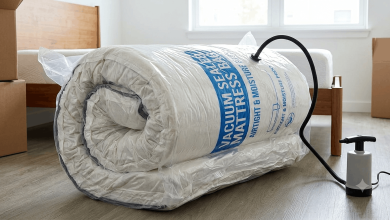
If you’re outfitting a camper or guest sleeping space where weight and storage matter, a memory foam camping mattress makes sense. For your primary sleep surface at home, it’s an entirely different purchase. Pocket coil and hybrid mattresses aren’t portable by design, and that’s the right trade-off when you’re optimizing for nightly rest.
How Long Does a Pocket Coil Mattress Last?
Durability is one of the most common questions around pocket coils, and the honest answer depends on the coil gauge, the quality of comfort layers, and how the mattress is maintained.
A quality pocket coil mattress with tempered steel coils and high-density foam comfort layers should last 8 to 12 years with normal use. Lower-end pocket coil beds with thin comfort layers tend to develop impressions in the foam first, not in the coils themselves. The coils in a well-made mattress often outlast the foam on top.
To get the most out of a pocket coil mattress, rotate it 180 degrees every 3 to 6 months. This distributes wear more evenly across the sleep surface. Most pocket coil mattresses are not designed to be flipped since the coil layer is the base and needs to stay on the bottom.
Use a proper foundation, whether that’s a box spring, platform slat base, or adjustable frame. Unsupported mattresses, especially on flimsy or widely-spaced slats, will wear faster and may void your warranty.
When a Pocket Coil Mattress Is the Wrong Choice
Most guides won’t say this, but pocket coil mattresses are not for everyone.
If you share a bed with a very light sleeper and motion transfer is your top priority, an all-foam mattress or a high-end latex mattress may still outperform even a good pocket coil hybrid on motion isolation. The foam simply has no springs to transfer any movement.
If you have severe pressure point sensitivity, particularly hip or shoulder pain that foam has helped in the past, switching to coils may not be an improvement. In those cases, the deep contouring of a high-quality memory foam mattress may be what your body actually needs.
And if your main use case is temporary or portable, like a fold-out guest situation or camping, pocket coils aren’t designed for that and you’ll be better served by a purpose-built solution.
Frequently Asked Questions About Pocket Coil Mattresses
What is a pocket coil mattress?
A pocket coil mattress uses individually wrapped steel coils that move independently from each other. This design allows each coil to respond to pressure directly above it without affecting the surrounding coils, which improves motion isolation and gives the mattress better contouring ability compared to connected coil systems.
Are pocket coil mattresses good for back pain?
Pocket coil mattresses can be good for back pain, but the firmness level matters more than the coil type. Back pain sufferers generally need medium to medium-firm support that keeps the spine aligned without creating pressure points. A pocket coil hybrid with a responsive comfort layer is a common recommendation from sleep specialists.
How long do pocket coil mattresses last?
A quality pocket coil mattress typically lasts 8 to 12 years. The comfort foam layers on top tend to wear before the coils themselves. Rotating the mattress every 3 to 6 months and using a proper foundation significantly extends the lifespan.
What is the difference between pocket coils and innerspring coils?
Innerspring coils are connected together in a grid, which means pressure on one coil transfers to neighboring coils. Pocket coils are individually wrapped, so each coil moves on its own. This makes pocket coils better at isolating motion and contouring to the body’s shape.
Are pocket coils better than memory foam?
Neither is universally better. Pocket coils sleep cooler, feel more responsive, and are easier to move on. Memory foam contours more closely, absorbs motion slightly better, and suits people with pressure point sensitivity. Hybrid mattresses that combine pocket coils with foam comfort layers offer a middle ground that works well for most sleepers.
What is a good coil count for a mattress?
For a queen mattress, 800 to 1,000 high-quality pocket coils is a solid benchmark. Beyond that number, additional coils don’t guarantee better sleep. Focus on the coil gauge and the quality of the comfort layers rather than chasing a high coil count number.
Do pocket coil mattresses sleep hot?
Pocket coil mattresses generally sleep cooler than all-foam beds because the open air channels between coils allow airflow through the mattress core. They’re not temperature-neutral on their own if the comfort layers on top trap heat, but structurally they’re one of the cooler options available.
Can you use a pocket coil mattress on an adjustable base?
Many pocket coil mattresses are compatible with adjustable bases, but you need to verify this with the specific model. Look for mattresses explicitly listed as adjustable base compatible, as very thick or rigid designs may not flex properly at the head and foot positions.
Is Tempur-Pedic better than a pocket coil mattress?
Tempur-Pedic offers premium all-foam mattresses with proprietary pressure-relieving material. They’re excellent for certain sleepers but tend to retain more heat and restrict movement compared to pocket coil hybrids. The Tempur-Pedic warranty covers defects and impressions deeper than 0.75 inches for 10 years. Whether it’s “better” depends entirely on your sleep style, temperature sensitivity, and budget.
What’s the best mattress under $1,000?
The best mattress under $1,000 depends on your sleep position and preferences, but strong options in the pocket coil category include the Brooklyn Bedding Signature Hybrid, Casper Original Hybrid, and Saatva Classic during sales. All offer solid coil construction, good comfort layers, and meaningful trial and warranty periods.
Ready to Choose the Right Mattress for How You Sleep?
Pocket coil mattresses are one of the most versatile and widely available sleep systems out there, and they genuinely work well for most sleepers when matched to the right firmness and comfort layer combination. The key points: coil count is less important than coil quality, airflow is a real structural advantage, and hybrid designs solve most of the trade-offs between coils and foam.
If you run hot, share a bed, or switch positions at night, a pocket coil hybrid is likely your best option. If your priority is maximum motion isolation or deep pressure relief above everything else, a quality foam mattress may still win for your specific situation.
For more guidance on building out your sleep setup, check out our articles on platform bed frames for hybrid mattresses, how to choose the right mattress firmness for your body weight, and what mattress accessories actually improve sleep quality.