
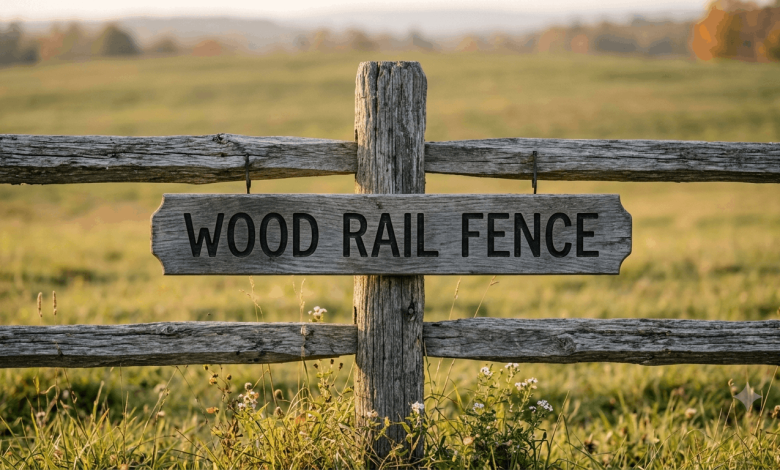
You drive past a farm and the first thing you notice isn’t the crops or the barn. It’s the fence. That long row of wood rails cutting across the field tells you something about the land, the animals it holds, and the person who manages it. Wood rail fence has been the backbone of American agricultural land for centuries, and it’s still one of the most searched topics among landowners trying to figure out what fencing actually works.
This article breaks down everything you need to know — the types of wood rail fencing used on farms today, how they compare to other materials, what they cost, which livestock they work best for, and what’s changing in the industry right now. Whether you’re setting up new pasture or replacing aging posts, you’ll walk away knowing exactly what to choose and why.
Why Wood Rail Fence Still Dominates Agricultural Land
Walk any livestock auction or rural feed store and you’ll hear farmers talk about fence the way mechanics talk about engines. They have opinions, preferences, and strong feelings about what lasts and what doesn’t.
Wood rail fencing has stayed popular for a simple reason: it works. It’s visible to animals, so horses and cattle won’t run through it the way they might with wire. It blends naturally into rural settings. And when it’s built right with quality lumber and solid posts, it holds up for decades.
That doesn’t mean it’s perfect. Wood requires maintenance, it can rot if the wrong species is used, and the upfront cost per linear foot runs higher than basic wire options. But for landowners who want a fence that handles livestock containment, looks professional, and adds property value, wood rail is hard to beat.
The History Behind the Post and Rail Design
The post and rail design goes back to colonial America. Early settlers adapted it from European styles, using locally available timber to mark property lines and keep livestock close. Split rail fencing — where logs are split lengthwise into rails — became iconic across the eastern United States, particularly in Virginia, Kentucky, and Tennessee.
That tradition carried forward. Today’s wood rail fences use the same basic logic: vertical posts set into the ground, horizontal rails running between them, spaced to match the size of the animals being contained. The materials and treatments have improved, but the geometry hasn’t changed much.
Types of Wood Rail Fence Used on Farms Today
Not all wood rail fences are the same. The number of rails, the wood species, and the post depth all affect how the fence performs over time.
Two-Rail Wood Fence
A two-rail fence uses two horizontal rails between posts. It’s the most open style and works best for marking boundaries or containing large animals like horses and cattle that respect a visual barrier. It won’t stop small livestock like goats or sheep from pushing through the gaps.
Three-Rail Wood Fence
Three rails give you more coverage. This is the most common style on horse properties and cattle operations. The extra rail adds structural support and reduces the chance that an animal will get a leg caught in the opening. For most general agricultural use, three-rail is the standard.
Four-Rail Wood Fence
Four rails are used when you need tighter spacing — often for smaller horses, young foals, or mixed-species pastures. The added rail increases cost and labor but gives you better control over what stays in and what stays out.
Split Rail Fence
Split rail uses logs that are literally split down the middle, giving each rail a rustic, natural look. It’s more of a traditional or decorative style now, though it still sees use on properties where appearance matters as much as function. The rails slot into pre-drilled holes in the post, which makes installation faster but can loosen over time.
Best Wood Species for Agricultural Fencing
The wood species you choose matters more than most buyers realize. Pick the wrong lumber and you’ll be replacing posts in five years. Pick the right one and your fence can stand for 25 to 30 years with minimal work.
Cedar
Western red cedar is one of the top choices for rail fencing across the U.S. It contains natural oils that resist rot and insect damage without chemical treatment. Cedar is lightweight, which makes it easier to handle during installation, and it weathers to a silver-gray that many landowners actually prefer.
The downside is cost. Cedar runs higher per board foot than pine, and in some parts of the country it’s harder to source.
Black Locust
Black locust is arguably the most durable native wood for fence posts in North America. It’s extremely dense, resists rot at the ground line (the most vulnerable part of any fence post), and has a lifespan that can exceed 40 years in the right conditions. Farmers in the Midwest and Appalachian regions have used it for generations.
The challenge: black locust isn’t widely available at lumber yards. You typically need to source it locally or through specialty suppliers.
Pressure-Treated Pine
Pressure-treated pine is the most widely available option and the most affordable. It’s been chemically treated to resist moisture, rot, and insects. Modern treatments have moved away from older arsenic-based formulas — today’s standard is alkaline copper quaternary (ACQ) or copper azole, both of which are considered safer around livestock.
Treated pine works well for rails. For posts, make sure you’re using lumber rated for ground contact (labeled UC4B or UC4C for the most demanding soil conditions).
Osage Orange (Hedge Apple)
Osage orange is a regional material found mainly in the Great Plains. It’s incredibly hard, naturally rot-resistant, and almost impossible to split after it dries. Farmers in Kansas, Oklahoma, and Missouri have relied on it for over a century. If you can get it, it’s excellent for posts. It’s rarely available outside its native range.
Wood Rail Fence vs. Other Agricultural Fencing Options
Wood rail doesn’t compete in a vacuum. When you’re planning a farm fence, you’re weighing it against wire, electric, vinyl, and combination systems.
Wood Rail vs. Woven Wire
Woven wire (also called field fence or farm fence) offers better containment for small animals. A horse won’t notice a two-rail wood fence if it’s spooked, but woven wire with a wood or steel post system adds a physical barrier. Many farms combine the two: wood posts and rails on the top, woven wire below. This hybrid approach gives you visibility, strength, and containment in one system.
Wood Rail vs. Electric Fence
Electric fence is the most affordable option per linear foot and works well as a temporary or interior divider for rotational grazing. But it requires a power source, regular maintenance to stay charged, and it won’t work during power outages or if vegetation touches the wire. Wood rail doesn’t have these dependencies. It works on its own, all day, every day.
Wood Rail vs. High-Tensile Wire
High-tensile wire is popular on large cattle operations where you’re fencing hundreds of acres. It covers more ground for less money. The trade-off: it’s nearly invisible to horses and can cause serious injury if an animal runs into it at speed. Wood rail is the safer choice for equine operations regardless of cost.
Wood Rail vs. Vinyl Rail Fence
Vinyl rail fencing looks like wood but doesn’t rot, split, or need painting. It’s worth considering for high-visibility areas like road frontage or paddock entries. The problem is rigidity. Vinyl doesn’t flex the way wood does. In cold climates, it can crack or become brittle, and if a large animal hits it, the rail often breaks cleanly rather than bending. Wood tends to absorb impact better.
What Does Agricultural Wood Rail Fencing Cost?
Cost is one of the first questions any landowner asks. The honest answer is that it varies — but you can get to a working estimate pretty quickly.
For materials only, basic pressure-treated pine rail fencing runs between $3 and $6 per linear foot for a two-rail system. Three-rail systems typically land between $5 and $10 per linear foot. Cedar costs 20 to 40 percent more than treated pine for the same configuration.
Add installation labor and you’re typically looking at $10 to $25 per linear foot depending on your region, the terrain, and whether corner and gate posts require additional concrete work.
A one-acre square plot has roughly 835 linear feet of perimeter. A three-rail pressure-treated pine fence around that acre, installed professionally, could cost anywhere from $8,000 to $20,000 depending on local labor rates.
Larger operations lower the per-foot cost because post spacing can be extended slightly on flat terrain and contractors offer better pricing on volume work.
USDA Cost-Share Programs for Farm Fencing
One thing almost no competing article mentions: the USDA’s Environmental Quality Incentives Program (EQIP) offers cost-share assistance for farm fencing projects, particularly when the fence helps with livestock exclusion from streams, wetlands, or cropland. Eligible farmers can receive payments covering 50 to 75 percent of the installed fence cost.
If you’re a working farm owner in the United States, contact your local USDA Natural Resources Conservation Service (NRCS) office before you buy a single board. The savings can be significant, and the application process is less complicated than most people assume.
Choosing the Right Fence for Your Livestock
This is where most general fencing guides fall short. The right wood rail fence depends heavily on what you’re keeping in — and what you’re keeping out.
Horses
Horses need a fence they can see. A rail fence at 54 to 60 inches high works well for most breeds. Three or four rails are recommended to prevent horses from reaching over or pushing through. Avoid barbed wire entirely — it causes severe lacerations in horses that panic and run through it.
Black locust or cedar posts are preferred for equine operations because there’s no concern about chemical leaching from treated wood near animals that chew fences habitually.
Cattle
Cattle can be fenced with a simpler system than horses. A three-rail fence at 48 to 54 inches handles most beef breeds. Cattle are less likely to test a fence unless they’re stressed or underfed, so the structural demands are slightly lower. Pressure-treated pine rails work fine here.
For bulls or high-stress situations, consider adding a strand of electric wire to the top rail as a deterrent.
Sheep and Goats
This is where wood rail fencing alone fails. Goats will find every gap and test every rail. Sheep can slip through openings that seem impossibly small. If you’re running small ruminants, you need either a four-rail system with tight spacing or a combination of wood rails with woven wire stapled to the posts. The wood rail gives you structure and visibility; the wire handles actual containment.
Mixed-Species Pastures
Mixed operations call for a fence that meets the most demanding animal’s requirements. Start with goat or sheep containment as your baseline, then build up from there. A three-rail system with woven wire beneath it, set at 48 to 54 inches, handles most combinations you’ll find on a working farm.
How Long Does a Wood Rail Fence Last?
Lifespan depends on three things: the wood species, the quality of the installation, and how much maintenance you put in.
Pressure-treated pine posts rated for ground contact (UC4B) typically last 20 to 30 years before the post base begins to fail. The rails, which don’t touch the ground, often last longer. Cedar and locust posts can outlast treated pine in certain soil types, particularly in wet climates where copper-based treatments don’t perform as well.
The ground line is where every wood post eventually fails. That’s the zone 6 inches above and below the soil surface where moisture, oxygen, and temperature fluctuation combine to break down wood fastest. If you want to extend fence life, tamp the soil firmly around each post during installation to limit air pockets, and consider applying a post preservative at the ground line before you set the post.
Rail maintenance is simpler. Inspect rails annually for cracks, splits, and sagging. Replace any rail that’s visibly soft or cracked through more than one-third of its thickness.
Sealing and Treating Rails Over Time
Untreated cedar and pine rails benefit from a penetrating wood sealer applied every 3 to 5 years. This slows moisture absorption and prevents surface checking (the small surface cracks that appear as wood dries and re-wets over seasons). You don’t need expensive products — a standard oil-based wood preservative from any farm supply store does the job.
Painted rail fences need more attention. Paint seals the surface but when it cracks, water gets underneath and accelerates rot. If you’re going to paint, use an exterior primer first and plan on repainting every 5 to 7 years.
Industry Trends in Agricultural Fencing
The fencing industry has changed more in the past decade than in the previous fifty years. Wood rail remains dominant for horse properties and premium agricultural land, but several shifts are worth knowing about.
Eco-Treated and Low-VOC Lumber
Pressure-treated lumber has historically used preservatives that raised concerns about soil leaching and animal safety. Newer formulas using copper azole and zinc borate have reduced those concerns significantly. Some manufacturers are now offering eco-certified treated lumber that meets stricter standards for use around organic farms and near water sources. Demand for these products has grown steadily since 2020.
Hybrid Wood and Wire Systems
The combination of wood rail tops with woven wire below has gone from a workaround to a standard practice on well-managed farms. Suppliers now offer pre-packaged systems with matching post dimensions and staple spacing guides. What used to require custom planning is now available off the shelf at most farm supply chains.
Composite and Recycled-Content Rails
Composite lumber made from recycled wood fiber and plastic has entered the agricultural market. These rails don’t rot, don’t need sealing, and hold their color for decades. The trade-off is higher upfront cost and less structural rigidity compared to solid wood. They’re gaining traction in equine facilities and high-end rural estates where maintenance reduction justifies the premium.
Local Sourcing and Milled-On-Site Posts
There’s been a quiet but steady move among small farmers toward locally milled posts, particularly black locust and osage orange in regions where those species are available. The appeal is cost savings, known provenance, and the performance that comes from wood dried and milled in the same climate where it will be used. Some county agricultural extension offices now offer guidance on setting up basic on-farm milling operations.
Installation Basics Every Landowner Should Know
You don’t need to be a contractor to understand what good installation looks like. Knowing the basics helps you evaluate bids, supervise a crew, or tackle a small project yourself.
Post spacing is typically 8 to 10 feet on center for rail fencing. Shorter spacing adds strength but increases material cost. Corner and end posts need to be larger diameter than line posts — typically 6 inches minimum versus 4 inches for standard line posts — because they carry the tension of the entire fence run.
Post depth should be at least one-third of the total post length below grade. A 6-foot post needs at least 2 feet in the ground. In loose or sandy soils, go deeper. Concrete collars around posts add stability but can actually trap moisture against the post if not sloped away from the wood at the surface.
Set all your corner and end posts first, stretch a string line between them, and use that as your guide for line post placement. This keeps the fence straight across uneven terrain without constant re-measurement.
Frequently Asked Questions About Wood Rail Fence on Agricultural Land
What is the best fencing for agricultural land?
The best fencing depends on your livestock and goals. Wood rail fence works well for horses and cattle due to its visibility and strength. For small ruminants like goats and sheep, pair wood rail with woven wire. If cost per acre is the priority, high-tensile wire or electric fence covers more ground for less money, though both have trade-offs in safety and maintenance.
How long does a wood rail fence last?
A properly installed wood rail fence using pressure-treated posts rated for ground contact typically lasts 20 to 30 years. Cedar and black locust can last longer in the right conditions. Rails generally outlast posts since they don’t contact the soil. Annual inspection and periodic sealing extend lifespan.
Is split rail fencing good for horses?
Split rail works as a boundary marker or decorative fence, but it’s not ideal for horse containment. The gaps between rails are too large, and the rail-in-socket design can loosen over time. For horses, a solid three or four-rail post-and-rail system with close spacing is a more reliable choice.
What wood is best for fence posts?
Black locust is widely considered the most rot-resistant native species for fence posts, with lifespans exceeding 40 years in good conditions. Cedar is a close second and more widely available. Pressure-treated pine is the most practical and cost-effective choice for most farms, provided you use lumber rated UC4B or higher for ground contact.
What is the cheapest farm fencing option?
Electric fence is the least expensive option by a wide margin, running as little as $0.50 to $1.50 per linear foot for a basic setup. High-tensile wire comes next. Wood rail fencing costs more upfront but requires less ongoing management than electric systems, which need regular maintenance to stay effective.
How much does agricultural fencing cost per acre?
A square one-acre plot has about 835 linear feet of perimeter. Installed wood rail fencing typically costs $10 to $25 per linear foot, putting a one-acre enclosure between $8,000 and $20,000. Wire and electric options run considerably less. USDA EQIP cost-share programs can offset 50 to 75 percent of eligible fencing costs for qualifying farmers.
Is wood or vinyl rail fencing better for farms?
Wood is generally the better choice for working farms. It absorbs impact without shattering, holds up in extreme cold better than vinyl, and is easier to repair. Vinyl makes sense for high-visibility areas or where appearance is a priority and livestock pressure is low. In active pastures with large animals, wood rail holds up better over time.
What fencing keeps goats in?
Goats require tight, rigid containment. A four-rail wood fence combined with woven wire or field fence stapled to the posts is the most reliable system. Electric wire as a secondary deterrent also helps with particularly determined animals. Standard two or three-rail wood fencing alone will not contain goats.
How do I maintain a wood post and rail fence?
Inspect the fence annually in early spring after freeze-thaw cycles. Check posts for rot at the ground line by probing with a screwdriver — soft or spongy wood needs replacement. Re-tighten or replace loose rails. Apply a penetrating wood sealer every 3 to 5 years on untreated rails. Painted fences need repainting every 5 to 7 years.
Can I get financial help for farm fencing costs?
Yes. The USDA’s Environmental Quality Incentives Program (EQIP), administered through the Natural Resources Conservation Service (NRCS), offers cost-share payments for farm fencing projects that serve conservation purposes such as keeping livestock away from streams or wetlands. Contact your local NRCS office to check eligibility and current payment rates in your county.
Make the Right Call Before You Buy a Single Post
Wood rail fence is one of the most practical, long-lasting investments you can make in agricultural land — if you choose the right species, the right rail count, and the right installation depth for your soil and livestock.
Cedar or black locust posts where you can get them. Pressure-treated pine where you can’t. Three rails for horses and cattle. Four rails with woven wire if goats or sheep are in the picture. Check USDA EQIP before you spend a dollar, because cost-share can fundamentally change what you’re able to build.
For more guidance on land management and rural property decisions, explore related topics on reuterings.com including pasture planning for livestock operations, how to choose between wood and composite materials for outdoor structures, and what agricultural landowners need to know about property fencing laws by state.