
You wouldn’t normally put a limestone quarry, an animal feed company, and a children’s mental health hospital in the same conversation. But look at what these three organizations, Dolese, JD Heiskell & Company, and Camber Mental Health, actually represent, and a clear thread connects them: they’re all operating in growth-driven segments where demand is rising fast, competition is getting tighter, and the companies that plan well are pulling ahead. If you’re researching business health across these industries, tracking market shifts, or just trying to understand where the money and momentum are moving, this breakdown covers all three.
Dolese Bros. Co.: A 120-Year-Old Company Still Growing
Dolese isn’t a name you’ll find on the stock ticker. It’s an employee-owned construction materials company out of Oklahoma City, founded in 1902. That’s over 120 years in the same industry, and they’re not slowing down.
The company supplies ready-mixed concrete, crushed limestone, and construction sand to commercial, industrial, and residential projects across Oklahoma. With more than 60 facilities and roughly 1,000 employees, Dolese operates at a scale that most regional construction material suppliers can’t match.
What’s Driving Dolese’s Growth Right Now
In mid-2025, Dolese was selected as the quarry partner for Brimstone, a California-based green chemistry company that had reviewed over 23,000 quarries across the United States. Brimstone’s process extracts alumina from calcium silicate rocks, a potential breakthrough for low-carbon industrial production. Being chosen out of 23,000 options is not a minor milestone.
The partnership positions Dolese inside a Department of Energy-backed clean energy demonstration project. That’s a significant shift from traditional road and highway supply. It signals that Dolese is no longer just a regional materials supplier. It’s becoming a feedstock partner for next-generation industrial chemistry.
Competitive Position in the Construction Materials Sector
Dolese competes in NAICS code 3273 (ready-mixed concrete) and adjacent segments including crushed limestone and construction sand mining. The competitive edges that matter most in this space are:
- Geographic coverage and proximity to job sites
- Consistent product quality and mix reliability
- Fleet and delivery logistics
- Long-term contractor relationships
Dolese’s employee-owned structure plays a real role here. When employees have ownership stake, turnover drops and institutional knowledge stays inside the company. That matters in a business where a driver who knows every job site in Tulsa County is genuinely more valuable than one who doesn’t.
Risks and Gaps in the Dolese Market Position
Construction materials companies are highly cyclical. When residential builds slow down or state highway budgets get cut, demand drops fast. Dolese’s Oklahoma focus is also a geographic concentration risk. The company doesn’t appear to be expanding aggressively into new states, and without trademark activity indicating new product lines, their growth story currently relies on the Oklahoma market staying healthy and the Brimstone partnership scaling up.
JD Heiskell & Company: Animal Feed at Scale
JD Heiskell & Company (JDH) has been in the agricultural supply chain since 1886. That’s not a typo. The company began when JD Heiskell moved to Tulare, California, to build a grain storage warehouse, and the business has been in the family ever since.
Today, JDH operates as a major animal feed manufacturer and commodity trader, supplying grains, co-products, and manufactured animal feed to dairy, beef, and hog producers across the US, Canada, Mexico, and Asia. Revenue estimates put the company somewhere between $250 million and $5 billion depending on the source and methodology, which tells you this is a large private company with limited public disclosure.
JDH’s Market Segment and Positioning
JDH sits inside NAICS code 3111, Animal Food Manufacturing. This is not a glamorous segment, but it’s a durable one. As long as there are cattle, hogs, and dairy cows, there’s demand for what JDH provides.
The company’s competitive strengths are built around three areas:
- Logistics depth: JDH moves commodities via rail, truck, and barge, which gives it a cost and flexibility advantage over competitors who rely on a single transport mode
- Long-standing supplier relationships: 140 years of agricultural history creates trust that newer competitors simply can’t replicate
- Geographic reach: Facilities across the US with trading relationships in Asia give JDH exposure to international feed grain markets
Growth Trends Shaping Animal Feed Manufacturing
The animal feed industry doesn’t make headlines often, but the underlying trends are worth paying attention to. Global protein demand is rising as middle-class populations in Asia and Latin America grow. That puts upward pressure on livestock production, which directly drives feed demand.
JDH’s recent expansion to Tulare, California, reflects a deliberate move into a key dairy state. California has one of the largest dairy industries in the country, and planting deeper roots there is a logical growth play for a company that already has commodity trading relationships across the Pacific.
Technology is also entering this space in a quiet way. Precision nutrition for livestock, where feed compositions are tailored to specific production stages and animal breeds, is becoming more common among large dairy operations. Companies that can deliver customized feed formulations at scale will have a pricing advantage in that environment.
What JDH Needs to Watch
The company’s main exposure is commodity price volatility. Corn, soybean meal, and distillers grains fluctuate widely based on weather, ethanol policy, and global trade conditions. A feed company that can’t manage margin compression during a commodity price spike will struggle. JDH’s trading operation is presumably designed to hedge against this, but it’s still the central risk in this business.
Camber Mental Health: Youth Behavioral Health in a Growing Crisis
Camber Mental Health has one of the most direct growth stories of the three organizations covered in this article, and it’s driven by a problem that isn’t going away.
The organization, formerly known as KVC Hospitals, rebranded to Camber Mental Health in 2022. The name “Camber” refers to an arch or bridge, reflecting what the organization sees as its role: building a path toward better outcomes for children and families experiencing mental health crises.
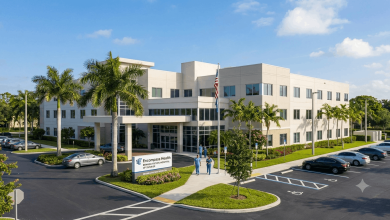
Based in Kansas, Camber operates inpatient children’s mental health hospitals and residential treatment centers in Kansas City, Wichita, and Hays. Over the past five years, the organization has treated more than 4,200 youth annually through its hospital and residential programs.
Why Youth Mental Health Demand Is Rising So Fast
The numbers behind Camber’s growth aren’t coming from marketing. They’re coming from epidemiology. According to the National Alliance on Mental Illness (NAMI), 50% of all mental health challenges begin by age 14. That’s not a number that’s improving.
Kansas ranks particularly poorly on adult mental health access, with high rates of mental illness and limited availability of care. The gap between need and available services is what’s been driving Camber’s expansion. When children from Sedgwick County were being referred to out-of-state facilities because local capacity didn’t exist, Camber opened a hospital in Wichita. When western Kansas had no acute inpatient pediatric services, Camber opened in Hays in 2023.
That expansion strategy, responding to specific geographic gaps in care rather than chasing population density, is a distinctive approach in behavioral health.
The Broader Market Context for Behavioral Health
The US behavioral health market was valued at approximately $92 billion in 2025 and is projected to reach over $132 billion by 2032. The global mental health market is on a similar trajectory, moving from roughly $98 billion in 2026 toward $115 billion by 2031.
Digital mental health is moving even faster. The digital behavioral health market is projected to reach nearly $180 billion by 2035, growing at a compound annual growth rate above 18%. That growth is being driven by telehealth adoption, mobile mental health apps, and virtual outpatient care platforms.
Camber’s focus is on the acute and residential end of the spectrum, which is less crowded than the digital app space but also more capital-intensive. Building a hospital is not a low-barrier entry. That works in Camber’s favor as a competitive moat, but it also means growth requires ongoing capital access and regulatory navigation.
Camber’s Partnership Model and What It Signals
In recent years, Camber announced a partnership with Children’s Mercy Kansas City, one of the country’s most respected pediatric health systems, to expand inpatient mental health capacity across the Kansas City region. Partnering with a major pediatric system rather than competing with it tells you something about how Camber thinks about growth. They’re not trying to be everywhere. They’re trying to fill the gaps that major systems either can’t or won’t fill on their own.
That partnership model could become a template for expanding into other underserved regions without requiring Camber to self-fund every new hospital.
What These Three Companies Have in Common
At first glance, Dolese, JD Heiskell, and Camber Mental Health don’t share much beyond the fact that they’re all privately held organizations operating in specialized, non-glamorous industries. But there are real patterns worth noting if you’re analyzing growth strategies across segments.
Long Operating Histories in Durable Markets
Dolese has been around since 1902. JDH since 1886. Camber’s parent organization, KVC Health Systems, has been in behavioral health for decades. None of these organizations are chasing trends. They’re embedded in industries with consistent, long-term demand: infrastructure materials, agricultural production, and mental health services.
That longevity creates operational depth that newer competitors can’t buy. You can’t shortcut 120 years of contractor relationships or 140 years of commodity trading knowledge.
Geographic Concentration as Both Strength and Risk
All three organizations have strong regional roots. Dolese in Oklahoma. JDH in the grain belt and California dairy regions. Camber in Kansas. Geographic focus lets you build real market share in a specific area. It also means your fortunes are tied to that region’s economy, regulatory environment, and demographics.
For Camber, the risk is also an opportunity: Kansas ranks poorly on mental health access, which means the demand gap is large, but it also means state funding and Medicaid reimbursement policies will directly shape how fast the organization can grow.
Growth Through Gap-Filling, Not Just Expansion
The most interesting strategic thread across all three is how they grow. Dolese didn’t go looking for a green energy partnership; they got selected because they had the infrastructure and rock quality that Brimstone needed. JDH expanded into Tulare because that’s where dairy production is concentrated. Camber built in Hays because kids from western Kansas were being sent out of state for treatment.
Each organization is responding to real, identifiable gaps rather than growing for growth’s sake. That’s a fundamentally different approach from companies that chase revenue by entering new markets without a specific demand signal pulling them in.
Frequently Asked Questions About Dolese, JD Heiskell, and Camber Mental Health
What does Dolese Bros. Co. actually do?
Dolese Bros. Co. is an employee-owned construction materials company based in Oklahoma City. Founded in 1902, it supplies ready-mixed concrete, crushed limestone, and construction sand to commercial, industrial, and residential projects. With more than 60 facilities and over 1,000 employees, it’s one of Oklahoma’s largest construction material suppliers.
Is JD Heiskell & Company publicly traded?
JD Heiskell & Company is listed with the stock symbol JDHYX according to some business databases, but it operates primarily as a private, family-owned business. Revenue estimates vary widely between sources. The company was founded in 1886 and is headquartered in Omaha, Nebraska, with significant operations in Tulare, California.
What is Camber Mental Health and who does it serve?
Camber Mental Health is a behavioral health organization based in Kansas that provides inpatient and residential treatment for children and adolescents experiencing mental health crises. It was rebranded from KVC Hospitals in 2022 and is part of the larger KVC Health Systems network. It serves children and families primarily in Kansas, with locations in Kansas City, Wichita, and Hays.
How fast is the behavioral health market growing?
The US behavioral health market is projected to grow from around $92 billion in 2025 to over $132 billion by 2032, a compound annual growth rate of about 5.3%. Digital mental health is growing faster, with projections approaching $180 billion by 2035. Demand is driven by rising rates of mental illness, workforce burnout, youth mental health crises, and broader telehealth adoption.
What industries are Dolese and JD Heiskell operating in?
Dolese operates in NAICS code 3273, covering ready-mixed concrete and related construction materials. JD Heiskell operates in NAICS code 3111, animal food manufacturing, as well as adjacent agricultural commodity trading activities. Both companies are in industries with long-term structural demand, though both are exposed to economic cycles in their respective sectors.
What is Dolese’s connection to clean energy?
In 2025, Dolese was selected as the quarry partner for Brimstone, a green chemistry company working on carbon-neutral alumina extraction from calcium silicate rocks. Brimstone reviewed more than 23,000 quarries before choosing Dolese, citing its reliable infrastructure, market access, and rock quality. The project is partially funded by the US Department of Energy.
Why did KVC Hospitals rebrand to Camber Mental Health?
KVC Hospitals rebranded to Camber Mental Health in 2022 to better reflect the organization’s philosophy and mission. The word “camber” means arch or bridge in English, representing the organization’s goal of building a bridge toward recovery for children and families. The rebrand also helped distinguish the children’s hospital division from the broader KVC Health Systems organization.
Who are Dolese’s main competitors?
Dolese competes with other construction material suppliers in the ready-mixed concrete and aggregate segments. Major national players in adjacent spaces include companies like Martin Marietta Materials and Vulcan Materials. Locally in Oklahoma, competition comes from regional suppliers. Dolese’s employee-owned structure and 120-year regional relationships give it a strong local competitive position.
What to Read Next on Reuterings.com
Dolese, JD Heiskell & Company, and Camber Mental Health each tell a version of the same story: industries with steady underlying demand, organizations with deep operational roots, and growth strategies built around filling specific, identifiable gaps rather than chasing volume for its own sake.
If you’re researching how established companies build competitive advantage over time, the patterns in these three segments offer a practical lens. For more on how behavioral health organizations are adapting to rising demand, the workforce strategies behind large construction companies, or the agricultural supply chain trends affecting US food production, explore related coverage on Reuterings.com.