
You grab a potato, wrap it in foil, and pop it in the oven. An hour later you’re staring at a steaming, fluffy side dish and wondering: how many carbs in a baked potato, exactly? The answer changes more than most people expect, and it depends on the size sitting on your plate right now.
A medium baked potato holds close to 37 grams of total carbs and about 161 calories. That number swings up or down fast once you factor in size, skin, and toppings. Below, you’ll get the exact gram counts, the calorie breakdown, and the honest answer to whether a baked potato belongs in a healthy diet.
How Many Carbs Are in a Baked Potato?
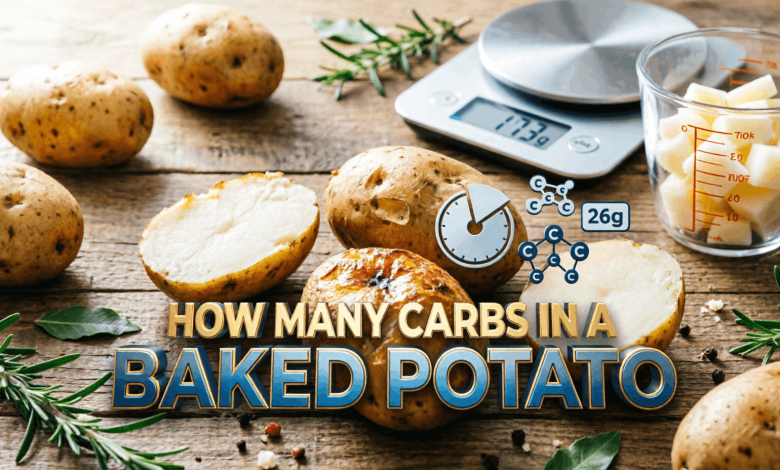
A medium russet potato (about 173 grams, roughly the size of a computer mouse) baked with the skin on contains:
- 36.5 grams total carbs
- 3.8 grams dietary fiber
- 32.7 grams net carbs
- 161 calories
- 4.3 grams protein
- 0.2 grams fat
Almost all of those calories come from carbohydrate. Potatoes carry very little protein and next to no fat until you start adding butter, cheese, or sour cream on top.
Baked Potato Carbs, Calories in a Baked Potato: Broken Down by Size
Potatoes aren’t sold by the gram at the grocery store, so “medium” means different things to different cooks. Here’s how the numbers move as the size changes.
| Potato Size | Weight | Calories | Total Carbs | Fiber |
| Small | 138g | 128 cal | 29g | 3g |
| Medium | 173g | 161 cal | 37g | 4g |
| Large | 299g | 278 cal | 63g | 6g |
That large steakhouse-style potato is close to double the carb load of the small one. If you’re portioning for blood sugar or calorie goals, weighing the potato before you bake it gives you a far more reliable number than eyeballing “medium.”
Does the Skin Change the Carb Count?
Yes, and the difference is bigger than most people assume. A baked potato eaten with the skin on carries around 37 grams of total carbs and 4.8 grams of fiber. Peel that skin off and you’re left with roughly 33 grams of carbs but only 2.3 grams of fiber.
The skin holds a good share of the fiber, along with potassium and vitamin C. Skipping it lowers the fiber count without lowering the total carbs by much, so if you’re tracking net carbs, leaving the skin on is the better move.
Are Baked Potatoes Healthy?
A plain baked potato is a whole, minimally processed food packed with potassium (over 900mg in a medium potato, more than a banana), vitamin C, vitamin B6, and fiber. It’s naturally fat-free and cholesterol-free. Nutritionists have pointed to potatoes as a filling, budget-friendly source of energy for decades, and a plain baked potato earns that reputation.
Where things go wrong is the toppings. One tablespoon of butter adds about 100 calories and 11 grams of fat. Two tablespoons of sour cream tack on another 60 calories. Load a potato with cheese, bacon, and both of those, and you’ve turned a 161-calorie side dish into a 500-plus calorie meal.
So a baked potato is healthy on its own. What you pile on top is what decides whether it fits your goals.
Baked Potato vs. Other Potato Prep Methods
Cooking method changes both the carb count and how your blood sugar responds. Here’s how baked potatoes stack up against other common preparations, based on a medium potato serving.
| Prep Method | Calories | Total Carbs | Glycemic Index |
| Baked | 161 | 37g | 75-85 |
| Boiled | 134 | 31g | 50-60 |
| Mashed (no butter/milk) | 137 | 31g | 65-75 |
| French fries (medium serving) | 365 | 48g | 70-75 |
Baking concentrates the natural sugars in a potato, which pushes its glycemic index higher than boiling does. Boiling actually preserves more resistant starch, a type of carbohydrate your body digests more slowly.
How to Lower the Carb Impact of a Baked Potato
You don’t have to give up baked potatoes to manage your carb intake. A few adjustments make a real difference.
- Cool it before you eat it. Refrigerating a cooked potato for 24 hours increases resistant starch by up to 25%, which can lower its glycemic impact once you reheat and eat it.
- Eat the skin. It adds fiber without adding many extra carbs.
- Pair it with protein and fat. Grilled chicken, a fried egg, or plain Greek yogurt on top slows down how fast the carbs hit your bloodstream.
- Cut your portion in half. Half a medium baked potato runs about 18 grams of net carbs, which fits inside most low-carb meal plans.
- Choose a smaller potato. A small potato saves you close to 8 grams of carbs compared to a medium one, without changing how you cook it.
Baked Potatoes and Special Diets
Keto: A whole baked potato (32.7g net carbs) eats up most or all of a keto dieter’s daily carb budget in one sitting. Most keto plans call for 20 to 50 grams of net carbs per day total, so a full potato rarely fits. A half portion is more workable.
Diabetes: Baked potatoes carry a moderate to high glycemic index, but portion control and pairing them with protein, fat, or non-starchy vegetables can soften the blood sugar spike. Many diabetes educators suggest limiting a serving to half a medium potato.
Weight loss: At 161 calories with 4 grams of fiber, a plain baked potato is genuinely filling for the calorie cost. The trouble comes from butter, cheese, and sour cream, which can triple the calorie count without adding much fullness.
Your Next Step
A medium baked potato carries about 37 grams of carbs and 161 calories, and the skin, size, and cooking method all move that number. Eaten plain, it’s a filling, nutrient-dense food that fits into most eating plans when you watch your portion and go easy on the toppings.
If you’re mapping out your next meal, check out our guides on how many calories are in a sweet potato, the healthiest potato toppings for weight loss, and carbs in white rice vs. brown rice to round out your plate.